Fish Profiles
Neon Tetra Care and Ideal Tankmates
Learn neon tetra care essentials: tank size, water parameters, schooling needs, feeding, and the best tankmates for a thriving community aquarium.
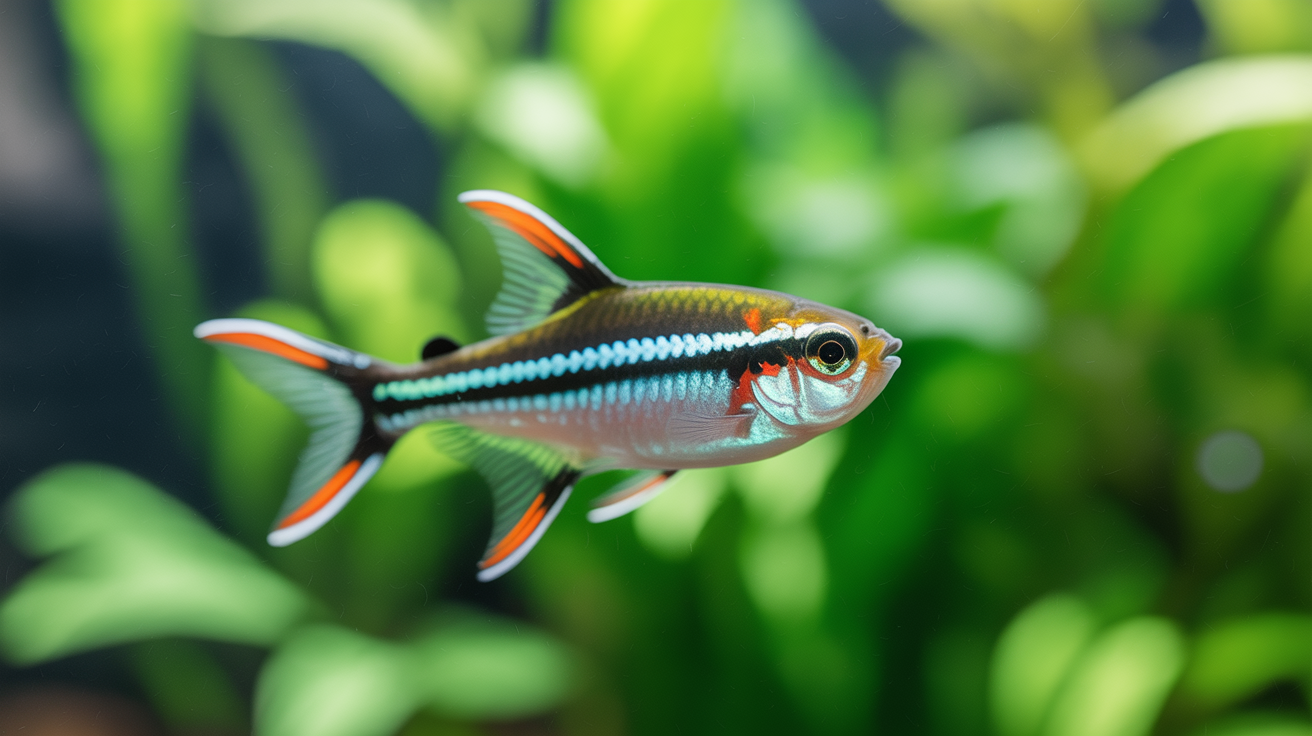
Neon tetras are one of the most recognizable freshwater fish in the hobby, and for good reason. They're hardy once established, peaceful toward nearly every tankmate, and that iridescent blue-red stripe catches light in a way that never gets old. If you keep a tight school in a well-planted tank, they're genuinely one of the easier fish to keep happy long-term.
Here's what you need to know to get them right from the start.
Tank Size and Setup
Neon tetras are small (adults reach about 1.5 inches / 3.8 cm), but they're active schooling fish that need room to move. A 10-gallon tank is the practical minimum for a starter school, and a 20-gallon long gives you much more flexibility with both fish count and tankmate options.
Water parameters to target:
| Parameter | Ideal Range |
|---|---|
| Temperature | 70–81°F (21–27°C) |
| pH | 6.0–7.0 |
| Hardness (GH) | 1–10 dGH |
| Ammonia / Nitrite | 0 ppm |
| Nitrate | below 20 ppm |
Neons come from soft, acidic blackwater streams in South America, so they genuinely prefer slightly acidic water. That said, captive-bred specimens (which is what you'll almost always find at a store) adapt reasonably well to neutral pH. Don't push above 7.5 or you'll see stress coloration and increased disease susceptibility.
For filtration, a sponge filter or a hang-on-back rated for your tank size works well. Neons don't want a strong current. Keep the surface moving gently for gas exchange, not churning.
Planted tanks suit them perfectly. Dense midground plants, some floating coverage to dim the light, and a dark substrate will bring out the best color. Driftwood also helps soften the water over time and keeps pH stable in the 6.5–7.0 range without much fuss.
Schooling and Social Behavior
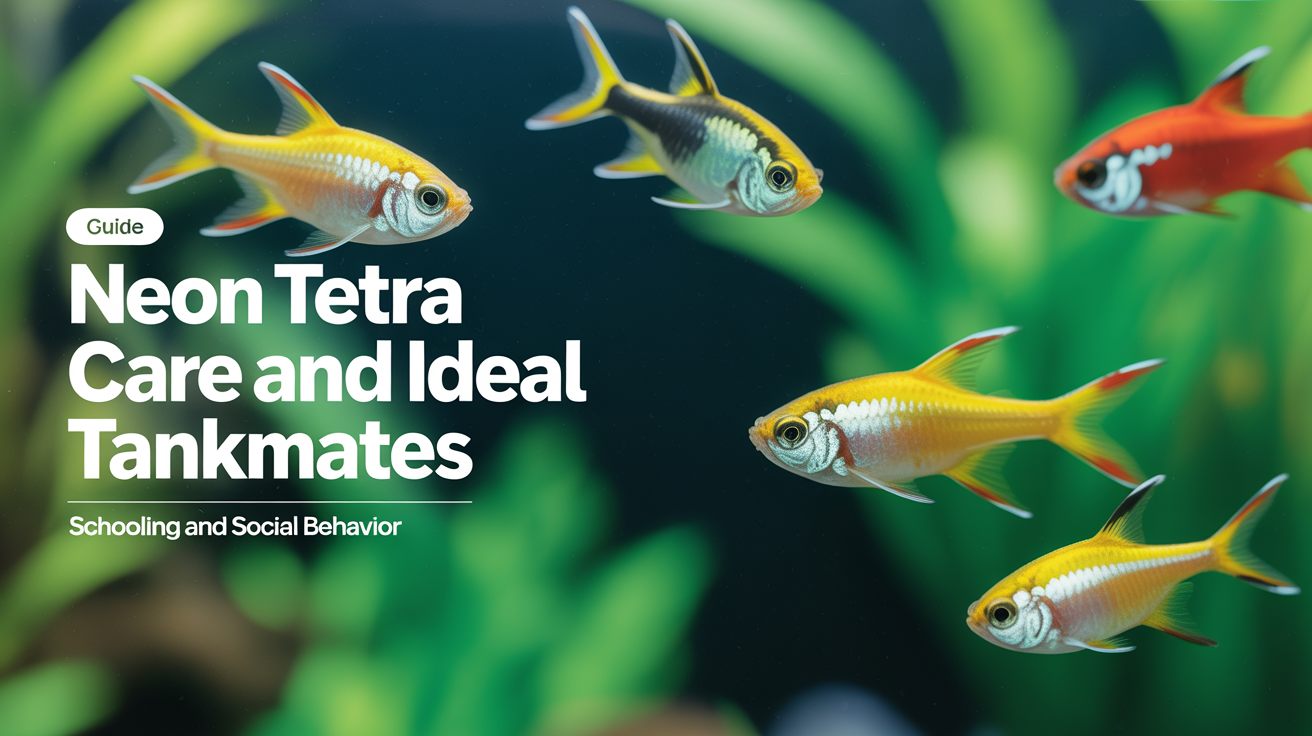
Neon tetras are obligate schoolers. A solo neon or a pair of two will spend most of their time hiding or showing faded colors. The minimum school size is 6, but a group of 10 or more is where the behavior really comes alive — tight mid-water formations, synchronized movement, that "shimmer" effect when they turn together.
They spend most of their time in the middle of the water column. They're not fin-nippers and rarely show aggression toward each other or tankmates. The main exception: during feeding, they'll jockey for position, which is completely normal.
New fish should be quarantined for 2–4 weeks before entering the display tank. Neon tetras are susceptible to neon tetra disease (caused by the microsporidian Pleistophora hyphessobryconis), which has no cure and spreads readily. Quarantine is the single best prevention.
Feeding
Neons are omnivores with small mouths, so food size matters. Their mouth opening is roughly 1–2 mm, so most standard tropical flakes need to be crushed slightly before feeding.
Good food options:
- Crushed high-quality tropical flake (read the protein content; aim for 40%+)
- Micro pellets sized 0.5–1 mm
- Frozen baby brine shrimp (excellent color enhancer)
- Frozen daphnia
- Micro worms or vinegar eels for occasional live variety
Feed once or twice daily, only what they'll consume in 90 seconds. Uneaten food breaks down quickly and drives up ammonia and nitrate, which stresses neons faster than most fishkeepers expect.
Health and Common Problems
Healthy neons are bold, stay in a loose school during the day, and have vibrant, continuous color from the gills back. Faded color during lights-on hours, isolation, clamped fins, or white patches are all warning signs.
Watch for these issues:
Neon tetra disease: The first sign is a faded or blotchy patch on the blue stripe, usually mid-body. Fish become lethargic and separate from the school. There is no effective treatment. Remove affected fish immediately to prevent spread. If you see this, consult an aquatic vet or experienced fish store before medicating, as some over-the-counter treatments do more harm than good.
Ich (white spot disease): Small white dots that look like grains of salt. Treat by slowly raising the temperature to 82–84°F (28–29°C) over 48 hours (neons tolerate this for short periods) combined with a standard ich medication. Follow the product dosing exactly.
Bacterial infections: Frayed fins, red streaking, or open sores warrant a water change first (30–40%), followed by an assessment. Sometimes it's purely a water quality issue. If symptoms persist after improving parameters, a broad-spectrum antibiotic may be appropriate — but medication decisions for sick fish are better made with guidance from a knowledgeable fish store or aquatic vet.
Maintain good water quality above all else. Neons are sensitive to ammonia and nitrite spikes. Weekly water changes of 25–30% keep nitrates manageable and go a long way toward preventing most health problems.
Ideal Tankmates
Neon tetra tankmates need to share the same parameter preferences and be peaceful enough not to eat or harass a 1.5-inch fish. The best community tanks pair neons with fish that occupy different water column zones, so there's no competition.
Top-tier tankmates:
| Fish | Why It Works |
|---|---|
| Corydoras catfish | Bottom dwellers, totally peaceful, same soft-water preference |
| Ember tetras | Similar size, peaceful, same midwater zone (school them separately) |
| Harlequin rasboras | Peaceful schoolers, upper-mid water, compatible parameters |
| Otocinclus catfish | Algae grazers, gentle, won't bother neons |
| Dwarf gourami | Top-dwelling, usually peaceful with small fish |
| Pygmy corydoras | Tiny catfish, safe with neons, love the same conditions |
Corydoras in particular make excellent companions. They work the substrate for leftover food, are completely passive, and thrive in the same water conditions as neons. More on keeping them well in our guide to corydoras catfish care.
Fish to avoid:
- Betta fish (individual temperament varies, but bettas often harass or eat neons)
- Angelfish (will eat adult neons once large enough)
- Tiger barbs (chronic fin-nippers)
- Cichlids in general
- Any fish with a mouth large enough to swallow a 1.5-inch fish whole
If you're building a larger community, guppies can coexist with neons in a soft-to-neutral pH setup, though the ideal parameters differ slightly. Read our guppy care guide if you're considering mixing them.
Acclimation and Stocking
The most common mistake with neons is adding them to an uncycled or newly cycled tank. These fish are more sensitive to nitrogen spikes than something like a platy or danio. Add them after the tank has been running for at least 4–6 weeks, with confirmed 0 ppm ammonia and 0 ppm nitrite.
When you bring them home, float the bag for 15 minutes to equalize temperature, then drip-acclimate over 30–45 minutes. Adding a small amount of tank water to the bag every 5 minutes lets them adjust to your pH gradually. Don't pour the store water into your tank.
Stock conservatively. A common guideline is 1 inch of small, slim-bodied fish per gallon of tank water. For a 10-gallon, that's a school of 6–8 neons with no other fish, or 6 neons plus a small group of pygmy corydoras. For a 20-gallon, you have real flexibility: 12–15 neons plus a bottom crew and maybe a pair of dwarf gouramis up top.
If you keep bettas and are curious about their community potential, our betta fish care guide covers the tankmate question in detail — neons specifically are a borderline case.
Frequently Asked Questions
How many neon tetras should I keep together?
A minimum of 6 is the practical floor, but aim for 10 or more if your tank size allows. Smaller groups show stress behaviors: hiding, faded color, erratic swimming. A school of 10 to 15 in a 20-gallon planted tank is where they really thrive.
What's the right tank size for neon tetras?
10 gallons is the minimum for a small school of 6. A 20-gallon long is more practical if you want to add other species. Larger tanks also buffer against parameter swings better, which matters because neons are sensitive to water quality changes.
Can neon tetras live with bettas?
Sometimes, but it's risky enough to be cautious. Some bettas ignore neons entirely; others hunt them. The bright stripe can trigger aggression in fin-focused bettas. If you try it, have a backup plan (a separate tank) and watch closely for the first few weeks. Tanks 20 gallons or larger with dense plants give neons escape routes.
Why are my neon tetras losing color?
Faded color during lights-on hours points to stress. Check your water parameters first: ammonia or nitrite above 0 ppm, or nitrate above 40 ppm, will cause immediate color loss. If parameters are fine, look at school size (fewer than 6 is stressful), temperature (below 68°F / 20°C is too cold), or early signs of neon tetra disease.
Do neon tetras need a heater?
Yes. Room temperature in most homes (68–72°F / 20–22°C) is on the cold edge of their tolerance. A reliable submersible heater set to 75–78°F (24–26°C) keeps them comfortable year-round and reduces immune stress. Get a separate thermometer to verify the heater is holding the right temperature.