Fish Profiles
Betta Fish Care: Tank Size, Water, and Tankmates
Keep betta fish healthy with the right tank size, water parameters, temperature, and compatible tankmates. Practical guidance for new and seasoned keepers.
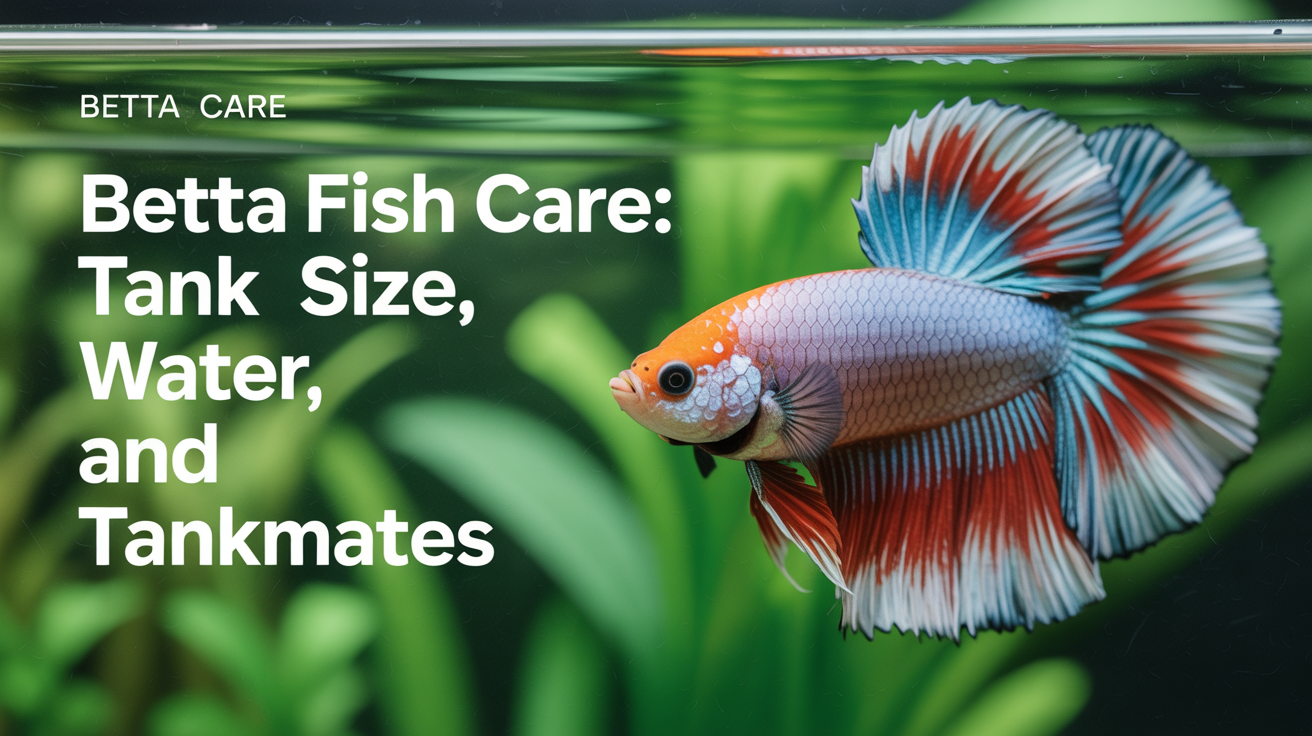
Betta splendens are one of the most forgiving fish for beginners, but they're also one of the most misunderstood. With the right tank, stable water, and thoughtful stocking choices, a betta can thrive for three to five years and display colors that no cup at a pet store comes close to showing.
Tank Size: How Much Space Does a Betta Actually Need?
The single-gallon bowls sold alongside bettas are a relic of bad fishkeeping advice. A betta needs a minimum of 5 gallons (roughly 19 liters), and 10 gallons is genuinely better. Here's why:
- Water stability. Smaller volumes swing in temperature and chemistry faster than a betta can adapt. A 5-gallon tank is far easier to heat and keep consistent than a 1-gallon bowl.
- Exercise and enrichment. Bettas are active, curious fish. Males especially patrol their territory and benefit from the length to swim back and forth.
- Filtration headroom. A low-flow sponge filter works well in a 5–10 gallon tank without blasting a betta with current it can't fight.
If you're starting with a 5-gallon cube or hex tank, that's fine, but run a heater, a filter, and a lid. Bettas jump, often without warning.
Tank Shape Matters Too
Bettas breathe air at the surface through a labyrinth organ. Tall, narrow tanks (sometimes sold as "betta condos") mean a betta has to swim a long distance to reach the surface. Opt for a tank that is wider and longer rather than dramatically tall. A standard 10-gallon rectangle (20 x 10 x 12 inches) is a near-perfect shape.
Water Parameters and Temperature
Getting the water right is more important than any decoration or food choice you make. Bettas come from the warm, slow-moving waters of Southeast Asia, so replicating that environment is straightforward.
| Parameter | Target Range |
|---|---|
| Temperature | 76–82°F (24–28°C) |
| pH | 6.5–7.5 |
| Ammonia | 0 ppm |
| Nitrite | 0 ppm |
| Nitrate | below 20 ppm |
| Hardness (GH) | 3–12 dGH |
Temperature is where most betta keepers slip up. Room temperature in many homes fluctuates enough to stress or kill a betta. A 25-watt submersible heater keeps a 5-gallon tank steady; a 50-watt heater handles a 10-gallon without overheating. Always use a separate thermometer, because the dial on a cheap heater is rarely accurate.
Ammonia and nitrite must read zero at all times. Both are toxic even at low concentrations, and a betta in an uncycled tank will show ragged fins, lethargy, and clamped scales before you notice anything else is wrong. If you're starting a new tank, run a fishless nitrogen cycle first (typically two to four weeks) before adding your betta. If you're already seeing symptoms of ammonia stress, a 25–30% water change immediately plus a water conditioner that neutralizes ammonia (sodium thiosulfate-based products) buys you time while you address the root cause.
Water Changes and Maintenance
In a cycled, filtered 5-gallon tank, a 20–25% water change weekly is typical. In a 10-gallon with a light bioload, every 10–14 days often works. The goal is keeping nitrates below 20 ppm between changes. Test the water with a liquid test kit rather than strips. Strips are unreliable, especially for nitrite readings.
Tap water is fine for bettas in most municipalities. Treat it with a dechlorinator before adding it to the tank. If your tap water has heavy chloramine rather than chlorine, use a conditioner specifically rated for chloramine removal.
Betta Tankmates: Who Gets Along and Who Doesn't
Male bettas cannot be housed together. Period. Two males in the same tank will fight until one (or both) dies or is seriously injured. Female bettas can sometimes coexist in a "sorority" of five or more in a tank of at least 20 gallons, but aggression is common and requires a heavily planted, heavily monitored setup.
With other species, the answer is "it depends," and it depends on your individual betta more than any blanket rule.
Fish That Usually Work
- Corydoras catfish. Bottom-dwelling, peaceful, and ignored by most bettas. A group of six in a 10-gallon or larger pairs well with a single male betta. See our corydoras care guide for specifics on their needs.
- Pygmy corydoras (Corydoras pygmaeus or hastatus). Even smaller and more mid-water than standard cories; less competition for the betta's territory.
- Small tetras. Neon tetras, ember tetras, and chili rasboras generally coexist peacefully with calmer bettas in tanks of 15 gallons or more. They need to be fast enough to escape a betta that decides to nip, and the tank needs enough plants and cover that the betta has its own "zone." Check out the neon tetra care guide before mixing species.
- Snails and shrimp. Nerite snails are nearly indestructible and ignored by most bettas. Ghost shrimp sometimes get eaten; amano shrimp are larger and fare better. Mystery snails are popular but a betta may nip at their antennae.
Fish to Avoid
- Guppies. Male guppies have colorful, flowing fins that most bettas read as rival males. Aggression is almost guaranteed. Female guppies are plainer but can still trigger aggression. If you're interested in guppies, they do better in their own tank; see our guppy care guide for how to set one up.
- Fin nippers. Tiger barbs, many danios in small groups, and serpae tetras routinely shred betta fins. Damage opens the door to bacterial and fungal infections.
- Other labyrinth fish. Gouramis and paradise fish will not tolerate a betta in the same water.
Making a Community Work
If you're going to try a community with a betta, go slow. Add the other fish first, let them establish themselves, then add the betta. Have a backup plan (a quarantine tank or a spare divider) if the betta turns out to be unusually aggressive. Watch for the first 48 hours closely, then check daily. A betta that is constantly flaring, chasing, or shredding fins needs to go back to a species-only setup.
Diet and Feeding
Bettas are carnivores. Their upturned mouths and the shape of their digestive system are built for insect larvae and small invertebrates, not flakes that sink and bloat.
A good rotation for a healthy betta:
- Betta-specific pellets as a daily staple (two to four pellets, twice a day is plenty)
- Frozen or freeze-dried bloodworms, daphnia, or brine shrimp two to three times per week as variety
- One fast day per week to prevent constipation and bloat
Overfeeding is the most common husbandry mistake with bettas. Uneaten food spikes ammonia and contributes to swim bladder problems. If a betta skips a meal or two, that's normal. If it refuses food for more than a week, check the water first (ammonia or temperature drift is usually the culprit), then consider whether the fish may be ill.
Common Health Problems and When to Get Help
Healthy bettas are active, curious, eat readily, and have smooth, fully-spread fins. A betta that hides constantly, has clamped fins, or develops white spots, fuzzy patches, or ragged edges needs attention quickly.
Fin rot is the most common issue and is almost always caused by poor water quality. A 30–40% water change, clean conditions, and time often resolves mild cases. Severe or spreading fin rot needs medication; consult an aquatic vet or a knowledgeable fish store before reaching for antibiotics, as misuse worsens resistance and can crash a biological filter.
White spot disease (ich) shows as tiny white grains resembling salt across the fins and body. Temperature-raising protocols (slowly increasing to 86°F / 30°C for two weeks) combined with ich medication is a standard treatment, but betta labyrinth fish can be sensitive to some medications. Read labels carefully and get a second opinion from your fish store if you're unsure.
Swim bladder disorder causes a betta to float at odd angles or struggle to swim to the bottom. It's often temporary and dietary. Fast the fish for 24–48 hours, then try a single blanched, shelled frozen pea as a laxative. If the problem persists beyond a week, rule out internal parasites or bacterial infection with professional help.
Frequently Asked Questions
Can a betta live in a 2.5-gallon tank?
Technically a betta can survive in 2.5 gallons, but it is not a comfortable long-term setup. Water quality is much harder to maintain in small volumes, and temperature swings are more extreme. A 5-gallon tank is the realistic minimum for a healthy, long-lived betta.
How often should I change my betta's water?
In a filtered, cycled 5-gallon tank, a 20–25% change once a week is a solid baseline. Test your water parameters and adjust frequency based on nitrate buildup rather than following a rigid calendar. Unfiltered setups need changes much more often (every two to three days) to stay safe.
Why is my betta's color fading?
Color fading is usually a stress response. Check water temperature (should be 76–82°F), ammonia and nitrite (both should be zero), and tank size. Bettas also pale temporarily after spawning or if a tankmate is bullying them. Consistent, high-quality care usually restores color over a few weeks.
Do bettas need a heater?
Yes, in most homes. Room temperature in temperate climates typically runs 65–72°F (18–22°C), which is too cool for a betta over the long term. A small, submersible heater set to 78–80°F (25–27°C) is the simplest fix and one of the best investments in betta health you can make.
Can I keep two female bettas together?
Female bettas are less aggressive than males but are not automatically compatible. A "sorority" of five or more females in a 20-gallon or larger, heavily planted tank can work, but it requires close monitoring and a willingness to separate fish that aren't getting along. Two females in a 10-gallon frequently results in one dominant fish harassing the other nonstop.