Fish Profiles
Guppy Care Guide: Setup, Diet, and Breeding
Everything you need to keep guppies healthy: tank size, water parameters, feeding schedules, and how to breed them successfully at home.
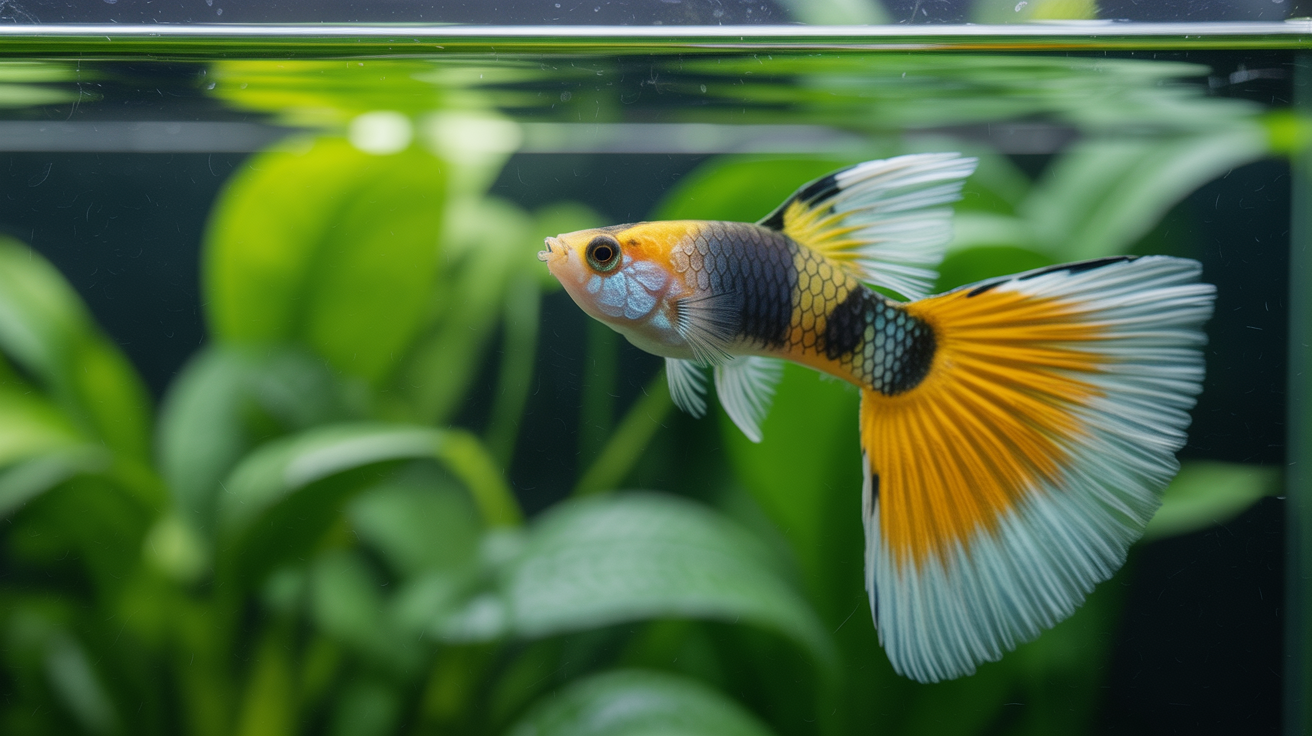
Guppies (Poecilia reticulata) are one of the most forgiving fish you can start with, and yet experienced hobbyists still keep entire dedicated tanks of them. They're colorful, active, and breed readily once conditions are right. Get a few basics locked in and they'll reward you for years.
Guppy Tank Setup
A 10-gallon tank is a comfortable minimum for a small colony of five or six fish. Guppies are surface swimmers, so surface area matters more than depth, a long, shallow tank beats a tall column tank. If you plan to breed them seriously, a 20-gallon long gives you room to separate batches of fry without constantly shuffling fish.
Water Parameters
Guppies come from warm, slightly hard freshwater in Venezuela and Trinidad, so they do best in conditions that reflect that:
| Parameter | Target Range |
|---|---|
| Temperature | 72–82°F (22–28°C) |
| pH | 6.8–7.8 |
| Hardness (GH) | 8–12 dGH |
| Ammonia | 0 ppm |
| Nitrite | 0 ppm |
| Nitrate | below 20 ppm |
They tolerate a wider range than those numbers suggest, but fish kept at the edges of their tolerance get stressed faster and sick more often. A reliable heater (25W works fine for a 10-gallon, 50W for a 20-gallon) and a basic liquid test kit are non-negotiable.
Filtration and Flow
Guppies like gentle flow. A sponge filter rated for your tank size is ideal, especially once fry are in the picture, they can't be sucked into an intake they can't see. Hang-on-back filters work fine with an intake sponge guard. Avoid powerheads or anything that creates turbulent surface agitation; guppies don't fight current well.
Change 20–25% of the water weekly. If nitrates climb past 20–30 ppm between changes, either increase change frequency or trim your stocking.
Plants and Cover
Live plants make a real difference. Java fern, hornwort, and water sprite are all easy-grower options that guppies appreciate for cover and for fry to hide in. Dense floating plants like frogbit or Amazon frogbit are especially useful when you're breeding, the surface vegetation gives newborn fry places to shelter from adult fish.
Guppy Diet
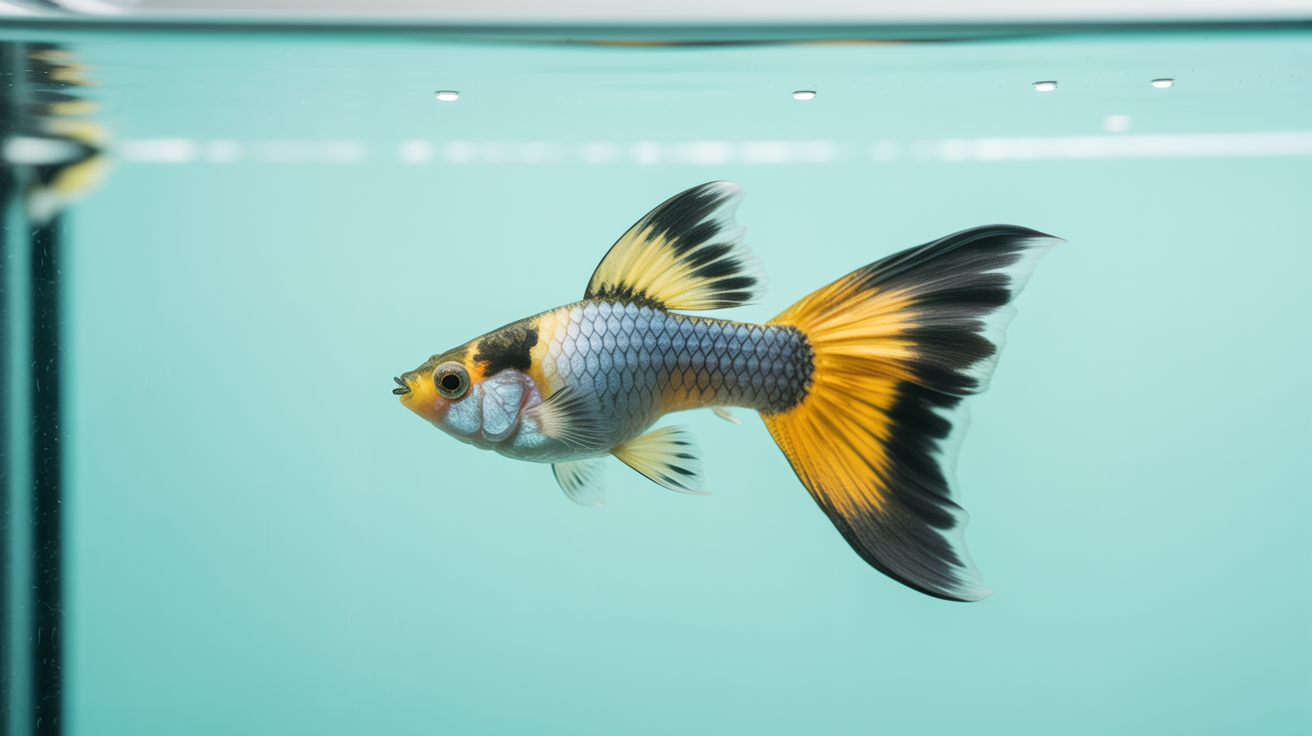
Guppies are omnivores with small mouths, so particle size matters as much as nutritional content. A high-quality micro-pellet or crushed flake as a daily base covers their needs. Rotate in live or frozen foods two or three times a week for better color and breeding condition:
- Baby brine shrimp (frozen or live), excellent for conditioning and feeding fry
- Daphnia, a natural laxative that helps prevent bloat; use frozen if live isn't available
- Micro worms, easy to culture at home, great for fry
- Bloodworms, feed sparingly, no more than once a week; high protein, but too much causes digestive issues
Feed small amounts twice a day, only what they eat in about 90 seconds. Overfeeding is the most common guppy mistake, uneaten food breaks down into ammonia fast in a small tank.
Guppy Lifespan and Health
Under good conditions, guppies live 1.5 to 3 years. Males tend to die younger than females, partly because of the metabolic cost of producing and displaying elaborate fins. Fancy strains bred for extreme fin shapes (such as halfmoon or ribbon tails) often have shorter lifespans than wild-type or feeder-stock fish.
Common Health Issues
Fin rot is the most frequent problem, usually triggered by poor water quality or a small fin nip that gets infected. Clean water clears mild cases; if the rot is progressing fast or reaching the body, consult an aquatic vet or an experienced fish store before reaching for medication.
Ich (Ichthyophthirius multifiliis) shows as white salt-grain spots across the body and fins. Raising temperature gradually to 82°F and treating with a standard ich medication works well when caught early, follow dosing instructions exactly and complete the full course.
Wasting disease (fish refuses food, looks pinched behind the head despite eating) is often internal parasites. This one's worth a vet call if you see it, since guessing on the right antiparasitic can make things worse.
The single best preventative for all of these is stable, clean water. Stressed fish get sick. Healthy water keeps fish healthy.
Breeding Guppies
Guppies are livebearers, meaning females give birth to free-swimming fry rather than laying eggs. This makes breeding accessible but also means an unplanned colony can grow quickly if you're not prepared.
Sexing and Ratios
Males are smaller (typically 0.6–1.4 inches / 1.5–3.5 cm) with colorful tails and a pointed anal fin called a gonopodium. Females are larger (1.2–2.4 inches / 3–6 cm), plainer, and have a rounded anal fin. A gravid spot, a dark triangular patch near the back of the belly, appears and darkens as a female approaches birth.
Keep a ratio of one male to two or three females. A single female with multiple males gets harassed constantly and will stop eating or hide.
The Breeding Cycle
Females store sperm after a single mating and can produce multiple batches of fry from one encounter, a batch roughly every 28–30 days. A healthy female can birth anywhere from 10 to 60 fry per drop, depending on her age, size, and condition.
The easiest way to save fry is a heavily planted tank. Dense hornwort or floating frogbit gives them enough cover to survive alongside adults. If you want higher survival rates, move the pregnant female to a separate 5-gallon tank a day or two before birth, then remove her immediately after, she will eat fry given the chance.
Fry grow quickly on baby brine shrimp and crushed micro-pellets. They're large enough to be safe from most adult fish by 6–8 weeks.
Selective Breeding
If you want to develop a strain, separate males and females by color or fin type at 3–4 weeks old (before sexual maturity) and pair deliberately. Guppy genetics are genuinely complex, a lot of traits are linked to the Y chromosome, so results from a cross won't always be predictable in the first generation.
Compatible Tankmates
Guppies do well with other peaceful community fish. Good options include:
- Neon tetras, similar size, similar water requirements; see our neon tetra care guide for stocking details
- Corydoras catfish, bottom-dwellers that stay out of guppies' space; corydoras are covered here
- Otocinclus, tiny algae eaters that ignore everything
- Amano shrimp, useful cleanup crew, though they may snack on very small fry
Avoid fin-nipping species like tiger barbs or serpae tetras, male guppies' flowing tails are too tempting. Bettas are a common pairing mistake; a betta will often shred or kill male guppies on sight. For betta-specific compatibility notes, our betta care guide covers that in detail.
Frequently Asked Questions
How often do guppies breed?
A healthy female gives birth roughly every 28–30 days once she's been mated. She stores sperm, so she doesn't need a male present for subsequent drops. If you have males and females together, assume they're breeding.
Can I keep only male guppies?
Yes, and many hobbyists prefer an all-male tank specifically for the color display. Males coexist fine without females; the aggression that occurs in mixed tanks mostly comes from competition for access to females. A 10-gallon all-male tank with six to eight fish looks spectacular.
Why do my guppy fry keep disappearing?
Adult fish eat fry. This happens fast, newborns are tiny and easy prey. Dense planting helps, but if you want real survival numbers, either move the pregnant female to a separate tank for birth or raise fry in a dedicated grow-out tank. A 5-gallon with a sponge filter and some floating plants works well.
What is the ideal guppy tank temperature?
74–78°F (23–26°C) is a sweet spot for long-term health and moderate breeding activity. Higher temperatures (80–82°F) speed up metabolism, increase breeding rate, and shorten lifespan. Cooler temperatures (70–72°F) slow everything down. Avoid fluctuations of more than 2°F in a 24-hour period.
My guppy is swimming sideways or at the surface, what's wrong?
Buoyancy problems usually point to swim bladder issues, often caused by overfeeding, constipation, or a bacterial infection. Fast the fish for 48 hours and see if it improves. If the problem persists or the fish looks otherwise unwell (clamped fins, pale color, rapid breathing), consult an aquatic vet or experienced fish store rather than guessing on medication.