Fish Profiles
Mystery Snail Care: A Beginner's Cleanup Crew
Learn how to keep mystery snails healthy: right tank size, what they eat, how to protect their shells, and what to watch for as a beginner.
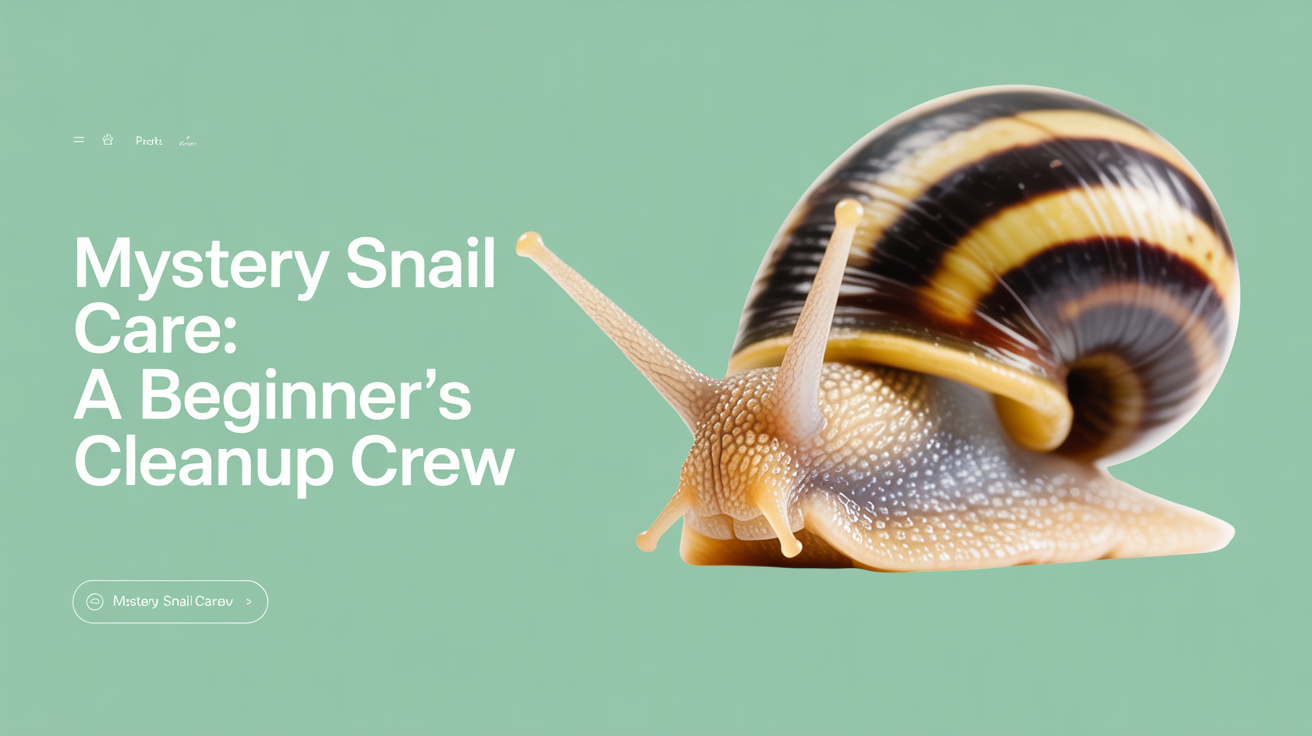
Mystery snails are one of the more satisfying additions to a beginner freshwater tank. They trundle along the glass eating algae, leftover food, and decaying plant matter without bothering your fish. They are peaceful, visible during the day, and surprisingly interactive once you spend time watching them. They are also genuinely easy to care for, as long as you get the water chemistry right and feed them enough.
This guide walks through everything a new keeper needs to know: tank size, water conditions, diet, shell health, and common problems to watch for.
Tank Size and Setup
Mystery snails are larger than most freshwater snails. A single adult can grow to roughly the size of a golf ball, though most stay somewhat smaller depending on diet and genetics. Because of that size, they need more floor space than a nano tank provides.
A 10-gallon aquarium is a reasonable minimum for one or two mystery snails alongside a small community of fish. If you want a group of three or four snails, a 20-gallon gives everyone room to roam without competing too hard for food. The general idea is to avoid crowding, which makes it easier to keep water quality stable.
Mystery snails are escape artists. They will climb the glass and, if there is a gap at the top of the lid, they will find it. A well-fitting cover is not optional. Many keepers lose a snail or two before they figure this out. The snail usually dies within a day once it dries out, so check the lid fit before you bring one home.
They do well in planted tanks and appreciate surfaces to graze on. Driftwood, broad-leaved plants, and rocks all give them something to explore. Bare-bottom tanks work too, but the snails tend to spend more time on the glass than on enrichment.
For tank mates, mystery snails get along with most calm community fish. They pair naturally with betta fish when the betta has a mild temperament, though some bettas will nip at the snail's antennae. Peaceful schooling fish like neon tetras or guppies make reliable tank mates. Avoid any fish known to pick at snails: puffers, loaches, and large cichlids will damage or eat them.
Water Conditions
Mystery snails are freshwater animals that tolerate a fairly wide range of conditions, but they do have limits.
| Parameter | Target Range |
|---|---|
| Temperature | 68 to 78 degrees F |
| pH | 7.0 to 8.0 |
| Hardness (GH) | 8 to 18 dGH |
| Ammonia | 0 ppm |
| Nitrite | 0 ppm |
| Nitrate | below 20 ppm |
The two most important factors for mystery snails specifically are pH and hardness. Their shells are made from calcium carbonate, and low pH or soft water dissolves that calcium over time. A tank that runs acidic (below 7.0) will slowly pit and erode the shell even if everything else looks fine.
If your tap water is naturally soft, you can raise hardness by adding crushed coral or cuttlebone to the filter or the tank. Cuttlebone is inexpensive and dissolves slowly, releasing calcium as the snails need it. A piece dropped directly in the tank will sink after a day or two and last for weeks.
Ammonia and nitrite should always read zero in an established, cycled tank. Mystery snails are sensitive to ammonia spikes, and an uncycled tank can stress or kill them quickly. Do not add snails to a new aquarium until the nitrogen cycle is complete.
Regular water changes of around 20 to 25 percent per week keep nitrate in check. Avoid large, sudden water changes, which can stress snails.
What Mystery Snails Eat
Mystery snails are opportunistic grazers. They eat algae off glass and decorations, soft plant matter, decomposing leaves, and uneaten fish food. In a well-stocked community tank, a snail may get most of its nutrition from what the fish leave behind.
That said, you should not rely on leftover food and algae alone. Mystery snails do best when they are deliberately fed. Here are the main food categories:
Algae wafers. Sinking wafers formulated for bottom feeders work well. Drop one in every day or two and the snail will find it.
Blanched vegetables. Zucchini, cucumber, spinach, and kale are all good options. Blanch them briefly in boiling water to soften the cell walls, let them cool, then weigh them down with a veggie clip or a small rock so they sink. Remove any uneaten pieces after 24 hours to avoid fouling the water.
Calcium-rich supplements. Cuttlebone dissolved in the tank adds calcium passively. Some keepers also offer small pieces of kale or spinach specifically because of their calcium content.
Commercial snail food. Some aquarium brands sell pellets or wafers specifically for snails and invertebrates. These work, though they are not strictly necessary if you are already feeding algae wafers and vegetables.
Mystery snails will also graze on live plants, but they strongly prefer dying or dead plant matter over healthy leaves. A tank with robust, fast-growing plants usually stays intact. If your snail is actively eating healthy leaves, it may not be getting enough food elsewhere.
Shell Health
A mystery snail's shell tells you a lot about how it is doing. A smooth, thick shell with consistent color indicates good conditions. Pitting, pinholes, white patches, or thin spots are warning signs.
Pitting and erosion usually mean the water is too soft or too acidic. Test your pH and hardness first. If pH is below 7.0 or hardness is below 6 to 7 dGH, raise both. Crushed coral in the filter raises both pH and hardness gradually without overcorrecting.
White banding sometimes appears when a snail experiences stress, a period of food scarcity, or a water quality shift. The snail was still growing but conditions were not ideal during that growth period. It is not necessarily a crisis, but it is worth checking what changed around the time the band formed.
Thin or chalky shells in young snails usually mean not enough dietary calcium. More cuttlebone, more calcium-rich vegetables, and sometimes a hardness supplement will help over a few months as the shell grows.
Shells do not repair themselves. Existing damage stays; only new growth is healthy. So if you catch a problem early and fix the root cause, the snail will grow a better shell going forward even if the old part remains pitted.
If a shell develops a crack or a chip from a fall or a tank mate's attention, the snail can sometimes seal it from the inside with new shell material, but it takes time and good nutrition. Keep water quality high and calcium levels up. Consult an experienced local fish store if the damage looks severe or the snail seems lethargic and inactive for more than a few days.
Behavior and What to Expect
Mystery snails are active during the day, which makes them more engaging than many nocturnal invertebrates. You will see them grazing the glass, climbing plants, and sometimes floating near the surface. Floating is normal and does not mean anything is wrong on its own. The snail traps a pocket of air to help it move around. If a snail is floating and unresponsive for more than 24 hours, gently test whether it is still alive: remove it from the tank and smell it. A dead snail smells strongly and immediately. If it is alive, it will eventually right itself and continue on.
Mystery snails also close their operculum, the hard plate that seals the shell opening, when they feel threatened or when conditions are poor. A snail that stays sealed for more than a day or two is worth watching. Check water parameters.
They are not aggressive and will not bother fish or other invertebrates. Other snails, like nerite snails, coexist with mystery snails without issue.
Mystery snails are prolific breeders, but only in freshwater. They lay their egg clutches above the waterline, on the tank wall or lid, which means you will see them before they hatch. If you do not want snails multiplying, remove the egg clutches before they hatch, usually within two to four weeks of being laid.
Frequently Asked Questions
How long do mystery snails live? In good conditions, mystery snails typically live one to three years. Tank conditions, diet, and genetics all play a role. Snails sold at fish stores are sometimes already several months old, so the actual time you get with one can vary.
Can mystery snails live with other snails? Yes. Mystery snails generally coexist peacefully with other freshwater snails including nerites, ramshorns, and Malaysian trumpet snails. They do not compete aggressively for territory or food.
My mystery snail is not moving. Is it dead? Not necessarily. Mystery snails sleep, sometimes for long stretches, and will seal themselves inside their shell if water quality drops or they feel stressed. The simplest check is to remove the snail, hold it gently, and see if the operculum retracts when you nudge it. A live snail will react. A dead snail will smell strongly and the body will be soft and loose inside the shell.
Do mystery snails need a heater? If your room temperature stays consistently between 68 and 76 degrees F, they can often manage without a heater. Most aquariums in temperate climates do benefit from a heater to prevent temperature swings, especially overnight. Stable temperature is more important than a specific number within the normal range.
Are mystery snails safe with planted tanks? Generally yes. Mystery snails prefer to eat algae, decaying plant matter, and soft food rather than healthy living plants. Tanks with fast-growing plants like java fern, anubias, or hornwort rarely have problems. If a snail is eating healthy leaves, it usually means it is not getting enough food from other sources.