Aquarium Plants
Java Fern, Anubias, and Other Plants That Won't Die
A practical guide to easy aquarium plants that thrive without CO2 or special substrate, covering java fern care, anubias care, and other low-maintenance opti...
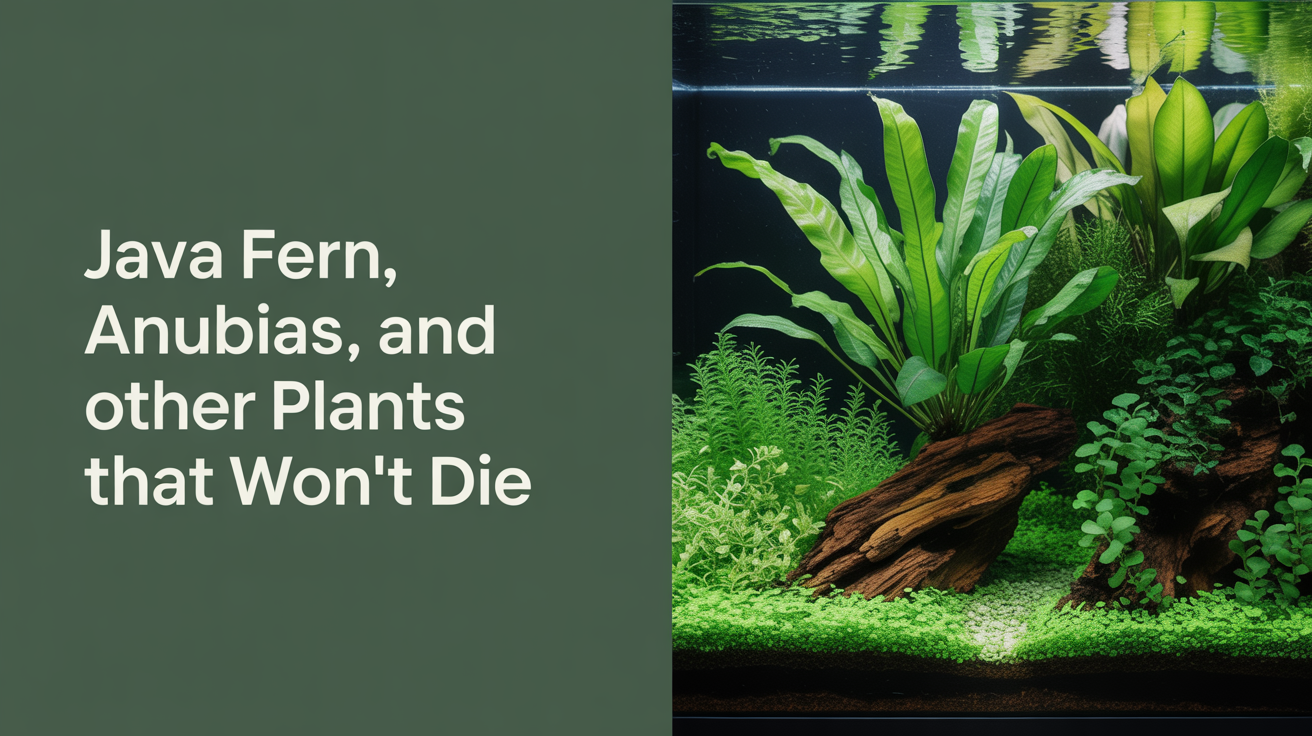
Most plant failures in beginner tanks come down to one thing: planting a species that needs more than the tank can offer. High light, injected CO2, and rich substrate are a reasonable ask for an advanced planted tank, but they are not reasonable asks for someone who just got their first ten-gallon going.
The good news is that a whole class of plants grows happily without any of that. Java fern, anubias, and a handful of related species have evolved to live attached to rocks and driftwood in shaded, slow-moving water. They are not just "tolerant" of low light and basic conditions. That is where they genuinely thrive.
This guide covers how to keep them, what trips people up, and a few other low-maintenance species worth adding once you have the basics down.
Why Rhizome and Epiphyte Plants Are Different
Before getting into specific species, it helps to understand why these plants behave the way they do.
Most aquatic plants are rooted in substrate and draw nutrients through their roots. Java fern, anubias, and mosses belong to a different category. They are epiphytes and rhizome plants, which means they anchor to hard surfaces and absorb nutrients directly through their leaves and roots from the water column.
This matters for care in one very practical way: you do not bury them. Their rhizome (the thick horizontal stem that the roots and leaves grow from) must stay above the substrate. Bury it, and it will rot within a couple of weeks. The plant looks fine at first, then melts from the base up. Plenty of beginners lose plants this way and assume they did something wrong with water chemistry when the real issue was planting depth.
To keep these plants, you tie or wedge them onto driftwood, rocks, or decor. Over a few weeks, the roots grip on their own and the tie can come off.
Java Fern Care
Java fern (Microsorum pteropus) is about as forgiving as aquatic plants get. It grows slowly and steadily across a wide range of water conditions.
What it needs
- Light: Low to moderate. It will grow under a basic LED strip that came with the tank. High light does not help and can cause the leaves to turn transparent.
- Temperature: Comfortable between 20 and 28°C (68 to 82°F), which covers most tropical community tanks.
- Water hardness and pH: Very flexible. Soft or hard, acidic or slightly alkaline, java fern handles it.
- Fertilizer: Not strictly necessary, but a liquid fertilizer dosed weekly (or root tabs placed near the rhizome, not under it) will keep growth moving.
How to attach it
Tie the rhizome to driftwood or a smooth rock with cotton thread or thin fishing line. Some people use super glue gel, which works fine and is aquarium-safe once cured. Place the plant in a lower-flow area if possible. High flow will not kill it, but the constant current slows establishment.
What normal growth looks like
Java fern is slow. Expect a new leaf every couple of weeks under good conditions. The leaves are thick and leathery, a deep green, and can reach 10 to 20 cm in a standard tank. You may notice small dark spots forming on the undersides of mature leaves. Those are spore clusters (sori), not a disease. They are how the plant reproduces naturally.
Common issue: black or transparent leaves
Transparent patches usually mean too much light. Move the plant to a shadier spot. Black, mushy areas at the rhizome almost always mean the rhizome was buried or is sitting in anaerobic substrate. Trim the damaged section back to healthy tissue and reattach.
Anubias Care
Anubias is another rhizome plant, native to the slow-moving rivers and streams of West Africa. It is darker, broader-leafed, and even slower-growing than java fern, but it is exceptionally hardy.
What it needs
- Light: Low. Anubias is one of the few plants that actually prefers shade. Under bright light, algae will colonize the leaves faster than the plant can grow new ones. Placing anubias under the shadow of floating plants or larger stem plants keeps it cleaner.
- Temperature: 22 to 28°C (72 to 82°F) suits it well.
- CO2: Not needed. Like java fern, anubias does fine without supplemental carbon dioxide.
Varieties worth knowing
Anubias barteri is the most common and comes in several sizes. The standard form grows broad, oval leaves and suits mid-ground placement. Anubias nana stays compact (leaves under 5 cm) and works well tied to small stones or the corner of a piece of driftwood. Anubias coffeefolia has slightly crinkled leaves and a reddish tinge on new growth.
Algae on anubias leaves
Because anubias grows so slowly, algae can colonize leaves before the plant outpaces it. Green spot algae (tiny hard green circles) is the most common offender. Nerite snails graze it off efficiently without damaging the plant. Reducing the photoperiod to eight or nine hours a day also helps. If leaves are heavily covered, it is fine to trim them off entirely. The plant will grow replacements.
For more on planting and anchoring these species, see how to plant and anchor aquarium plants.
Other Low-Maintenance Plants Worth Considering
Java fern and anubias get most of the attention, but they are not the only options for a tank without CO2 or special substrate.
Java moss (Taxiphyllum barbieri)
Java moss is technically a bryophyte, not a flowering plant, but it belongs in the same easy-care conversation. It requires no planting at all. Tuck a handful into a crevice on a rock or driftwood, or tie a flat mat to a mesh backing for a moss wall effect. It grows in low light, tolerates a wide temperature range, and provides excellent shelter for fry and small shrimp. It can get scraggly if it goes too long without a trim, but that is the only real maintenance it needs.
Cryptocoryne species
Crypts are rooted plants, not epiphytes, but they behave very differently from demanding species. They grow in low to moderate light, pull nutrients from the substrate, and ask for almost nothing else. The one thing to know is "crypt melt." When first moved to a new tank, crypts often drop all their leaves within a week or two. It looks alarming. Leave them alone. The roots stay alive and the plant regrows from the base within a few weeks, often coming back fuller than before.
Cryptocoryne wendtii and Cryptocoryne beckettii are both widely available and stay manageable in size. Either works well in a community tank with a basic inert substrate topped with a few root tabs.
Bucephalandra (Buce)
Buce is a relatively newer addition to the hobby and worth mentioning for anyone who wants something beyond the usual. It is a rhizome plant like anubias, attaches to hardscape, and is very slow-growing. The leaves often have an iridescent shimmer that catches light differently at different angles. It is pricier than java fern or anubias, but once established it is nearly bulletproof.
Floating plants
Frogbit, water sprite, and salvinia are worth adding to any beginner tank. They float on the surface, need no planting, and pull nitrates and phosphates directly from the water. They also cast shadow, which benefits shade-preferring plants underneath. The main drawback is that they spread quickly and need thinning out every week or two.
For a broader look at what grows well without a lot of light, see best low-light aquarium plants for beginners.
Do These Plants Need CO2?
The short answer is no. Java fern, anubias, mosses, crypts, and most floating plants do fine without injected CO2. They grow slowly enough that ambient CO2 dissolved in the water from fish respiration and surface gas exchange meets their needs.
Supplemental CO2 would make them grow faster, but faster growth is not always what you want. Java fern filling in too quickly becomes something to prune rather than enjoy. The natural slow pace of these plants suits a low-tech tank well.
If you are curious about whether a CO2 system is worth considering as your planted tank evolves, do you need CO2 for a planted tank covers that in more detail.
Frequently Asked Questions
Can I keep java fern and anubias together in the same tank?
Yes, and they complement each other well. Java fern tends to grow taller with longer, narrower leaves, while anubias stays lower and broader. They have similar care needs and can share the same piece of driftwood. Many aquarists tie both to a single large root for a layered, natural look.
My java fern leaves are turning black and falling apart. What is happening?
The most common cause is a buried rhizome. Check that the rhizome is fully above the substrate and not sitting in muck. If the rhizome is exposed but still rotting, trim back to healthy tissue and reattach. Occasionally very high light causes similar leaf damage, though the pattern tends to look more bleached than black.
How do I propagate anubias?
Anubias propagates by rhizome division. Once the plant has several leaves and a rhizome at least 5 cm long, you can cut it in half with a clean blade. Each section needs at least two or three leaves to recover well. Tie both pieces back to hardscape and they will grow on independently.
Do I need fertilizer for these plants?
Liquid fertilizers help, particularly one that covers iron and trace elements. Anubias and java fern are not heavy feeders, but they will grow more consistently with a weekly dose. If the tank has fish producing waste regularly, the plants may get enough from the water column on their own. Root tabs benefit crypts more than epiphytes, since crypts feed through their roots.
Will these plants melt if I change my water parameters?
Java fern and anubias are stable through normal parameter shifts that happen during water changes. Crypts are more sensitive and may melt if moved between tanks with meaningfully different water chemistry, but they recover. The biggest risk is a rapid temperature swing or a pH crash. Consistent, gradual changes are fine for all of these species.