Aquarium Plants
Do You Need CO2 for a Planted Tank?
CO2 injection isn't required for every planted tank. Learn when it helps, when to skip it, and how low-tech setups thrive without a pressurized system.
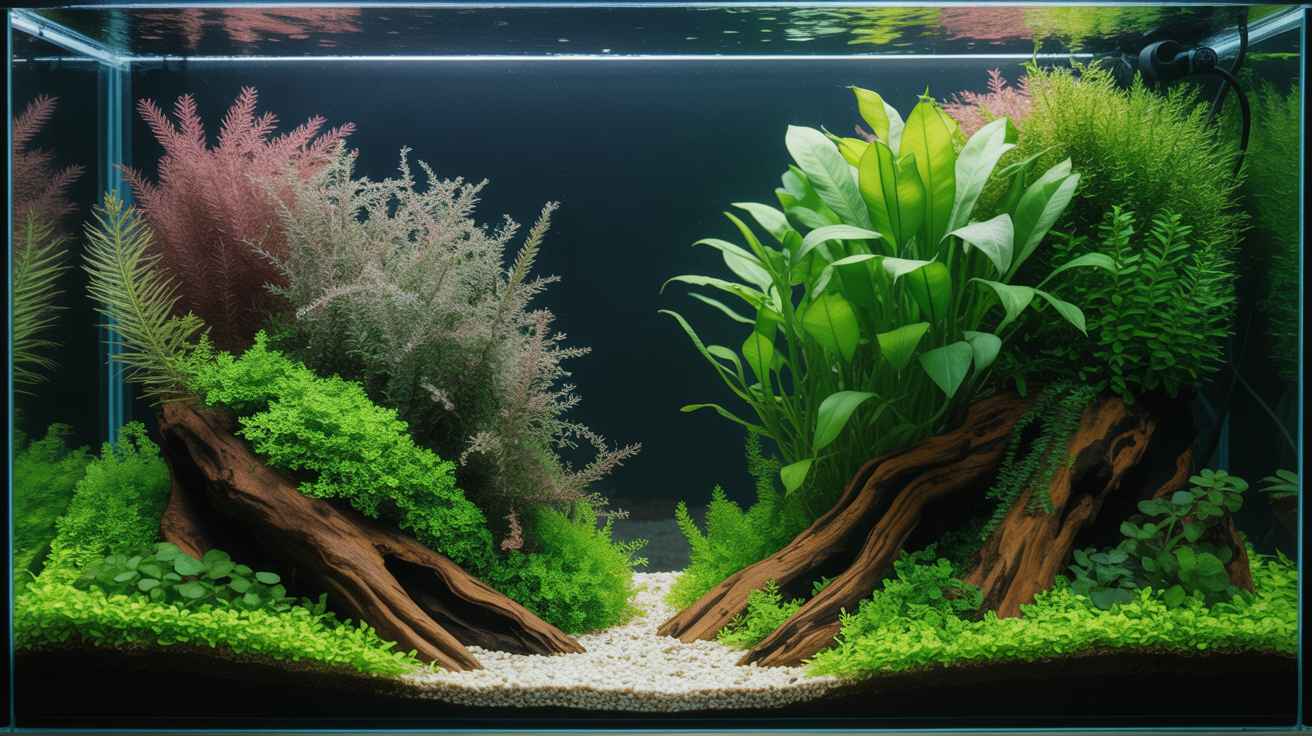
The short answer: no, you don't need CO2 injection to grow aquarium plants. Plenty of species thrive in a low-tech setup powered by nothing more than decent light, a nutrient-rich substrate, and water changes. That said, CO2 is the single most effective upgrade if you want fast, lush growth from demanding plants. The choice comes down to what you're trying to grow and how much complexity you're comfortable managing.
What CO2 Actually Does for Aquatic Plants
Plants need carbon, light, and nutrients to photosynthesize. In a sealed tank, dissolved CO2 from fish respiration and organic decomposition typically tops out around 3 to 5 ppm. That's functional but limiting. Injected CO2 pushes the water to 20 to 35 ppm, the sweet spot where most aquatic plants can photosynthesize at full speed.
Higher CO2 doesn't just make plants grow faster — it can change their color and leaf structure. Many stem plants that look washed-out under basic conditions show vivid reds and compact internodes when CO2 is dialed in. Without injection, the same plants often go leggy and pale.
One important note: CO2 drops pH. Every 1-unit drop in pH roughly doubles the CO2 concentration at a given hardness. If you're keeping fish that prefer a stable pH above 7.5 (African cichlids, for example), high CO2 injection can create real problems. Always monitor pH alongside CO2.
Low-Tech Planted Tanks: What You Can Grow Without Injection
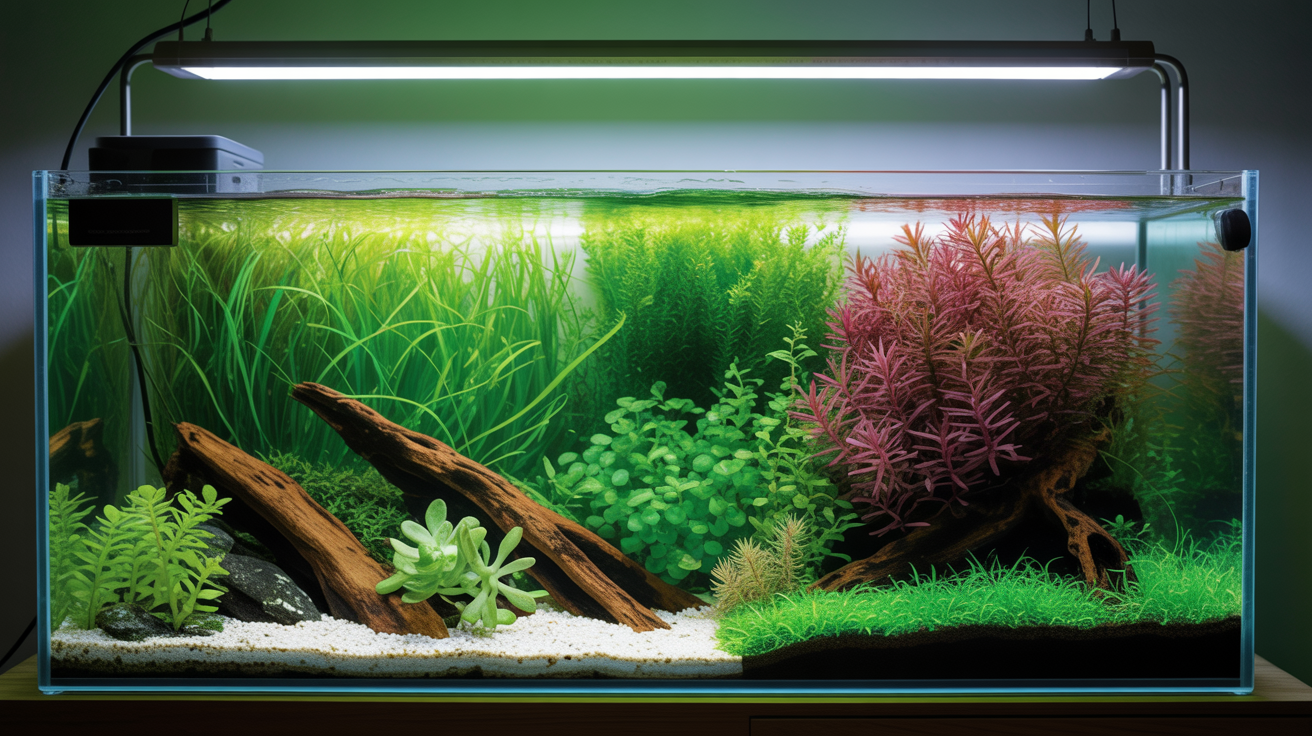
A low-tech planted tank runs without pressurized CO2, usually with moderate light (20 to 40 PAR at the substrate) and either a nutrient-rich substrate or liquid fertilizers added weekly.
These plants are reliable performers with no CO2:
| Plant | Growth Rate | Light Needed |
|---|---|---|
| Java fern (Microsorum pteropus) | Slow | Low |
| Anubias spp. | Very slow | Low to medium |
| Amazon sword (Echinodorus spp.) | Moderate | Medium |
| Cryptocoryne spp. | Slow to moderate | Low to medium |
| Java moss (Taxiphyllum barbieri) | Moderate | Low |
| Water sprite (Ceratopteris thalictroides) | Fast | Medium |
| Hornwort (Ceratophyllum demersum) | Very fast | Medium |
For a deeper look at species that do especially well in low-light, low-tech conditions, the guide on best low-light aquarium plants for beginners covers a broader list with setup tips.
The key insight: slow-growing plants need less CO2 because they consume it slowly. A java fern growing one leaf per month is never going to hit a carbon ceiling the way a fast-growing stem plant does.
CO2 Injection: Pressurized vs. DIY vs. Liquid Carbon
If you decide CO2 is right for your tank, there are three main approaches.
Pressurized CO2 Systems
This is the gold standard. A regulator sits on a CO2 cylinder (paintball-sized to 20 lb tanks depending on your setup), a solenoid turns the gas on and off on a timer, and a needle valve lets you dial in exact bubble rates. A drop checker or inline pH probe gives feedback on dissolved CO2 levels.
Costs: expect to spend roughly $120 to $250 for a decent entry-level pressurized kit, plus $20 to $40 per refill depending on cylinder size and local fill shops. The precision you get is worth it for high-demand planted tanks: Dutch-style aquascapes, competition-grade layouts, or tanks stocked with CO2-hungry plants like glossostigma or hairgrass carpets.
DIY Yeast CO2
Sugar-yeast fermentation in a bottle produces CO2 that you diffuse into the tank. It costs almost nothing to start ($5 to $15 in materials) and works fine for small tanks under 20 gallons. The downsides are real: CO2 output fluctuates as yeast activity rises and falls, you can't easily turn it off overnight (when plants aren't photosynthesizing and CO2 can stress fish), and you're refreshing the mixture every 2 to 3 weeks. Acceptable for a beginner's first planted tank; frustrating at scale.
Liquid Carbon (Glutaraldehyde-Based Products)
Liquid carbon products work as a carbon source that plants can absorb directly through their leaves. They're not CO2 in the true sense; they're a biocide with a secondary carbon benefit. They do work for some plants, particularly stem plants and mosses, though results are inconsistent compared to pressurized CO2.
One real concern: these products are toxic to certain plants (notably vals and some mosses at higher doses) and harmful to invertebrates. Dose carefully, always use the low end of the recommended amount in shrimp tanks, and watch plants for melting or bleaching after introduction. At full dosing they provide far less carbon than even a modest pressurized system.
CO2 vs. No CO2: The Practical Decision
Here's a straightforward way to think about it:
Go low-tech (no CO2) if:
- You're stocking primarily slow-growing species (anubias, crypts, java fern)
- You want a low-maintenance tank you check weekly rather than daily
- You're new to planted tanks and want one variable to manage at a time
- Your fish are sensitive to pH swings
- Your budget is under $100 for the full planted setup
Add CO2 injection if:
- You want to grow carpeting plants (dwarf hairgrass, Monte Carlo, glossostigma)
- You're targeting fast-growing stems for a dense, lush look within weeks rather than months
- You're doing a competitive or Dutch-style aquascape
- You're already comfortable with fertilizer dosing and lighting schedules
- You're willing to monitor CO2 levels and make regular adjustments
There's no shame in a low-tech tank. Some of the most aesthetically satisfying planted aquariums ever photographed run without a single bubble of injected CO2. The Walstad method (organic soil topped with gravel, minimal filtration, moderate light) produces dense, natural-looking tanks that need very little intervention after the first few months.
Getting the Rest of the Setup Right
Whether you add CO2 or not, two other factors matter more than most beginners realize: lighting duration and substrate.
Lighting
With CO2 injection, plants can handle longer photoperiods (8 to 10 hours) because they're growing fast enough to consume nutrients before algae does. Without CO2, shorter photoperiods (6 to 7 hours) tend to keep algae in check because you're not pushing more light energy into a carbon-limited system. High-intensity lighting plus no CO2 is a recipe for algae outbreaks.
The guide on aquarium lighting for plants: how much and how long explains PAR targets and timer schedules for both setups.
Planting Technique
Root-feeding plants like swords and crypts pull most of their nutrients from the substrate, so how you plant them matters. Anubias and java ferns feed primarily from the water column and should never be buried at their rhizome. Getting the planting technique right from the start prevents melt and poor establishment regardless of your CO2 approach. See how to plant and anchor aquarium plants for practical steps.
Frequently Asked Questions
Can fish produce enough CO2 for plants?
Fish respiration contributes some CO2, but not reliably enough to push dissolved levels above 3 to 5 ppm in a well-aerated tank. That's enough for slow-growing plants, not for demanding species. A heavily stocked, lightly aerated tank might test higher, but relying on fish to carbon-dose your plants isn't a strategy you can control.
Will adding CO2 hurt my fish?
At the right concentration (20 to 35 ppm), injected CO2 is safe for most freshwater fish. The risk comes from overdosing: above 40 ppm, fish show signs of CO2 poisoning (gasping at the surface, rapid gill movement). This is why running your CO2 on a solenoid timer that shuts off 1 hour before lights-out is standard practice. Monitor with a drop checker and watch fish behavior when you first dial in a new system.
Is liquid carbon worth buying?
For a low-tech tank that needs a small carbon boost, liquid carbon can make a visible difference. It's not a substitute for pressurized CO2 in a high-demand setup. The main reason to use it is convenience: no equipment, no maintenance, just a few drops per day. The main reason to avoid it is in shrimp tanks or with sensitive plants, where even low doses can cause problems.
How do I know if my plants need more CO2?
Look at growth rate first. Healthy plants with adequate CO2 grow visibly week over week. If stem plants are growing slowly with pale, small leaves and algae is taking over on the glass and hardscape, CO2 is often the limiting factor (after ruling out nutrients and light). You can also test with a CO2 drop checker: yellow means too much, blue means too little, green means you're in range.
Can I switch from a low-tech to a high-tech setup later?
Yes, and it's common. Many aquarists start low-tech to learn the basics, then add CO2 once they understand their tank's rhythms. Just know that adding CO2 can temporarily trigger an algae spike as the balance shifts. Go slow on the bubble rate: start at 1 bubble per second on a 20-gallon tank, give the plants two weeks to adjust, then increase if needed.