Aquarium Plants
How to Plant and Anchor Aquarium Plants
Learn how to plant aquarium plants correctly in gravel, sand, or on hardscape, with tips for anchoring rhizome plants and rooted stems.
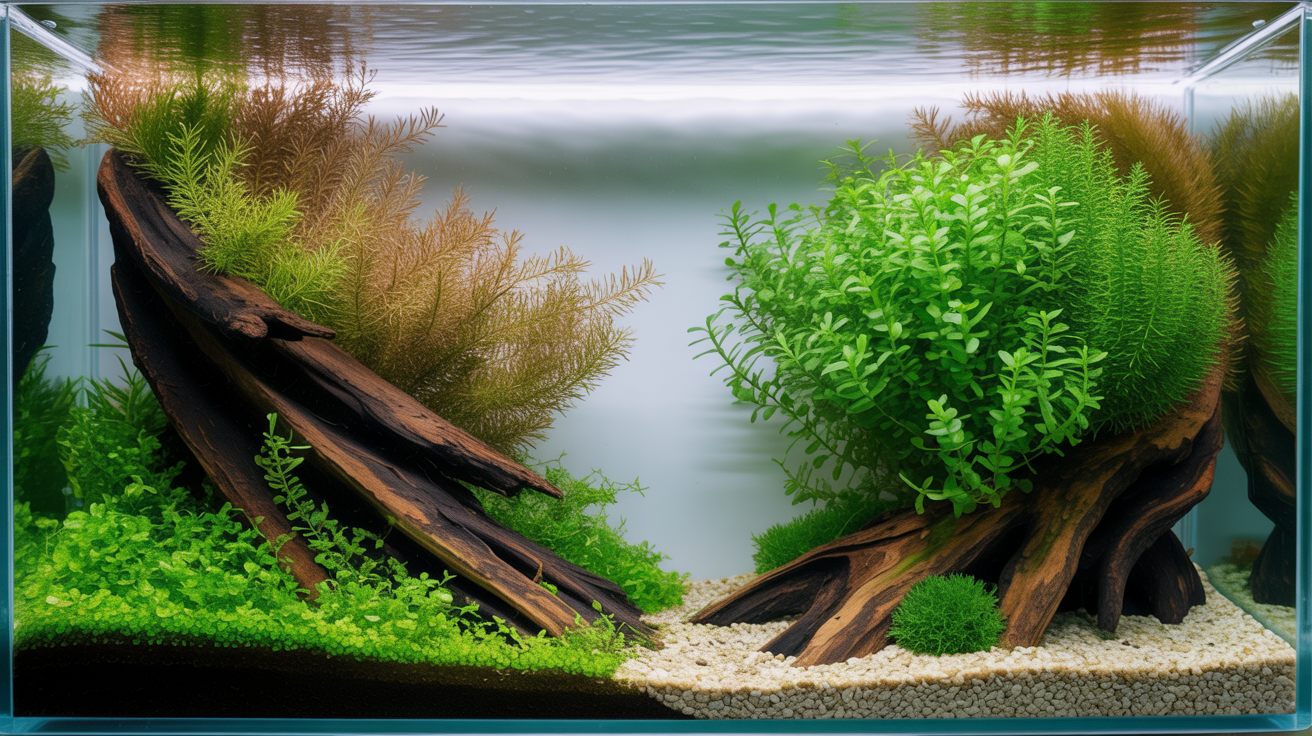
Getting live plants into your tank looks simple until the fish start digging, the current lifts a stem, or you push a rhizome too deep and it rots. The short answer: match your planting method to the plant type, set roots deep enough to hold but leave the crown exposed, and secure anything that should never touch the substrate to wood or stone.
Here is the full, practical breakdown.
Know Your Plant Type First
Every aquarium plant falls into one of a few groups, and the group dictates how it gets planted.
Rooted stem plants
Stem plants (hornwort, water wisteria, bacopa, rotala) absorb nutrients mainly through the substrate. Strip the bottom 2 inches (5 cm) of leaves, push the bare stem 1.5 to 2 inches (4 to 5 cm) into the substrate at a slight backward angle, and leave the leafy top free. Plant them in groups of 5 to 7 stems for a natural look; a lone stem looks sparse and tips over easily.
Rosette plants
Swords, crypts, and vallisneria grow from a central crown. The roots go down; the crown stays above the substrate line. If you bury the crown, the plant suffocates and rots within a week or two. A good rule: push the roots in until you feel resistance, then pull back 3 to 5 mm so the very base of the leaves sits at substrate level.
Rhizome plants
Anubias, java fern, and bolbitis are the classic examples. The rhizome is a horizontal stem from which both roots and leaves emerge. Never bury a rhizome in the substrate. It will blacken and rot. Instead, attach it to wood or stone (details in the next section). If you must use the substrate temporarily, lay the rhizome on the surface with the roots just touching the gravel and weight it down with a small pebble until it anchors.
Floating plants
Frogbit, Amazon frogbit, and salvinia just go on the surface. No planting needed, though you may want a surface agitation baffle to keep them in one area.
Bulb plants
Tiger lotus and aponogeton bulbs sit half-buried; roughly the top third of the bulb should remain above the substrate. Burying the whole bulb traps moisture around the growing tip and encourages rot.
Planting in Gravel vs. Sand vs. Aqua Soil
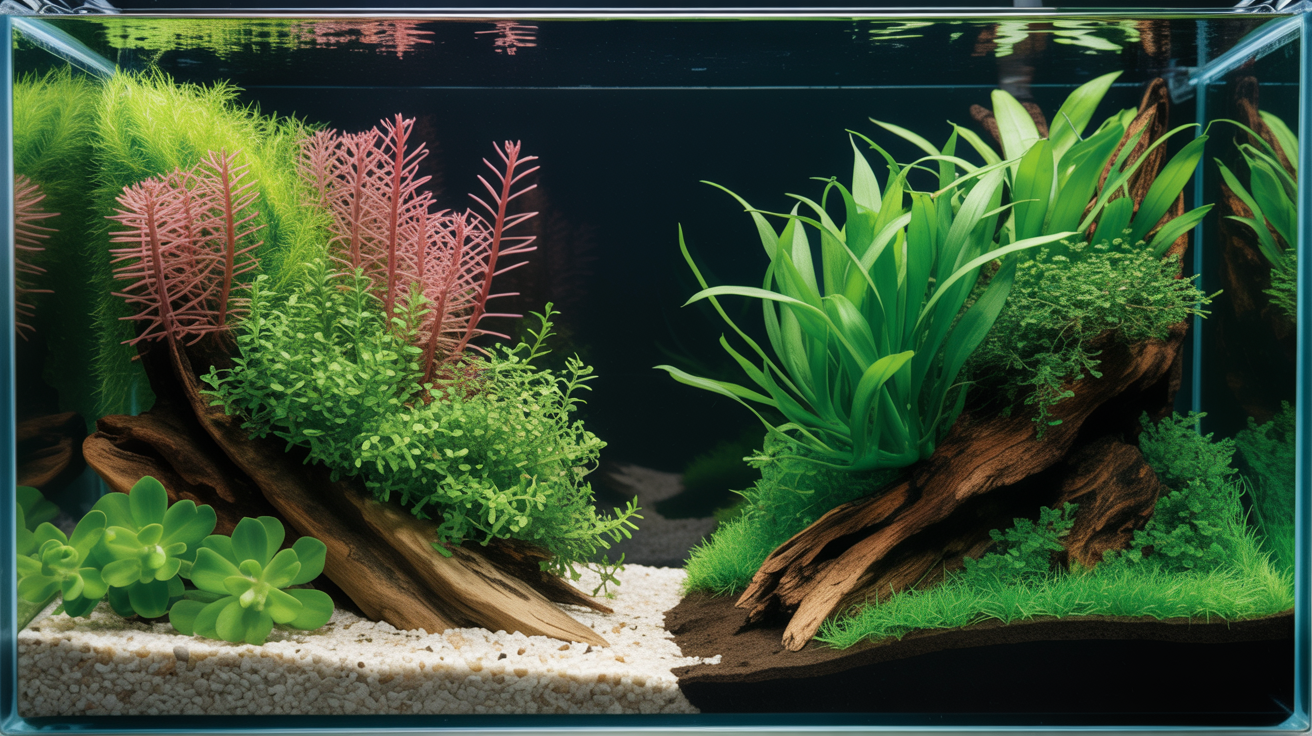
Substrate type changes your technique more than most beginners expect.
| Substrate | Recommended depth | Technique notes |
|---|---|---|
| Coarse gravel (3–5 mm) | 2–2.5 in (5–6 cm) | Use tweezers; roots splay easily. Weight new plantings with a small smooth pebble for a few days. |
| Fine gravel (1–2 mm) | 1.5–2 in (4–5 cm) | Holds well. Rinse before use to reduce cloudiness. |
| Play sand | 2 in (5 cm) | Can compact and go anaerobic below 2 in; stir monthly with a chopstick. Not ideal for heavy root feeders. |
| Capped aqua soil (e.g., active substrate under gravel) | 1–1.5 in (3–4 cm) into cap | Roots reach the nutrient layer quickly; don't need as deep a hold. |
| Bare-bottom | N/A | Use pots, mesh baskets, or attach to hardscape. |
Tweezers are the right tool for all substrate planting. Long aquascaping tweezers (10 to 12 inches / 25 to 30 cm) give you control without stirring up the whole tank. Grip the stem near its base, push it in, then gently release and slide the tweezers out without pulling the plant back up.
How to Anchor Rhizome Plants to Wood and Stone
Anubias and java fern are the workhorses of low-tech tanks, and anchoring them properly is its own skill. There are three practical methods.
Thread and tie. Cut a short length of dark cotton thread or thin fishing line. Wind it two or three times around the rhizome and the piece of wood or stone, then tie it off. Cotton thread biodegrades in 4 to 6 weeks, by then the roots have gripped the surface and the plant holds itself. Fishing line is permanent but invisible.
Aquarium-safe super glue (cyanoacrylate gel). Dry the attachment spot on the wood or stone with a paper towel. Apply a small dab of gel to the rhizome's underside, press it to the hardscape for 30 seconds, then lower the whole piece into the water. Cyanoacrylate cures underwater and is inert once set. This is the fastest method.
Mesh bags or pockets. Some aquascapers tuck rhizomes into mesh pockets on the back of hardscape. Less common, but useful for very large anubias pieces.
Java fern is especially forgiving. Even if the rhizome floats free, the plant grows fine wedged into a crevice. Its roots are adhesive and will grip rock surfaces over time without any help from you.
For a deeper look at which low-tech plants thrive without intensive care, the guide to best low-light aquarium plants for beginners covers substrate and attachment preferences for each species.
Planting Layout: Front, Middle, Back
Aquascape design follows the same logic as landscape photography: you want layers that lead the eye.
Foreground (front, 0 to 3 in / 0 to 8 cm tall): dwarf hairgrass, Monte Carlo, java moss spread over rocks. These carpeting plants need the most light because they're the farthest from the surface. If your fixture can't hit 30 to 50 PAR at the substrate, skip carpeting plants, they melt without enough light.
Midground (3 to 6 in / 8 to 15 cm tall): crypts, small anubias varieties, bolbitis. Medium light requirement, forgiving of gaps in CO2 or fertilizer.
Background (6 in / 15 cm and taller): swords, vallisneria, tall stem plants. These tolerate lower light because they grow toward the surface. They also hide equipment and filter returns.
Plant the background first, your arm won't knock over what's already planted in the front. Work from back to front and from the center outward.
Lighting and CO2: Getting the Basics Right
Plants grow only as well as their light and carbon allow. You don't need high-tech gear, but you do need enough of each.
A good beginner target is 6 to 8 hours of light per day from a full-spectrum fixture rated for planted tanks. More hours don't compensate for a dim bulb; they just encourage algae. If you're seeing stringy algae on your plants shortly after setup, reduce the photoperiod by an hour before changing anything else.
CO2 matters more in densely planted, high-light tanks. Low-tech tanks with moderate plant loads do fine on the CO2 that fish and bacteria produce naturally. If you're pushing growth in a high-light setup, the detailed breakdown in do you need CO2 for a planted tank will help you decide whether injection is worth the investment.
For light intensity by tank depth and plant type, aquarium lighting for plants: how much and how long is a useful companion once your plants are in the ground.
Aftercare in the First Two Weeks
New plants almost always go through a transition period. Leaves may yellow or melt, especially crypts, crypt melt is normal and the plant grows back from the roots, so don't pull it up. Other plants may pearl (release oxygen bubbles) within a day if they were grown emersed (above water) and are switching to submersed growth; that's a good sign.
What to watch:
- Uprooted stems: fish, especially cichlids and goldfish, will dig. Re-plant immediately. If it keeps happening, use a heavier substrate layer or pin the stems with a small plant anchor weight (sold as lead strips or silicone rings at fish stores).
- Yellowing leaves: common in the first week; usually improves without intervention. If it continues past 2 to 3 weeks, add a liquid fertilizer with nitrogen, potassium, and trace elements.
- Roots floating above substrate: this means the plant wasn't pushed deep enough. Re-seat it.
- Brown, mushy base: the crown or rhizome is buried. Carefully dig it out, trim the rotted tissue with clean scissors, and replant or reattach correctly.
Do not over-dose fertilizer in the first two weeks. Let the plants adjust, then add nutrients based on what the leaves tell you.
Frequently Asked Questions
Can I plant aquarium plants directly in gravel?
Yes, many rooted plants do well in fine-to-medium gravel. Stem plants and rosette plants like swords and vallisneria anchor fine in 2-inch-deep gravel. Coarse gravel above 5 mm is harder to work with because roots don't grip well, stems tip over. If you're using plain coarse gravel, root tabs pushed near the planting site give heavy feeders like swords the nutrients they need.
How do I keep my plants from floating up?
The most common cause is not planting deep enough. Bare stems need at least 1.5 to 2 inches (4 to 5 cm) of stem in the substrate. For problem plants, wrap the stem base in a lead-free plant weight or silicone ring, which adds just enough mass to hold it. Rhizome plants should be tied or glued to hardscape so there's no floating issue at all.
Do I need special soil or can I use regular gravel?
Regular aquarium gravel works for most plants if you supplement with root tabs for heavy feeders and a liquid fertilizer for the water column. Dedicated plant substrates (active soil, aqua soil) contain buffered nutrients and are ideal if you're planning a densely planted setup, but they're not required. Many thriving planted tanks run on plain gravel for years.
How deep should I plant aquarium plants?
It depends on the plant. Stem plants need 1.5 to 2 inches of bare stem buried. Rosette plants (swords, crypts) need the roots buried but the crown exposed. Bulbs sit roughly half-buried. Rhizome plants (anubias, java fern) should not touch the substrate at all, attach them to wood or stone.
Why are my newly planted aquarium plants melting?
Melting in the first 1 to 2 weeks is extremely common, especially for crypts. Plants sold commercially are often grown emersed (in the air above water) and must adapt to the submersed environment. The old emersed leaves die back; new, properly adapted leaves grow in their place. Keep the water quality stable (ammonia and nitrite at 0 ppm, nitrate below 20 ppm) and give the plant 3 to 4 weeks before worrying. If melting continues past a month or the roots are mushy, check that the crown is not buried.