Tank Setup
How to Pick the Right Aquarium Filter
Compare HOB, canister, and sponge filters, learn how to size a filter for your tank, and choose the right flow rate for your fish.
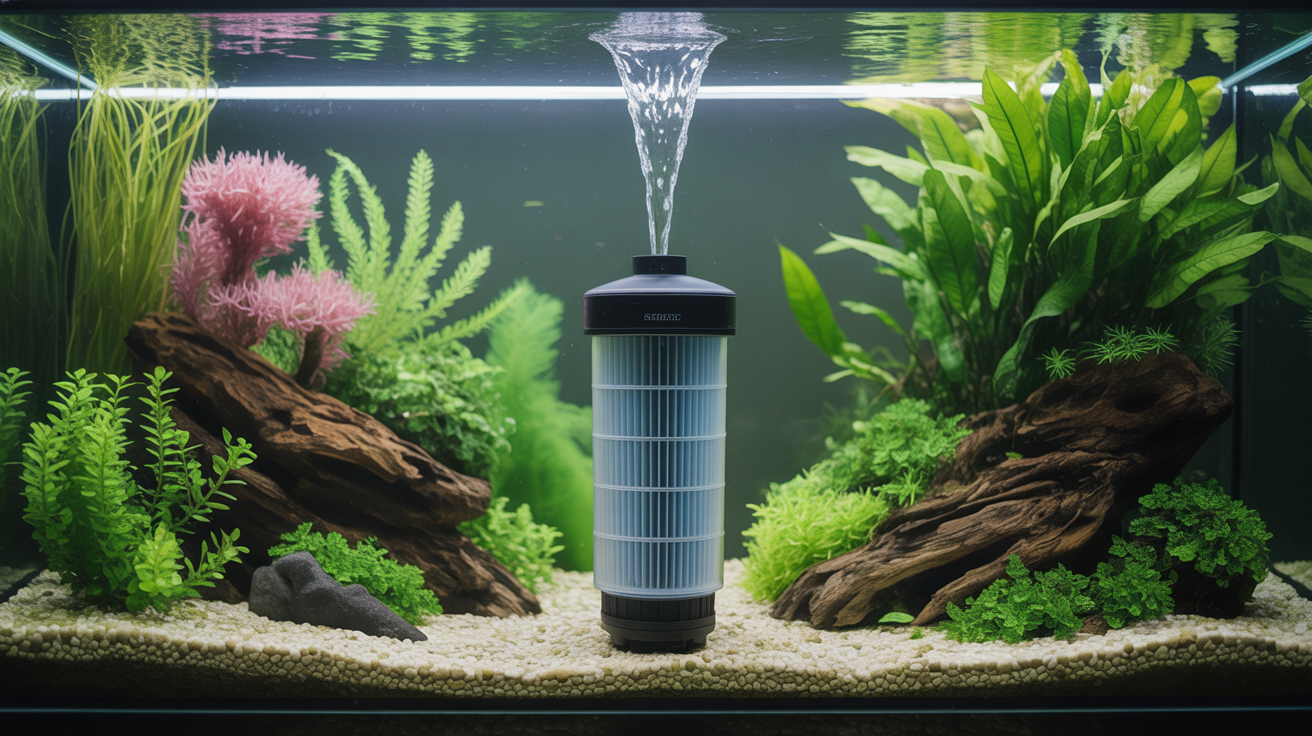
Filtration is one of those things you can spend a long time reading about without getting a clear answer. Every forum thread seems to end in a debate, and product listings are full of claims that are hard to evaluate. This guide cuts through the noise: here is how the three main filter types actually work, how to size one for your tank, and how to decide which style makes sense for where you are in the hobby.
If you are still picking a tank size, take a look at what size aquarium should a beginner get before committing to a filter. And if the nitrogen cycle is new territory, the nitrogen cycle: how to cycle a new fish tank explains why filtration and cycling go hand in hand.
The Three Main Filter Types
There is no single best aquarium filter. What works well depends on your tank size, the fish you keep, your budget, and how much maintenance you are willing to do. The three types you will encounter most often are hang-on-back (HOB), canister, and sponge filters. Each has a different design logic behind it.
Hang-On-Back Filters
HOB filters clip onto the rim of the tank and draw water up through an intake tube, push it through a filter cartridge or media basket, then return it over a spillway. They are the most common choice for tanks up to around 55 gallons, and they work well for beginners because they are straightforward to set up, simple to maintain, and inexpensive to buy.
The main drawback is that many HOBs come with proprietary cartridges that manufacturers suggest replacing monthly. That replacement schedule strips out the beneficial bacteria colonies that have built up in the media, which can destabilize the nitrogen cycle. A better approach is to find an HOB with an open media basket so you can use your own sponge, ceramic rings, or bio-balls and clean them gently in old tank water rather than discarding them.
HOBs also create surface agitation as the return water falls, which helps with gas exchange. That is a benefit for most fish, though worth noting if you keep species that prefer calmer water.
Canister Filters
Canister filters sit outside the tank, usually in the cabinet below. Water is drawn down through an inlet tube, pushed through a sealed canister packed with layers of mechanical, biological, and chemical media, then returned to the tank through an outlet. Because the media capacity is large and sits in a pressurized environment, canisters provide strong biological filtration and are well suited to heavily stocked tanks, tanks above 50 gallons, or setups with fish that produce a lot of waste.
The trade-off is cost and complexity. Canisters are more expensive upfront, and maintenance requires disconnecting hoses and cleaning the impeller. That said, they typically need a full cleaning less often than an HOB, so the per-session effort evens out over time.
For planted tanks, a canister is a popular choice because the inlet and outlet can be positioned to create a gentle circulation pattern without disturbing the surface film too much, which helps CO2 stay dissolved in the water.
Sponge Filters
A sponge filter is a foam block attached to a lift tube. An air pump drives bubbles up through the tube, which draws water through the sponge. The sponge captures particles and provides a large surface area for beneficial bacteria to colonize.
Sponge filters are inexpensive, gentle, and nearly impossible to break. They are the standard choice for fry tanks, quarantine tanks, and tanks housing fish that cannot handle strong current, such as betta fish or small nano species. Their limitation is capacity: a sponge filter in a heavily stocked 40-gallon tank will struggle to keep up, and the constant bubbling can be noisy in a quiet room.
One practical note: sponge filters need an air pump and airline tubing, which adds a small cost at setup.
How to Size a Filter for Your Tank
The most common filter sizing guidance you will see is the turnover rate rule: aim for a filter rated to turn over your tank volume roughly 4 to 10 times per hour. For a 30-gallon tank, that means a filter rated for at least 120 gallons per hour.
That number is a useful starting point, but treat the flow rate printed on the box with some skepticism. Manufacturers test filters under ideal conditions with no media loaded. Once you add media, run the filter through tubing, and account for the head pressure of lifting water, actual flow in real-world conditions is often noticeably lower than the rated figure. Choose a filter rated somewhat above the minimum rather than right at it.
A few other factors matter as much as raw flow rate:
- Stocking level. A lightly stocked tank with hardy fish can get by with less filtration. A heavily stocked cichlid tank or a community tank running near capacity needs more.
- Fish species. Goldfish and large cichlids produce significantly more ammonia than small tetras or rasboras. Match filter capacity to the bioload, not just the water volume.
- Live plants. A heavily planted tank processes some of the same waste that a filter handles. You can often run a somewhat smaller filter in a well-planted setup.
When in doubt, overfilter slightly rather than underfilter. The cost difference between a filter rated for 40 gallons versus 55 gallons is small, and the safety margin is worth it.
Flow Rate and Fish Welfare
High flow is not automatically better. Fish that evolved in slow or still water, including bettas, pearl gouramis, and many killifish, can become stressed when they are constantly fighting a current. Signs of flow stress include clamped fins, fish hiding near the glass, or fish holding an unusual posture.
The goal is enough flow to prevent dead spots where waste accumulates and to deliver oxygen throughout the tank, without creating a current that exhausts your fish. Most HOB filters let you adjust the return flow or add a spray bar to diffuse it. Canisters are especially flexible because you can position the outlet to aim flow along the back wall rather than directly at the fish.
Smaller tanks call for more care here than larger ones. In a 10-gallon tank, even a modestly rated HOB can create a strong current relative to the water volume. A sponge filter or a baffled HOB outlet often makes more sense for nano setups.
Filter Comparison at a Glance
| Filter Type | Best For | Typical Cost | Maintenance Frequency | Noise Level |
|---|---|---|---|---|
| HOB | Tanks under 55 gal, beginners | Low to moderate | Every 2 to 4 weeks | Quiet to moderate |
| Canister | Large tanks, heavy stocking, planted setups | Moderate to high | Every 1 to 3 months | Very quiet |
| Sponge | Fry tanks, quarantine, betta and nano tanks | Very low | Every 2 to 4 weeks | Moderate (air pump) |
Choosing the Right Filter for Your Setup
If you are setting up your first tank in the 10 to 40-gallon range, an HOB with an open media basket is a reasonable, low-risk starting point. It is easy to see what is happening inside, straightforward to maintain, and widely available at most fish stores.
If you are working with a larger tank, plan to keep a lot of fish, or want a planted setup with low surface disturbance, a canister is worth the higher upfront cost. The filtration capacity and flexibility it provides will outlast several tank upgrades.
If you have a betta in a 5 to 10-gallon tank, a fry grow-out setup, or a quarantine tank, a sponge filter paired with a quiet air pump is hard to beat. The low price also makes it easy to keep a seeded spare sponge running in an established tank so you always have a ready-to-go filter for emergencies.
Whatever you choose, remember that the filter is only part of the equation. A properly cycled tank with consistent maintenance will outperform a premium filter in a tank that was never cycled properly. Setting up your first freshwater aquarium step by step walks through the full process from the beginning.
Frequently Asked Questions
Do I need to run two filters on my tank?
Running a second filter is not necessary for most home aquariums, but it is useful if you keep a heavily stocked tank or want a backup during maintenance. Some fishkeepers run a sponge filter alongside a primary HOB or canister specifically so they always have a seeded sponge ready to seed a quarantine tank in a hurry.
How often should I clean my filter?
Clean mechanical media (sponges, filter floss, pads) when you notice reduced flow or when they look visibly clogged, typically every two to four weeks for an HOB. Biological media should be cleaned less frequently, and always in used tank water, not tap water. Tap water contains chlorine that kills the beneficial bacteria you are trying to preserve.
Can I use a filter rated for a smaller tank than mine?
Technically yes, but it creates a real risk of ammonia spikes, especially if your tank has any bioload. A filter that cannot process waste fast enough will leave your fish living in deteriorating water. If budget is the constraint, step up one tank size on the filter rating rather than down.
What happens if my filter stops running overnight?
The bacteria in your filter media begin to die off without oxygenated water flowing through them within several hours. If your filter stops and you notice it quickly, a restart is usually fine. If it was off for many hours, test your water over the following days and do a partial water change if ammonia rises. This is one reason some fishkeepers run a small sponge filter as a backup alongside their main filter.
Is chemical filtration necessary?
Activated carbon and similar chemical media are optional for most established, healthy tanks. They are useful for removing medications after a treatment course, clearing tannin-tinted water from driftwood, or addressing odors. Most experienced fishkeepers skip them in routine setups and focus instead on strong mechanical and biological filtration combined with regular water changes.