Tank Setup
What Size Aquarium Should a Beginner Get?
The sweet spot for a first fish tank is 20 gallons. Here's why bigger tanks are easier to manage and how to choose the right size for your space.
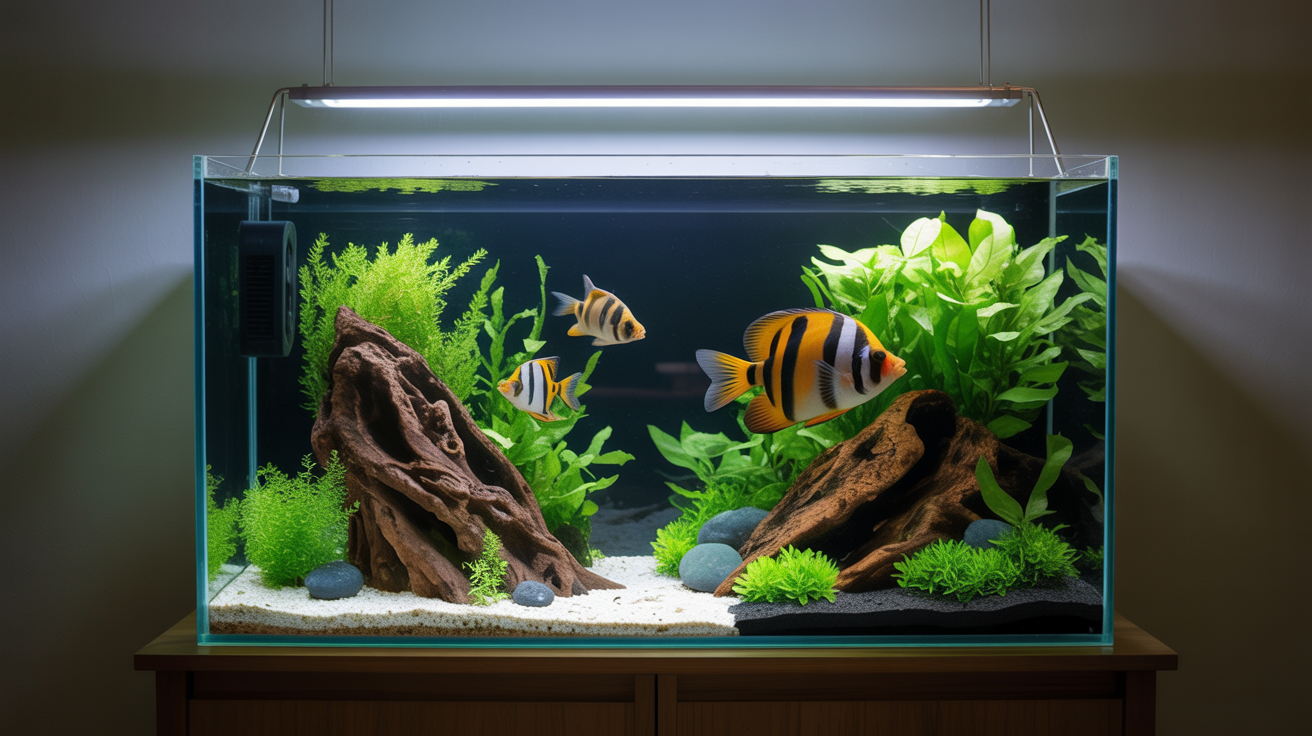
For a first tank, a 20-gallon long is the most forgiving choice you can make. It holds enough water to buffer mistakes, fits on most furniture, and opens the door to a decent variety of fish. That said, the right size depends on your space, your budget, and the fish you actually want to keep.
Why Tank Size Matters More Than You Think
Water volume is the single biggest factor in how stable your tank environment stays. A small tank doesn't just hold fewer fish, it reacts faster to every mistake. Add too much food, miss a water change, or have a heater malfunction, and the water parameters shift within hours rather than days. That speed is brutal for beginners who are still building a routine.
In a 20-gallon tank, a missed water change on day 7 instead of day 5 is forgivable. In a 5-gallon tank, it can mean a spike in ammonia that kills fish overnight. This is the core of the "bigger is easier" argument, and it's not wrong.
Bigger tanks also give fish more swimming room, more stable temperatures, and more dilution of waste. If you're already interested in understanding how waste becomes toxic and then harmless, the nitrogen cycle guide explains the chemistry.
The 10-Gallon vs 20-Gallon Question
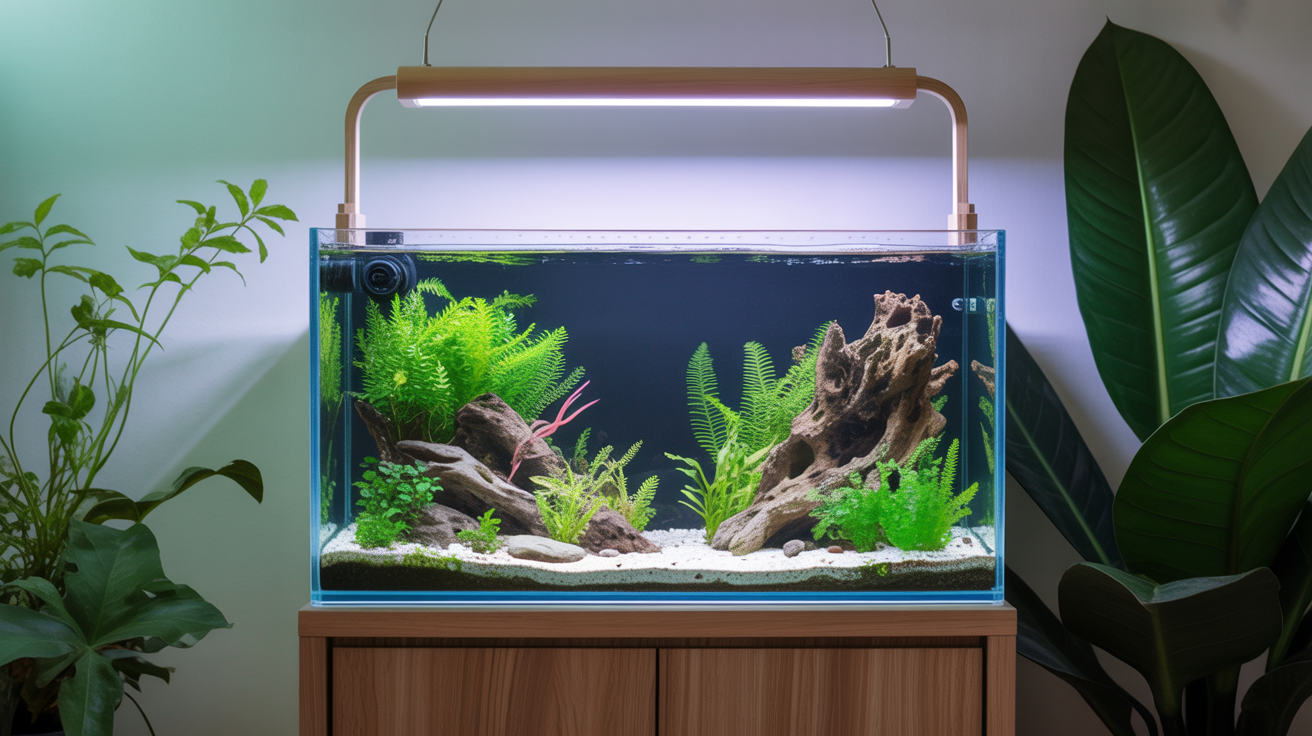
A 10-gallon is often sold as a starter kit, and plenty of fish stores push it on beginners. It's inexpensive, compact, and feels manageable. For some people and some situations, it works fine. For most beginners, it's actually the harder path.
Where a 10-Gallon Works
- You want a species-specific setup: a single betta, a small shrimp colony, or a nano planted tank with microrasboras
- Your living space genuinely won't fit anything larger
- You're comfortable doing water changes every 4 to 5 days instead of every week
Where a 20-Gallon Wins
- You want a community tank with a mix of species (this is what most beginners picture)
- You're new to water chemistry and want more time to catch problems
- You want to keep fish with a minimum tank size above 10 gallons (which includes most tetras, corydoras, and livebearers)
A 20-gallon long (30" x 12" x 12") gives meaningfully more floor space than a 20-gallon tall (24" x 12" x 16"), and floor space matters far more for most fish. Bottom-dwelling fish like cories need horizontal room. The extra footprint also makes aquascaping easier.
Here's a quick comparison:
| Tank Size | Water Volume | Weekly Changes | Fish Options | Margin for Error |
|---|---|---|---|---|
| 5 gallon | ~4.5 gal actual | Every 2-3 days | 1 betta or shrimp | Very low |
| 10 gallon | ~9 gal actual | Every 4-5 days | Limited; 6-8 small nano fish | Low |
| 20 gallon long | ~18 gal actual | Every 7 days | Most community fish | Moderate |
| 29 gallon | ~26 gal actual | Every 7-10 days | Community + some medium fish | Good |
| 40 gallon breeder | ~35 gal actual | Every 7-10 days | Most freshwater species | High |
Note: "actual" volume accounts for substrate, decor, and equipment displacing water.
What Fish Do You Actually Want?
This question should drive the size decision, not the other way around. Many beginners fall in love with a fish at the store, buy it for a tank that's too small, and end up with health problems within weeks.
Some common examples:
Goldfish (fancy varieties) need a minimum of 20 gallons for the first fish and 10 more per additional fish. A common misconception is that goldfish can live in bowls, they can survive, but they won't thrive, and they produce far more waste than tropical fish of the same size.
Betta fish need a minimum of 5 gallons, ideally 10. A 5-gallon with a heater, filter, and gentle flow is fine for a single betta.
Neon tetras do best in schools of 8 or more, which means at least 15 to 20 gallons to give them enough room to school properly.
Corydoras catfish are social and need groups of 6. A 20-gallon long gives them enough floor space.
Angelfish need at least 30 gallons tall because of their body height. They're a beautiful beginner fish in terms of hardiness, but the tank size requirement catches people off guard.
Before buying any fish, look up the specific species requirements. If you're planning a community tank from scratch, the process of setting up your first freshwater aquarium step by step walks through stocking order and compatibility.
Budget and Space Realities
A 20-gallon starter kit (tank, hood, filter, heater) runs roughly $80 to $150 depending on the brand and where you buy. A 10-gallon kit can be found for $30 to $60. The cheapest option isn't always the best value, a 10-gallon that you outgrow in six months costs more over time than starting with a 20-gallon.
The heaviest consideration is often furniture. A 20-gallon filled with water, substrate, and decor weighs around 225 pounds (about 100 kg). A dedicated aquarium stand is worth the investment, it's built flat and strong, unlike most bookshelves, which can bow under sustained weight.
For apartments or smaller spaces, a 20-gallon long fits on a 36-inch stand, which is a pretty standard piece of furniture. If you truly only have room for a 10-gallon footprint, a 10-gallon is better than no tank.
What About Starting Even Bigger?
A 40-gallon breeder or 55-gallon is sometimes recommended as the "just go bigger" advice. This is reasonable if you have the budget and space, but it comes with its own trade-offs for beginners:
- Cycling a larger tank takes the same amount of time but requires more starter bacteria media (or more patience)
- Water changes become more physically involved: a 25% change on a 55-gallon means moving about 14 gallons of water
- Cost of fish to reasonably stock a 55-gallon is higher
- If something goes wrong with a large tank, you have more fish at risk
A 40-gallon breeder is a great second tank. As a first tank, a 20-gallon gives you the margin for error without the logistical overhead.
Cycling: The Non-Negotiable Step
Whatever size you choose, the tank needs to cycle before fish go in. Cycling builds up colonies of beneficial bacteria that convert fish waste (ammonia) into progressively less toxic compounds. Skipping this step is the single most common cause of beginner fish death.
A 20-gallon cycles in roughly the same time as a 10-gallon, typically 4 to 6 weeks without shortcuts, sometimes 2 to 3 weeks with seeded filter media from an established tank. If you want to understand your options before you start, the fishless cycling vs. fish-in cycling guide lays out both approaches honestly, including which one is easier on the fish.
Frequently Asked Questions
Is a 10-gallon tank too small for a beginner?
Not necessarily, but it's less forgiving than a 20-gallon. A 10-gallon works well for a single betta or a small shrimp setup. For a community tank with multiple species, most beginners find it frustrating because the fish options are limited and water quality degrades faster between maintenance sessions.
Can a beginner maintain a 55-gallon tank?
Yes, though the physical work is heavier. The water chemistry is more stable in a larger tank, which makes it easier in terms of keeping parameters consistent. The main challenges are the cost of equipment and livestock, and moving larger volumes of water during changes. A 55-gallon as a first tank is ambitious but doable if you go in with the right expectations.
How much does a 20-gallon setup actually cost to get started?
A 20-gallon kit with a filter and heater runs $80 to $150. Add $20 to $40 for substrate, $30 to $60 for decor and a few plants, $20 to $30 for a test kit, and $20 to $50 for the initial fish stock. Total startup cost is typically $170 to $280, not counting a stand if you need one.
Do I need a heater for a 20-gallon beginner tank?
Most freshwater fish kept by beginners are tropical fish, meaning they need water temperatures between 74°F and 80°F (23°C to 27°C). If your room stays consistently warm, a heater might not be strictly necessary, but in most homes and for most species, a 50W or 100W adjustable heater is a practical requirement.
What's the easiest fish to keep in a 20-gallon starter tank?
Zebra danios, white cloud mountain minnows, platies, and ember tetras are all hardy, active, and tolerant of the minor parameter swings that happen while a new fishkeeper is finding their rhythm. They're also widely available and inexpensive, so if something goes wrong early in the learning curve, the loss is less discouraging than starting with expensive or sensitive species.