Aquarium Plants
How to Dose Fertilizers in a Planted Aquarium
Learn how to fertilize aquarium plants using root tabs, liquid fertilizers, and EI dosing. Covers macro and micro nutrients, schedules, and deficiency signs.
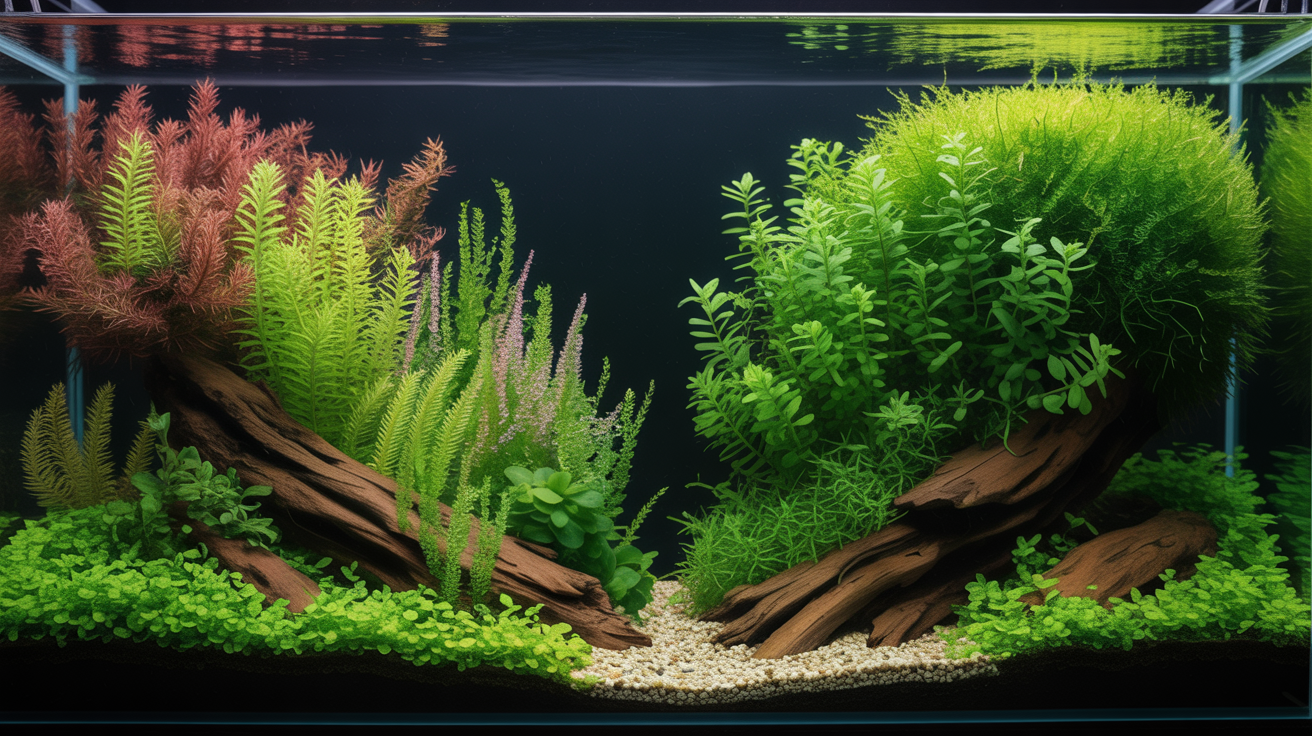
A planted tank without fertilizer is a bit like a garden with terrible soil. The plants may hang on for a while, especially the hardy, low-demand species, but eventually growth slows, leaves yellow, and new growth comes in pale and small. Fertilizer closes that gap. The tricky part is figuring out which type to use, how much to add, and how often.
This guide walks through the core concepts: what nutrients plants actually need, how root tabs and liquid fertilizers compare, and how the Estimative Index method takes the guesswork out of dosing schedules.
What Nutrients Aquarium Plants Need
Plants require two broad groups of nutrients: macronutrients and micronutrients. Understanding the difference helps you diagnose problems and choose the right fertilizer.
Macronutrients
Macronutrients are the nutrients plants use in the largest quantities. The three primary ones are nitrogen (N), phosphorus (P), and potassium (K). You will often see these listed together as NPK on fertilizer labels.
- Nitrogen fuels leafy, vegetative growth. Plants get some nitrogen from fish waste through the nitrogen cycle, but a heavily planted tank can run low.
- Phosphorus supports root development and cell division. Many hobbyists were taught to avoid phosphorus because it feeds algae, but plants need it too. Keeping phosphorus at a reasonable level while also meeting nitrogen and potassium needs is the balancing act.
- Potassium is involved in water regulation within plant cells and enzyme function. It is often the first nutrient to run out in a planted tank, particularly in tanks with soft or very pure water.
Secondary macronutrients include calcium, magnesium, and sulfur. Calcium and magnesium matter most in soft-water tanks. A lack of magnesium often causes older leaves to yellow between the veins while the veins themselves stay green.
Micronutrients
Micronutrients (also called trace elements) are needed in much smaller amounts, but deficiencies still cause visible problems. The key ones for aquarium plants include iron, manganese, boron, zinc, copper, and molybdenum.
Iron deficiency is the most common. It shows up as yellowing of new growth (the youngest leaves go pale first) while older leaves hold their color. This is because iron is not mobile within the plant: it cannot move from old tissue to new. Without a steady iron supply in the water column or substrate, new leaves suffer.
Root Tabs vs Liquid Fertilizers
Both deliver nutrients to plants, but they do it differently. Choosing between them, or combining them, depends on what types of plants you are keeping and how your tank is set up.
Root Tabs
Root tabs are compressed fertilizer pellets that you push into the substrate near plant roots. They release nutrients slowly over weeks or months, feeding plants directly through their root systems.
Root tabs work best for heavy root feeders: swords (Echinodorus species), crypts, vallisneria, and similar plants that develop large root masses. If your substrate is nutrient-poor gravel or sand, root tabs make a meaningful difference for these species.
The main limitation is that root tabs do nothing for plants that feed primarily from the water column, such as stem plants, floating plants, and most mosses and ferns.
Liquid Fertilizers
Liquid fertilizers dissolve in the water column and are available to all plants through their leaves and stems, as well as through roots in the substrate water. They work faster than root tabs and give you more precise control over dosing.
Most liquid fertilizers come in two varieties: all-in-one formulas that combine macro and micro nutrients in one bottle, and separate macro and micro formulas. All-in-one bottles are convenient and work well for low-tech tanks. Separate bottles let you adjust the ratio, which matters in higher-light, faster-growing setups where nitrogen gets used up quickly but iron stays adequate.
Combining Both
Many planted tank hobbyists use root tabs for their substrate plants and dose liquid fertilizer for water-column feeders. This combination covers the full range of plant types and ensures nothing goes hungry.
For a simple, low-maintenance planted tank with mostly low-light species, root tabs every few months plus a modest dose of all-in-one liquid fertilizer once or twice a week is often enough. You can read more about which plants thrive in that kind of setup in our guide to best low-light aquarium plants for beginners.
The Estimative Index (EI) Dosing Method
The Estimative Index, developed by Tom Barr, is a popular dosing approach for planted tanks. The idea is straightforward: dose nutrients generously throughout the week so that plants always have enough, then do a large water change at the end of the week to reset accumulated levels. Repeat weekly.
EI works on the assumption that it is better to slightly overshoot nutrient levels than to undershoot them. Deficiencies are harder to diagnose and fix than occasional excesses that get cleared by the water change.
A Basic EI Schedule
A typical EI routine for a moderate to high-light tank splits dosing across three days, alternating between macronutrients and micronutrients:
| Day | What to Dose |
|---|---|
| Monday, Wednesday, Friday | Macronutrients (nitrogen, phosphorus, potassium) |
| Tuesday, Thursday, Saturday | Micronutrients and iron |
| Sunday | 50% water change, then start again |
The exact amounts depend on your tank size and plant load. EI is deliberately forgiving: if you slightly overdose macros one day, the water change clears it. This makes it easier to maintain than methods that try to hit exact target concentrations with minimal margin.
Is EI Right for Your Tank?
EI was designed for high-light, CO2-injected tanks with fast plant growth. In a low-tech, low-light tank, the same dosing rates would be excessive because slower plants cannot use nutrients that quickly. For low-tech setups, a reduced EI approach (sometimes called low-tech EI or PPS-Pro variants) uses smaller doses without the aggressive weekly reset.
If you are wondering whether CO2 injection is worth adding to your planted tank, which also affects how quickly plants consume fertilizer, our guide on whether you need CO2 for a planted tank covers the trade-offs.
Reading Your Plants for Deficiency Signs
Fertilizer dosing is not set-and-forget. Plants communicate what they need through their leaves, and learning to read those signals saves a lot of guesswork.
Yellowing of older leaves first often points to a mobile nutrient deficiency, such as nitrogen or magnesium. Mobile nutrients can move from old tissue to new, so old leaves show the shortage first.
Yellowing of new growth while older leaves stay green suggests an iron deficiency or another immobile micronutrient. New tissue cannot pull nutrients from old tissue, so it is the first to show the gap.
Holes in leaves or leaf edges that look ragged can indicate potassium deficiency. Leaves may also develop dark spots or a translucent appearance before deteriorating.
Stunted, small new leaves sometimes point to calcium deficiency, particularly in soft-water tanks.
Keep in mind that these symptoms can overlap with other issues: poor lighting, inadequate CO2, or physical damage from fish can look similar. Before adding more fertilizer, check your water parameters and lighting first. Proper planting and anchoring also affect how well roots access substrate nutrients, which is covered in our guide on how to plant and anchor aquarium plants.
Starting Simply and Adjusting Over Time
If you are new to planted tanks, the temptation is to buy five different fertilizer bottles and start a complex dosing schedule right away. A simpler approach tends to work better: start with an all-in-one liquid fertilizer dosed at half the label recommendation, add root tabs under any heavy root feeders, and observe your plants over a few weeks.
If growth is slow and leaves are pale, increase the dose. If you are seeing algae growth that correlates with fertilizer additions, dial back and check whether your light duration or intensity is the main driver. Algae problems in planted tanks are more often a light issue or a CO2 imbalance than a fertilizer excess.
The goal is a tank where plants are visibly growing, putting out healthy new leaves, and staying a good green without the tips going brown or old leaves melting away. Once you see that, you have found a dosing routine that works for your setup.
Frequently Asked Questions
Can I over-fertilize a planted aquarium?
Yes, though it takes more than most hobbyists expect. Very high nitrate or phosphate levels can stress fish. More commonly, excessive dosing without matching plant uptake or adequate water changes contributes to algae. Start at lower doses and increase based on plant response rather than front-loading a heavy schedule.
Do I need fertilizer if I already have fish in the tank?
Fish waste provides some nitrogen, but it rarely provides enough of all the nutrients a planted tank needs. Phosphorus and potassium in particular are often low in fish-only setups because they are not produced by fish waste in significant quantities. Most planted tanks benefit from at least a basic fertilizer routine even when stocked with fish.
How often should I replace root tabs?
Most root tab products are designed to last two to three months. The exact timing depends on your substrate, plant density, and how much root activity is in that area. A practical approach is to replace tabs when you notice the root-feeding plants starting to show deficiency signs, or to stick to a quarterly schedule as a preventive measure.
Can I use terrestrial plant fertilizer for aquarium plants?
It is generally not a good idea. Many garden and houseplant fertilizers contain additives, such as urea nitrogen or chelating agents, that are not tested for aquatic use and may be harmful to fish. Aquarium-specific fertilizers are formulated to be safe for fish and invertebrates at recommended doses.
Do floating plants need fertilizer?
Floating plants like duckweed, frogbit, and water lettuce are heavy feeders that pull nutrients directly from the water column. They often consume nitrogen and iron quickly, which can actually help control algae by competing for the same resources. If your floating plants are yellowing, a dose of liquid fertilizer, particularly one with iron, usually brings them back quickly.