Aquarium Plants
Carpeting Plants: How to Grow a Lush Foreground
Learn how to grow aquarium carpet plants like dwarf hairgrass, monte carlo, and baby tears. Covers CO2 needs, the dry start method, planting technique, and w...
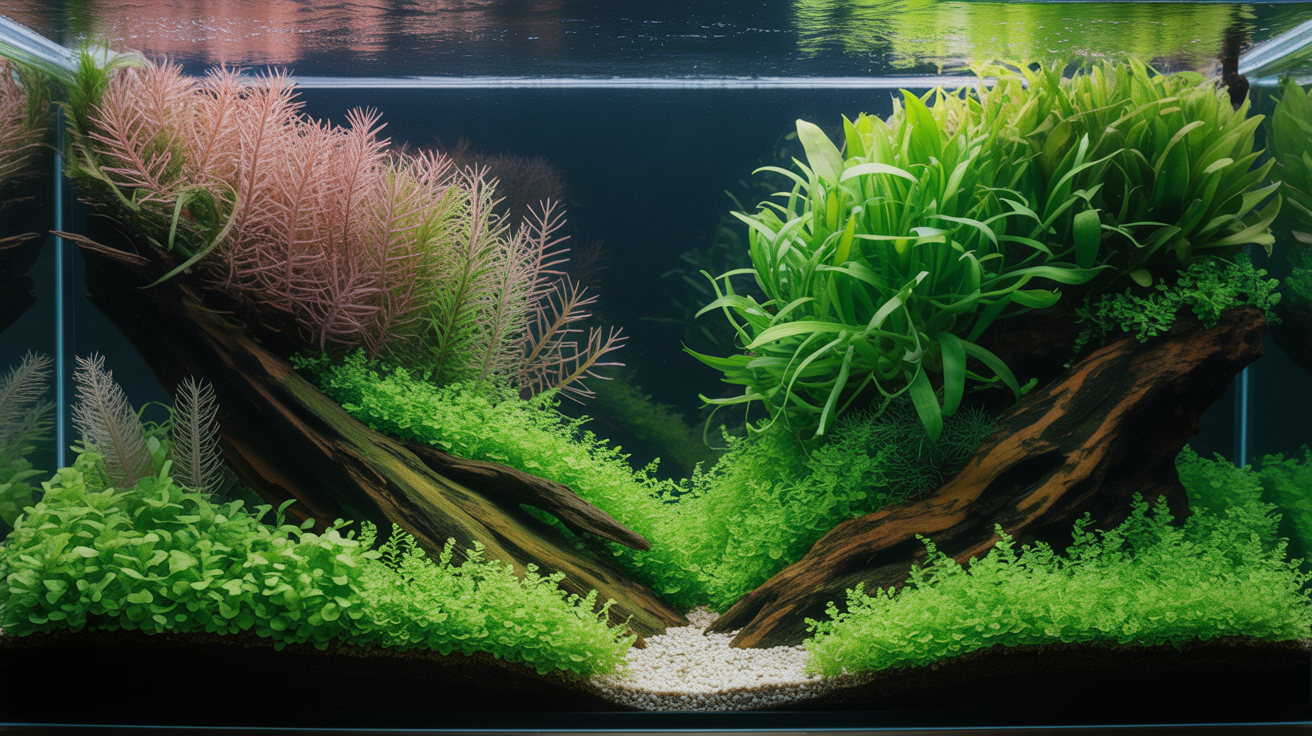
A carpet of living green spreading across your tank floor is one of the most satisfying things you can grow in a freshwater aquarium. It also has a reputation for being difficult, and in some cases that reputation is fair. But many hobbyists fail with carpet plants for a handful of fixable reasons, not because the plants are inherently impossible to keep.
This guide walks through the most popular foreground plants, what each one actually needs, how to plant them so they spread rather than melt, and what to do when a carpet stalls.
Popular Carpet Plants and What Sets Them Apart
Not every carpeting plant has the same requirements, and choosing one that fits your setup makes a real difference.
Dwarf Hairgrass (Eleocharis parvula or Eleocharis acicularis)
Dwarf hairgrass looks like a tiny meadow of bright green blades. It spreads through runners that creep across the substrate and send up new shoots. E. parvula stays shorter (around 3 to 4 cm) and is the variety most commonly sold as a true "dwarf." E. acicularis can push taller if conditions allow.
Hairgrass tolerates lower light better than most carpet plants, though it will spread slowly without decent illumination. It can grow without injected CO2 in a well-maintained, low-tech tank, but expect the spread to take months rather than weeks. With CO2 and moderate-to-high light, it fills in much faster.
Monte Carlo (Micranthemum tweediei)
Monte carlo has round, bright green leaves on creeping stems that hug the substrate. It stays low and dense, which makes it one of the cleaner-looking options for the foreground. It also tolerates somewhat lower light than dwarf baby tears, which is part of why it has become the go-to carpet recommendation for hobbyists who want something carpet-like without building a full pressurized CO2 system.
That said, "tolerates lower light" does not mean it thrives under dim conditions. It grows slowly and can look sparse without good light. Liquid carbon supplements (glutaraldehyde-based products) help somewhat, but they are not a direct replacement for injected CO2.
Dwarf Baby Tears (Hemianthus callitrichoides, often labeled HC Cuba)
HC Cuba produces the tiniest leaves of any common carpet plant, which gives a finished tank a delicate, almost mossy look. It is also the most demanding of the three. It wants high light, stable CO2, and a nutrient-rich substrate. In a low-tech setup it rarely carpets; it tends to yellow, go patchy, and eventually melt.
If you are new to planted tanks or are not running pressurized CO2, HC Cuba is not the best starting point. Monte carlo or hairgrass will teach you the carpeting process with less frustration.
Other Foreground Options Worth Knowing
A few plants occupy the carpeting niche without the same maintenance demands. Marsilea hirsuta looks like small four-leaf clovers and grows in low-tech tanks with decent light. Sagittaria subulata is taller than a true carpet plant but fills foreground space easily and is genuinely beginner-friendly. Neither gives you the same fine-textured lawn look, but both are reliable.
Light and CO2: The Honest Version
Carpet plants come up constantly when people ask do you need CO2 for a planted tank. The short answer for most carpeting species is: CO2 is not always required, but it changes the timeline and the outcome dramatically.
High light drives photosynthesis faster than the plant can access dissolved CO2 from the air alone. When that happens, growth stalls and algae fills the gap. This is why "high light, no CO2" is a particularly bad combination. If you are not injecting CO2, keep light moderate, so the plant's demand stays in range of natural CO2 levels.
A general framework for carpeting plants:
| Plant | Minimum Light | CO2 Required? | Spread Rate (approx.) |
|---|---|---|---|
| Dwarf hairgrass | Moderate | No, but helps | Slow to moderate |
| Monte carlo | Moderate to high | Recommended | Moderate |
| HC Cuba | High | Yes | Moderate with CO2 |
| Marsilea hirsuta | Low to moderate | No | Slow |
"Moderate" and "high" are relative terms that depend on your tank depth and fixture placement. As a rough guide, moderate means a quality full-spectrum LED at the wattage or PAR rating recommended for planted tanks; high means you are specifically targeting PAR in the range suited to demanding plants. Fixture manufacturers often publish PAR maps for their lights.
Planting Technique and the Dry Start Method
How you get carpet plants into the substrate matters more than most beginners expect.
Standard Wet Planting
Carpet plants are usually sold as tissue culture cups (gel-packed, algae-free, and often the cleanest option) or as small pots. Either way, rinse the gel or rock wool away before planting.
Divide the plant into small portions, roughly 1 to 2 cm wide, and use tweezers to push each piece into the substrate about 1 cm deep. Space sections 2 to 3 cm apart. They look sparse at first, and that is normal. The goal is to establish root anchors so runners can connect the gaps.
A fine-grained substrate helps. Coarse gravel gives runners nowhere to grip. If your substrate is very coarse, a thin layer of something finer on top, or an aquasoil capping approach, makes carpeting easier. For more on getting plants anchored correctly, how to plant and anchor aquarium plants covers the mechanics in detail.
The Dry Start Method
The dry start method (DSM) is an approach where you plant into moist substrate before filling the tank. The idea is that emersed growth, meaning the plant growing in air rather than submerged, is faster and produces stronger roots. Once the carpet has filled in visually, you flood the tank and transition to submerged growth.
To try it:
- Fill the tank with substrate and plant as described above.
- Mist the surface with dechlorinated water to keep humidity high.
- Cover the tank with plastic wrap or a glass lid to trap moisture.
- Provide light on the same schedule you would use for a running tank.
- Mist daily or every other day. The substrate should stay moist but not waterlogged.
- After 4 to 8 weeks (varies by species and conditions), the carpet should be visually filled in.
- Flood the tank slowly. Some melt is normal during the transition; new submerged growth will replace it.
DSM works best for HC Cuba and monte carlo. Dwarf hairgrass tends to do fine with standard wet planting and may not justify the extra setup time.
Why Carpets Fail and What to Do About It
A stalling or melting carpet almost always comes down to one of a few issues.
Light is too low or photoperiod is off. Carpet plants need light to drive runners. If the tank is dim or the light runs for only a few hours, spread will stall. Eight to ten hours of good light per day is a reasonable starting point.
CO2 is inconsistent. Fluctuating CO2 levels stress plants more than steady low CO2 does. If you are running pressurized CO2, check that the diffuser is not clogging and that the regulator is not solenoid-cycling at odd times.
Nutrients are missing. Carpet plants feed heavily from the substrate. Aquasoil or a root-tab program under the carpet helps. Water column dosing matters too, especially for potassium and micronutrients.
Algae competition. Green spot algae and thread algae both colonize struggling carpet plants. Improving the underlying conditions (light balance, CO2, nutrients) addresses the algae indirectly. Adding nerite snails helps with green spot algae on leaves.
Planting was too shallow. Runners that are only barely in the substrate pull free and float. Re-anchor loose sections and push them in a bit deeper.
If you want to think through best low-light aquarium plants for beginners as an alternative while you get your setup dialed in, that is a reasonable step before committing to a high-maintenance carpet.
Frequently Asked Questions
Can I grow carpet plants without CO2?
Dwarf hairgrass and Marsilea hirsuta are the most realistic options without injected CO2. Monte carlo can work with liquid carbon and good light, but it will spread slowly. HC Cuba reliably needs CO2 and is not a practical choice for a low-tech setup.
How long does it take for a carpet to fill in?
Under good conditions (CO2, adequate light, nutrient-rich substrate), monte carlo and hairgrass can fill a foreground in 6 to 12 weeks. HC Cuba may take longer. The dry start method can cut that timeline because emersed growth is faster.
My carpet plants keep floating up. What am I doing wrong?
The pieces were not pushed deep enough, or the substrate is too coarse for the runners to grip. Re-anchor floating sections with tweezers, pushing the base 1 to 2 cm into the substrate. Tissue culture plants sometimes need a few days to root before they stop lifting.
Do carpet plants need root tabs?
They benefit from them, especially in inert substrates like sand or plain gravel. Aquasoil provides initial nutrients but depletes over time, so root tabs become more useful in an established tank. Place them near (but not directly under) the carpet so the roots can reach without the tab disturbing the surface.
Can carpet plants live in a tank with fish?
Yes. Most community fish leave carpet plants alone. Some cichlids and goldfish dig or graze and will disrupt a carpet, so species choice matters. Bottom-dwellers like corydoras and small loaches coexist fine and can actually help by stirring mulm away from the plant roots.