Health & Disease
Velvet Disease in Freshwater Fish: Symptoms and Treatment
Velvet (Oodinium) coats fish in fine rust-colored dust and spreads quickly. Learn how to confirm it with a flashlight, treat it safely, and stop it from comi...
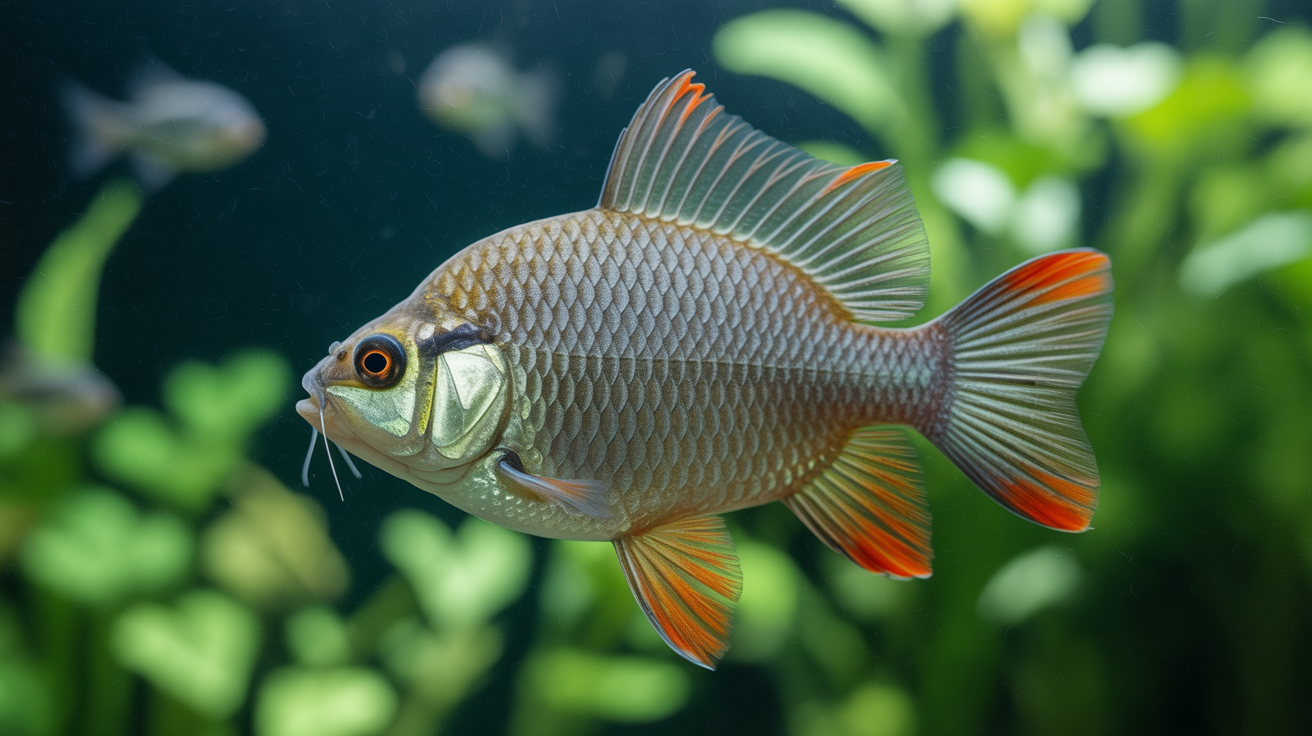
Velvet is one of those diseases that can get ahead of you fast. Fish that looked perfectly fine yesterday are scratching against decorations today, and by tomorrow a dusty golden coating has spread across their flanks. Knowing what you are looking at, and acting on it promptly, makes the difference between losing a fish or two and losing an entire tank.
This guide covers what velvet actually is, how to distinguish it from ich, how to treat it without harming sensitive fish, and how to prevent it from cycling back through your aquarium.
What Velvet Disease Is
Velvet is caused by Oodinium pillularis (and in some references O. limneticum), a dinoflagellate parasite that behaves similarly to ich but moves through its life cycle more quickly and at smaller scale. The common names "gold dust disease" and "rust disease" come from the appearance of the parasites on a fish's skin: thousands of tiny cysts that catch light and give the body a dusty, brownish-gold sheen.
Like ich, Oodinium has a multi-stage life cycle. Mature trophonts feed on the fish, then drop off as tomonts and divide rapidly inside a protective cyst. Each cyst can produce hundreds of free-swimming dinospores that go looking for a new host. That reproductive speed is why a mild case can escalate to a heavy infestation within a few days, especially at warmer temperatures.
For a broader look at how velvet fits alongside other common illnesses, common aquarium fish diseases and how to spot them early is a useful starting point.
How to Spot Velvet (and Tell It Apart from Ich)
The classic velvet presentation includes:
- A velvety or dusty coating, often yellowish, gold, or rust-brown in color
- Rapid, shallow breathing, or fish hanging at the surface near the filter return
- Clamped fins and lethargy
- Flashing behavior: fish rubbing their bodies against rocks, substrate, or tank walls
The single most reliable diagnostic test requires nothing more than a small flashlight and a dark room. Turn off the aquarium light and every other light source, wait a moment for your eyes to adjust, then shine a narrow beam of light at a low angle across the side of the fish. Velvet parasites reflect light differently from healthy skin, producing a faint golden or dusty shimmer you cannot see under normal lighting. If you see that shimmer, you have your answer.
How velvet differs from ich: Ich (Ichthyophthirius multifiliis) produces larger, white, grain-of-salt spots that are clearly visible under normal lighting without the flashlight test. Velvet cysts are far finer, almost like a dusting of pollen. Ich tends to concentrate on fins first, while velvet often appears on the body surface, particularly near the gills, before fins show obvious signs. Both cause flashing, but velvet fish often show more pronounced respiratory distress earlier in the infection.
If you want a direct comparison, ich: white spot, how to identify and treat it covers that disease in depth.
Treating Velvet in a Freshwater Aquarium
Velvet responds to treatment, but it requires consistency. You are targeting the free-swimming dinospore stage, because the trophonts on the fish are protected inside their cysts and medication has limited reach there. Treatment windows typically run 10 to 14 days to catch multiple life-cycle waves.
Before starting any medication, read the label fully and confirm the appropriate dose for your tank volume. For fish health concerns and especially for medication dosing, consulting an aquatic veterinarian or an experienced local fish store is genuinely worthwhile. The guidance below is general, not a prescription.
Copper-Based Treatments
Ionic copper solutions (such as copper sulfate-based products) are the most widely used treatment for velvet. Copper is effective but has a narrow margin between a therapeutic dose and a toxic one, so accuracy matters. Use a copper test kit throughout the treatment period to confirm levels stay within the safe therapeutic range indicated on the product.
Important: Copper will damage or kill invertebrates, shrimp, and snails. Remove them before treating. Many planted tank enthusiasts prefer to treat in a separate hospital tank for this reason.
Formalin-Based Treatments
Formalin (formaldehyde solution) is another option and can work well when used according to product directions. It is harder on fish than copper if overdosed, and it depletes dissolved oxygen, so ensure strong surface agitation throughout treatment. Like copper, formalin should not be used with invertebrates present.
Some products combine formalin with malachite green, which can be more effective but also more stressful on fish. Follow the product's specific protocol.
Protecting Scaleless Fish
Scaleless or thin-scaled fish, including loaches, catfish, and many plecos, are significantly more sensitive to copper and formalin than scaled species. If your tank includes these fish, dose at the lower end of the recommended range, watch closely for signs of stress, and consider a dedicated hospital tank where you can separate sensitive and tolerant species. Never exceed the product's recommended dose under the assumption that more is better.
Dimming Lights and Raising Temperature
Two supporting measures are worth taking alongside medication. First, turn off or significantly dim your aquarium light. The Oodinium organism is photosynthetic and depends on light for part of its energy; reducing light stresses the parasite and may slow reproduction.
Second, raising temperature to around 82-84F (28-29C), if your fish can tolerate it, accelerates the parasite's life cycle. That shortens the interval between generations and means the free-swimming stage, which is vulnerable to medication, arrives sooner. Raise temperature slowly over several hours rather than all at once, and do not push it beyond what your fish species can handle comfortably.
Why Velvet Keeps Coming Back
A fully treated tank can become reinfested if even a small number of tomonts survived treatment in substrate, decorations, or filter media, and then released new dinospores after medication was discontinued too early or cleared from the water column. Other routes for reinfection include:
- Adding new fish that are carrying a subclinical infection
- Introducing plants, substrate, or decorations from an infected source tank
- Sharing equipment between tanks without disinfecting it first
Stress also plays a role. Fish that are stressed by poor water quality, overcrowding, aggressive tankmates, or sudden temperature swings are more susceptible to velvet taking hold in the first place. Maintaining stable water parameters is not just good husbandry; it is a genuine disease-prevention measure.
When you acclimate new fish, the process itself matters. A rushed or stressful introduction raises cortisol levels and suppresses immune function in the hours that follow. How to acclimate new fish safely walks through the steps that reduce that stress window.
Using a Quarantine Tank to Break the Cycle
A quarantine tank is the most effective tool for stopping velvet from reaching your display tank in the first place, and for treating it without dosing your main aquarium. A basic setup does not need to be elaborate: a spare tank of 10-20 gallons, a sponge filter seeded from your main tank, a heater, and a few hiding spots is enough.
New fish spend at least two to four weeks in quarantine before joining the display tank. During that period you can observe them for early signs of velvet (using the flashlight test), treat if needed, and confirm they are genuinely healthy before they have any contact with your other fish.
When treating velvet in quarantine rather than the main tank, you avoid exposing invertebrates and sensitive species to medication, you avoid the copper-and-plants problem, and you can be more aggressive with treatment because you are not worrying about the full complexity of a mature planted display.
For a full walkthrough of setting one up, how to set up and use a quarantine tank covers the practical details.
After treatment, the display tank should be left fallow (fishless) for a minimum of four weeks at a higher temperature if possible. Without fish hosts available, free-swimming dinospores die off before they can reproduce. This step is frequently skipped, and it is frequently the reason velvet returns.
Frequently Asked Questions
Can velvet kill fish quickly?
Yes. Velvet can be fatal within a matter of days, particularly when the gills are heavily infested. Gill involvement interferes with breathing, and fish can suffocate before visible skin symptoms become dramatic. Any fish showing labored breathing alongside flashing should be assessed with the flashlight test promptly.
Is velvet contagious to all the fish in my tank?
The free-swimming dinospores are waterborne, so any fish in the same water is potentially exposed. In practice, fish with stronger immune function or less stress may resist heavy infection longer, but once velvet is confirmed in a tank you should treat the whole system (or move all fish to a hospital tank for treatment) rather than isolating just the visibly sick fish.
Do I need to throw away plants or decorations after a velvet outbreak?
Not necessarily. Plants can be treated alongside fish in a hospital tank, or left in the fallow display tank during the fishless period. Hard decorations and equipment can be disinfected with a dilute bleach solution (followed by thorough rinsing and dechlorination) or allowed to dry completely for several days, which kills the parasite.
How do I know when the tank is safe to reintroduce fish?
After a fallow period of at least four weeks at a temperature of 82F or above, the dinospore population in an unmedicated tank should be negligible. Many aquarists run the fallow period for five to six weeks to be confident. You can also consider adding a single, less-valued "test fish" and observing it with the flashlight test for one to two weeks before reintroducing the rest of the stock.
Can salt help treat velvet?
Aquarium salt at a concentration of 1-3 tablespoons per ten gallons is sometimes used as a supportive measure and may reduce osmotic stress on affected fish, but it is not a reliable primary treatment for velvet on its own. Copper or formalin-based medications are more consistently effective. Salt should be avoided with fish species that are sensitive to it, including many scaleless catfish and certain tetras.