Water Quality
How to Do an Aquarium Water Change the Right Way
Step-by-step guide to aquarium water changes: how much to change, how often, and the right tools to keep your fish healthy.
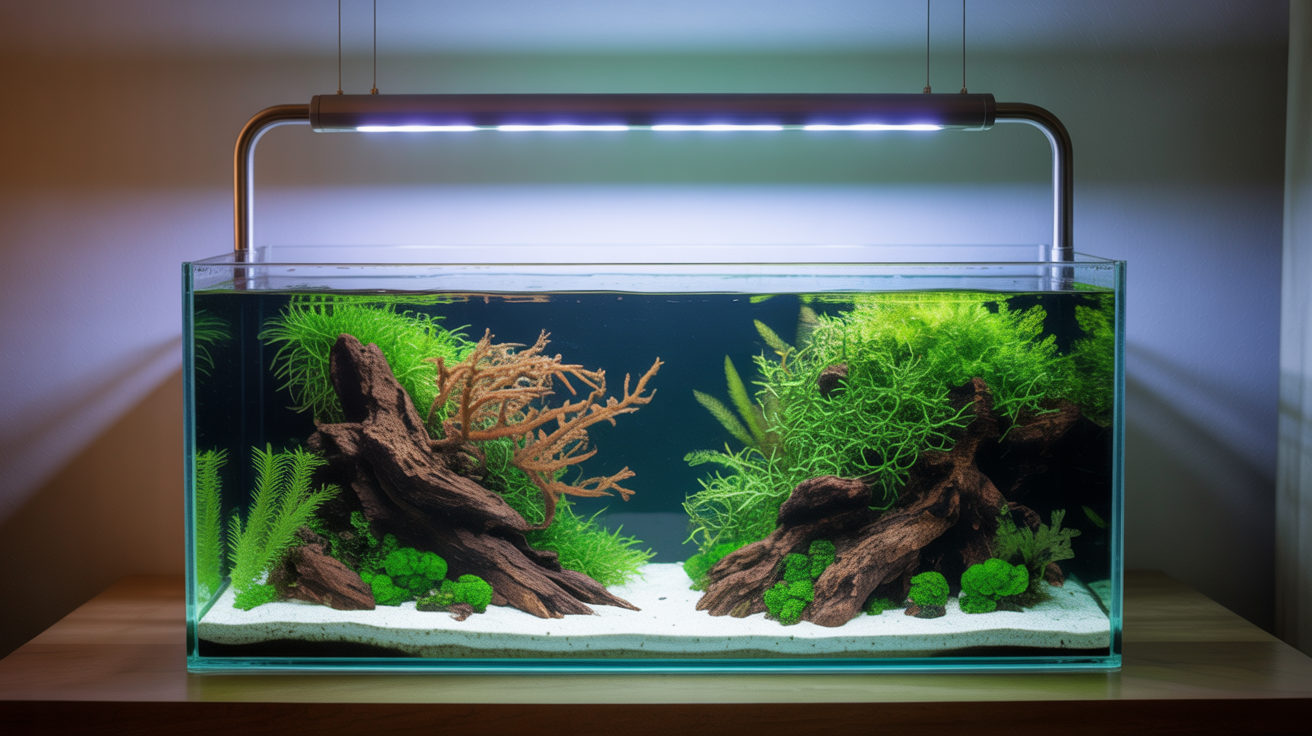
Regular water changes are the single most effective thing you can do for your fish. They dilute nitrates, replenish trace minerals, and reset the chemistry before small problems become emergencies. Here is exactly how to do them correctly, from the tools you need to the schedule that fits your tank.
For More Information
- Change 25 to 30% weekly for most community tanks; heavily stocked or fry tanks need more frequent, smaller changes.
- Match replacement water temperature within 1 to 2°F of the tank; a mismatch is the top cause of fish acting stressed after a change.
- Always dechlorinate, and confirm your conditioner covers chloramine specifically if your tap water uses it.
- Vacuum a third to half the substrate each week rather than the whole floor, to avoid stripping beneficial bacteria and disturbing plant roots.
- Never remove fish during a routine change; netting them causes more stress than the water change itself.
Why Water Changes Matter (and What You're Actually Fixing)
A cycled aquarium converts ammonia to nitrite, then nitrite to nitrate, but nitrate just accumulates. It doesn't disappear on its own. At concentrations above 40 ppm, nitrate suppresses immune function in most freshwater fish and stresses scaleless species like loaches and cories at levels well below that.
Water changes also replace:
- Carbonate hardness (KH), which buffers pH and erodes slowly over time
- Trace minerals consumed by plants and biological processes
- Old organic compounds, tannins, pheromones, dissolved waste byproducts that don't show on a test kit
A tank that never gets water changes will drift toward acidic, mineral-depleted conditions even if nitrate somehow stays low. That's why partial changes beat "just top off evaporation."
For a full breakdown of what your test results actually mean, see water parameters explained for beginners.
How Much Water to Change
The right percentage depends on your tank's stocking level and how often you change it.
| Tank type | Recommended change | Frequency |
|---|---|---|
| Lightly stocked, planted | 20–25% | Weekly |
| Moderately stocked | 25–30% | Weekly |
| Heavily stocked / growout | 30–50% | Twice weekly |
| Fry or hospital tank | 20–25% | Every 2–3 days |
| Betta in under 5 gallons | 25–30% | Twice weekly |
A common starting point is 25% weekly. If your nitrate consistently reads above 20 ppm between changes, increase either the percentage or the frequency. If fish show stress after changes (gasping, clamped fins), the problem is likely a mismatch between tap water chemistry and tank chemistry, not the volume you're changing.
Avoid changing more than 50% at once in a fully cycled tank unless you're dealing with an emergency. Large sudden changes can shock fish by shifting pH or temperature too fast, and they temporarily stress the beneficial bacteria colony.
What You Need Before You Start
You don't need much:
- Siphon gravel vacuum, a basic 12-inch or 18-inch gravel vac with tubing works fine for most tanks
- Bucket (food-grade, 5-gallon; dedicate it to the aquarium, never use a bucket that held soap)
- Python-style water changer (optional but genuinely useful for tanks 30 gallons and up)
- Dechlorinator / water conditioner, treats chlorine and chloramine before water touches the tank
- Thermometer, matching the replacement water to within 1–2°F (0.5–1°C) of tank temp matters
- Test kit, know your parameters before and after until you have a feel for your tap water
A Python water changer connects to a tap and lets you drain the tank and refill it without hauling buckets. The no-spill convenience is real, and it pays for itself in back strain. The gravel-vac attachment works the same way as a stand-alone siphon, the main thing is that you're pulling debris from the substrate during every change, not just removing water.
Step-by-Step: How to Do a Water Change
1. Check the temperature
Fill a bucket with tap water and measure it. If your tank runs at 78°F (26°C), you want replacement water in the 76–79°F (24–26°C) range. Hot-side or cold-side tap adjustments are usually sufficient. Don't skip this step, even a 5°F difference across a large change is enough to stress fish.
2. Add dechlorinator
Dose the bucket (or the tank itself if you're using a Python) with dechlorinator before the new water enters. Follow the bottle rate for the volume you're adding, not the full tank volume. For chloramine (common in municipal water with ammonia added), make sure your conditioner explicitly covers it, not all do.
3. Siphon the gravel
Push the wide end of the gravel vac into the substrate and work it in a grid pattern across roughly a third to half the tank floor. You don't need to vacuum every inch every week; rotating sections is fine. Aim to pull out detritus and mulm rather than bulldozing the substrate, which can cloud the water and stress fish temporarily.
If you have a planted tank with a deep substrate, stay above the root zone and don't vacuum planted areas aggressively, disturbing anaerobic pockets deeper than 2 inches can release hydrogen sulfide.
4. Remove the target volume
Keep siphoning until you've removed your planned percentage. A rough guide: a 20% change on a 30-gallon tank is 6 gallons. Mark your bucket at 5 gallons if it helps, or count bucket trips.
5. Refill slowly
Add the conditioned, temperature-matched water slowly, either pouring it over your hand to diffuse the stream or using a Python at moderate flow. Fast jets of water stir up substrate and startle fish. Refill to your normal waterline.
6. Log it
Note the date, percentage changed, and any parameters you tested. This seems unnecessary until a problem appears and you want to backtrack. Even a sticky note on the tank hood beats nothing.
Setting a Water Change Schedule That You'll Actually Keep
The best schedule is the one you stick to. Weekly changes on the same day (Sunday evening, for instance) become habit faster than "whenever it seems needed", which turns into monthly when life gets busy.
Factors that let you stretch to every 10–14 days:
- Low stocking (1 inch of fish per 5 gallons is a rough, imperfect metric)
- Heavy live plants competing with algae for nitrates
- Consistent feeding discipline (skip or reduce food 1 day per week)
Factors that push you toward twice weekly:
- Goldfish (prodigious waste producers at any size)
- Cichlids over 6 inches in a community tank
- Active breeding pairs feeding fry
- Tanks under 10 gallons, where chemistry swings faster
Use your test kit to calibrate. If nitrate is still below 20 ppm when you're due for a change, your schedule is working. If it's pushing 40 ppm, tighten it. You can read more about how to test aquarium water and how often to build a routine that keeps you ahead of problems.
Common Mistakes and How to Avoid Them
Not matching temperature. The number one shock trigger. A few minutes spent adjusting the tap pays off.
Skipping dechlorinator. Chlorine kills beneficial bacteria and irritates fish gills. Chloramine is worse and doesn't off-gas. Always treat.
Vacuuming too much substrate at once. Deep gravel disturbance releases trapped gases and strips the beneficial bacteria living in the substrate. Work in thirds.
Topping off evaporation instead of doing a true change. Evaporation concentrates everything in the tank. Topping off raises the water level but does nothing to dilute nitrates or replenish minerals.
Using a dirty bucket. Any soap residue is toxic to fish. Keep your bucket aquarium-only and rinse it with plain water before each use.
Changing water after medicating. Some medications bind to carbon in your filter media; others require stable water to work. Check the medication instructions specifically before scheduling a change.
For context on what the numbers on your test kit actually represent, ammonia, nitrite, and nitrate explained gives a clear breakdown of the nitrogen cycle and why those values move the way they do.
Frequently Asked Questions
How often should I do water changes in a new tank?
During the cycling period (typically 4–6 weeks for a fish-in cycle), change 25–30% every 2–3 days to keep ammonia and nitrite below 0.5 ppm. Once the tank is fully cycled and both ammonia and nitrite read zero, you can drop back to a normal weekly or biweekly schedule.
Can I do water changes too often?
For an established tank, daily or twice-daily changes won't hurt the fish directly, but they can slow the buildup of your biological filter during the first few months, because you're constantly diluting the ammonia that feeds nitrifying bacteria. After the tank is cycled, daily changes are fine and sometimes used intentionally in breeding setups.
My fish act stressed after water changes. What's wrong?
The most common cause is a temperature mismatch. Check your replacement water temperature carefully. The second most common cause is pH shock: if your tap water runs at pH 7.8 and your tank has drifted to 6.8 over time, a large change can swing pH sharply upward. Test both tap and tank pH before changing, and consider smaller, more frequent changes to prevent the tank from drifting far from your tap baseline.
Do I need to remove fish during a water change?
No. Netting and moving fish causes far more stress than the water change itself. Leave them in. The exception is fry too small to avoid the siphon, block the intake with a piece of sponge or fishnet material.
Should I turn off the filter and heater during the change?
Turn off the heater if your water level will drop below the heater element, running it dry can crack the glass and potentially damage the unit. You can leave canister and HOB filters running during the change as long as the intake stays submerged. If the intake comes out of the water, pause the filter and restart it once the tank is full.
References
- Nitrate (Wikipedia) confirms that concentrations above roughly 30 ppm can inhibit growth and stress aquatic species, the underlying reason water changes target nitrate specifically.
- Water hardness (Wikipedia) explains carbonate hardness and why it depletes over time, backing up why water changes do more than just dilute waste.
- Ammonia in Aquatic Systems (University of Florida IFAS Extension) is a useful extension reference on why water changes remain the most reliable tool for managing nitrogen waste products in a home aquarium.