Water Quality
Aquarium Water Parameters Explained for Beginners
Learn which aquarium water parameters matter, what the safe ranges are, and how to keep them stable for healthy freshwater fish.
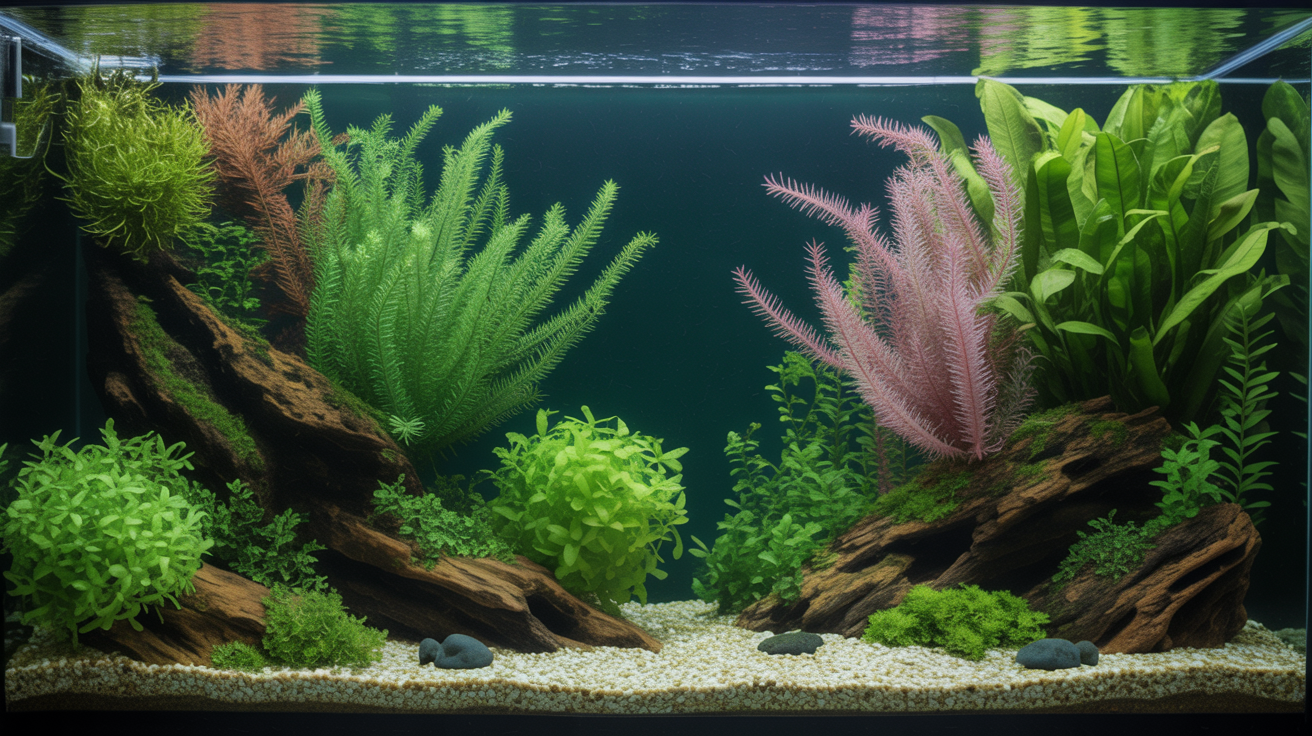
Your fish live inside their own chemistry. Every aspect of the water around them (acidity, hardness, temperature, and dissolved waste) shapes whether they thrive or quietly struggle. The good news is that keeping these numbers in the right range is very achievable once you understand what each parameter does and why it moves.
Here's a plain-English guide to the core freshwater parameters, what safe ranges look like, and what to do when something drifts out of bounds.
The Short Version
- Ammonia and nitrite must read 0 ppm at all times in a cycled tank. Anything higher is an emergency, not a data point to watch.
- Nitrate under 40 ppm is the practical ceiling for most community fish, under 20 ppm if the tank is heavily stocked or planted lightly.
- Temperature stability matters more than hitting an exact number; a steady 82°F beats a tank that swings 8°F overnight.
- pH swings of 0.5 or more within a day cause more visible stress than a stable pH that sits slightly outside the "ideal" range.
- Weekly 25 to 30% water changes are the single best tool for keeping every parameter on this list in check.
The Core Parameters Every Freshwater Tank Needs
Six parameters matter most for a typical community freshwater setup. You don't need to test all of them every week once a tank is established, but you should know what each one does.
| Parameter | Typical Safe Range | Notes |
|---|---|---|
| Temperature | 72–82°F (22–28°C) | Species-dependent; tropicals need stability |
| pH | 6.5–7.5 | Most community fish tolerate this range well |
| Ammonia (NH3) | 0 ppm | Any reading above 0 is an emergency |
| Nitrite (NO2) | 0 ppm | Toxic even at 0.25 ppm; deadly at 1 ppm |
| Nitrate (NO3) | below 40 ppm | Below 20 ppm preferred for sensitive species |
| GH (General Hardness) | 4–12 dGH | Varies widely by species |
Most beginners focus on pH and ignore ammonia, which is the opposite of what they should do. Ammonia and nitrite are the real killers; pH matters but is often stable enough not to cause immediate harm.
Temperature: Stability Beats Perfection
Most freshwater tropical fish do fine anywhere from 74–80°F (23–27°C). The specific number matters less than consistency. A tank that swings 8°F overnight stresses fish more than a steady 82°F would.
A good aquarium heater with a built-in thermostat handles this automatically. Check it weekly, though; heaters do fail, and a stuck-open heater can cook your fish in hours.
Cold-water fish like goldfish and white cloud mountain minnows actually prefer cooler temperatures, around 60–72°F (15–22°C). They shouldn't share a tank with tropicals; the temperature compromise suits neither group well.
If you notice fish clamped at the surface or unusually lethargic, check the thermometer before anything else. Temperature is the easiest parameter to verify and one of the most common culprits.
pH: Understanding Acidity and Alkalinity
pH runs on a scale from 0 to 14, with 7.0 being neutral. Most freshwater community fish tolerate 6.5–7.5 comfortably. Some species have narrower preferences:
- Soft-water fish (discus, many tetras, cardinal tetras): prefer 5.5–6.8
- Rift Lake cichlids (African species): prefer 7.8–8.5
- Livebearers (guppies, mollies, platies): prefer 7.0–8.0
- Most community tetras, corydoras, danios: happy at 6.8–7.4
The key thing beginners miss is that pH swings matter more than the absolute number. A sudden shift of 0.5 or more within 24 hours can cause pH shock, which looks a lot like disease: fish gasping, erratic movement, pale color. Slow, gradual changes are far less harmful.
Tap water pH varies by region. Check yours before filling a tank, and test again after 24 hours in a bucket with an airstone (CO2 off-gassing can shift it noticeably).
Avoid the temptation to constantly adjust pH with chemical additives. Unless you're keeping species with very specific needs, a stable 7.2 is better than a yo-yoing 6.8.
Ammonia and Nitrite: The Nitrogen Cycle in Practice
These two parameters are the core of what aquarists call the nitrogen cycle. Fish produce ammonia as a waste product (through gills and urine). Beneficial bacteria in your filter convert that ammonia to nitrite (NO2), and a second bacterial colony converts nitrite to nitrate (NO3). Nitrate is far less toxic and gets removed by water changes.
A new tank has none of these bacteria established yet. That's why new tanks go through a "cycle" period of 4–6 weeks before they're safe for fish. For a deeper breakdown of this process, understanding ammonia, nitrite, and nitrate covers the numbers in detail.
Ammonia above 0 ppm is always an emergency. Fish exposed to 0.5 ppm for several days will show gill damage. At 2 ppm, mortality risk rises sharply. Common causes:
- Tank not fully cycled before adding fish
- Overfeeding (uneaten food decomposes)
- Dead fish left in the tank
- Filter media rinsed with chlorinated tap water (kills beneficial bacteria)
Nitrite follows the same logic. Even 0.25 ppm stresses fish by interfering with oxygen transport in the blood. Like ammonia, the only acceptable reading in an established tank is 0 ppm.
If either reads above 0 in a cycled tank, do a 25–50% water change immediately and don't feed for 24–48 hours. Then investigate the cause. If a sick or injured fish is present, consult an aquatic vet or experienced local fish store rather than guessing at treatment.
Nitrate: The Slow Buildup
Nitrate is the end product of the nitrogen cycle, and it accumulates steadily. Unlike ammonia and nitrite, low-to-moderate levels are tolerable. "Moderate" means under 40 ppm, not 80 or 120.
Long-term exposure to high nitrate causes chronic stress, immune suppression, and reduced lifespan, even without obvious acute symptoms. Planted tanks consume nitrate naturally, which is one of several good reasons to add live plants to any setup.
The primary tool for managing nitrate is the water change. Swapping out 25–30% of the tank volume weekly keeps nitrate in a safe range for most stocking levels. For sensitive species or heavily stocked tanks, 40–50% weekly may be needed. Doing water changes correctly matters more than most beginners expect; the technique affects how well nitrate actually comes down.
Water Hardness: GH and KH
Hardness is less discussed but genuinely matters for fish health and breeding.
General Hardness (GH) measures dissolved calcium and magnesium. It's expressed in degrees (dGH) or ppm (1 dGH = about 17.9 ppm). Soft water is below 4 dGH; hard water is above 12 dGH.
Fish from soft-water rivers (Amazon, Congo, Southeast Asian blackwater streams) often struggle to reproduce or show color in very hard tap water. Conversely, African cichlids and many livebearers need hard water to stay healthy.
Carbonate Hardness (KH), also called alkalinity, measures bicarbonates and carbonates. Its main job is to stabilize pH. Low KH (below 3 dGH) means pH can crash suddenly, a phenomenon called "old tank syndrome" where a neglected tank gradually acidifies until fish die without obvious cause.
If you have soft tap water and keep livebearers, adding crushed coral to your filter raises both GH and KH gently. If you have hard water and want to keep soft-water species, reverse osmosis (RO) water blended with tap water is the cleanest solution.
How to Test Your Water (and How Often)
The right test kit depends on your situation:
- Liquid reagent kits (API Master Test Kit is the common benchmark) are accurate and economical long-term. They require pipettes and color cards but give reliable readings.
- Test strips are faster but less accurate, particularly for nitrite and nitrate. Fine for a quick weekly check in a stable, established tank; not reliable enough for diagnosing problems.
- Electronic meters (pH pens, TDS meters) are useful for pH and total dissolved solids but don't measure ammonia or nitrite. Use them alongside, not instead of, a chemical kit.
Testing frequency depends on where you are:
- New or cycling tank: every 24–48 hours for ammonia and nitrite
- Established tank, no problems: weekly test before a water change
- After adding new fish or medication: daily for a week
For a full walkthrough of what to test and when, see the guide on how and how often to test aquarium water.
What to Do When a Parameter Is Off
A single out-of-range reading is a data point, not necessarily a crisis. The response depends on what's off and by how much.
- High ammonia or nitrite: water change now, stop feeding, investigate the cause
- pH crash (sudden drop below 6.0): buffer slowly with baking soda solution or KH buffer; never dump chemicals straight in
- High nitrate (above 80 ppm): 40–50% water change, increase change frequency going forward
- Temperature spike: float ice cubes in a bag, add a small fan blowing across the surface; don't dump cold water directly in
The most common beginner mistake is testing only when something looks wrong. By then, a parameter may have been off for days. Weekly testing catches problems before they become emergencies.
Frequently Asked Questions
What is the most important water parameter for freshwater fish?
Ammonia. A single spike above 1 ppm can kill fish within hours. An established nitrogen cycle that keeps ammonia and nitrite at 0 ppm is the foundation everything else builds on.
Do I need to adjust my pH before adding fish?
Only if your tap pH is far outside the range your fish need. Most community fish tolerate 6.8–7.4 without any adjustment. Chasing a specific pH number with additives often causes more harm through instability than the original number would.
How often should I do water changes to keep parameters stable?
For a moderately stocked community tank, 25–30% weekly is the standard recommendation. Light stocking with live plants may allow every two weeks. Heavy stocking or messy fish (cichlids, goldfish) may need two changes per week.
Can live plants help with water parameters?
Yes, meaningfully. Healthy aquatic plants consume ammonia and nitrate as fertilizer, buffer pH shifts by absorbing CO2, and oxygenate the water. A densely planted tank can run measurably lower nitrate than a bare tank at the same stocking level. Plants don't replace water changes, but they reduce how urgently you need to do them.
What causes pH to drop in an established tank?
The most common cause is KH depletion. As organic acids accumulate from fish waste and decomposing material, the carbonate buffer gets consumed. Eventually, the pH starts to fall. Regular water changes replenish KH from fresh tap water. If your tap water is very soft, you may need to add a KH buffer to prevent this in older setups.
References
- Water hardness (Wikipedia) breaks down general hardness versus carbonate hardness in more chemical detail, including how carbonate hardness precipitates out when water is heated.
- Ammonia in Aquatic Systems (University of Florida IFAS Extension) is a good next step for readers who want the underlying science on why ammonia toxicity depends on pH and temperature.
- Nitrate (Wikipedia) documents the concentration thresholds where nitrate starts to inhibit growth and stress aquatic species, backing up the 40 ppm ceiling used throughout this guide.