Maintenance & Gear
How to Clean Aquarium Glass and Remove Algae
Learn how to clean aquarium glass and remove green algae fast using the right scraper technique, safe products, and a routine that keeps glass clear long-term.
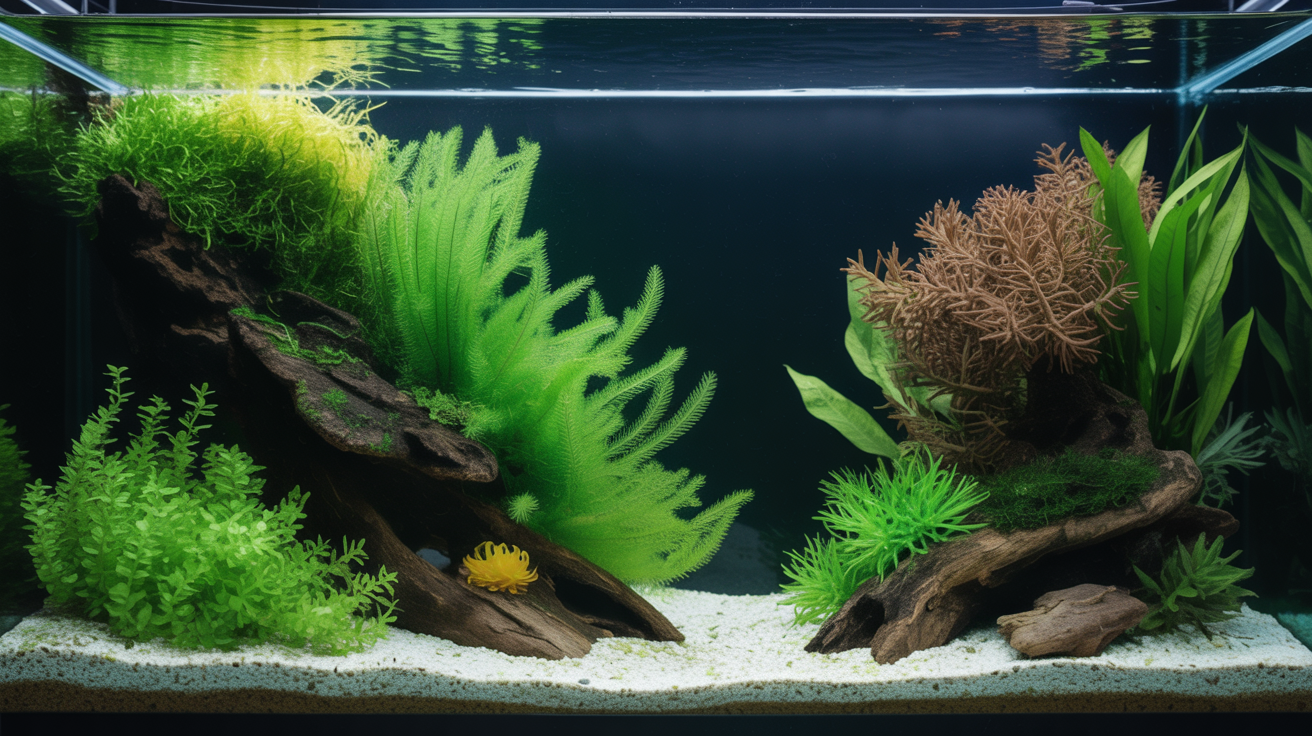
Cloudy, green-streaked glass ruins the view and signals that nutrients or light are running ahead of your maintenance schedule. The good news: cleaning aquarium glass takes about ten minutes per session once you have the right tools, and a consistent routine keeps it from getting that bad in the first place.
What to Know First
- A magnetic float scraper handles most weekly cleaning on glass tanks; acrylic tanks need soft foam or felt tools only, never metal.
- Brown film in a new tank is usually diatoms, a silicate-based algae that clears on its own within 4 to 6 weeks.
- Scrape before the water change, not after, so loosened algae gets siphoned out rather than resettling.
- Green spot algae and black brush algae both resist a standard scraper pass; they need a stainless blade (glass only) or targeted scrubbing.
- If algae regrows within 2 to 3 days of scraping, the real problem is light duration or nutrient levels, not the scraping technique.
What Causes Algae on Tank Glass
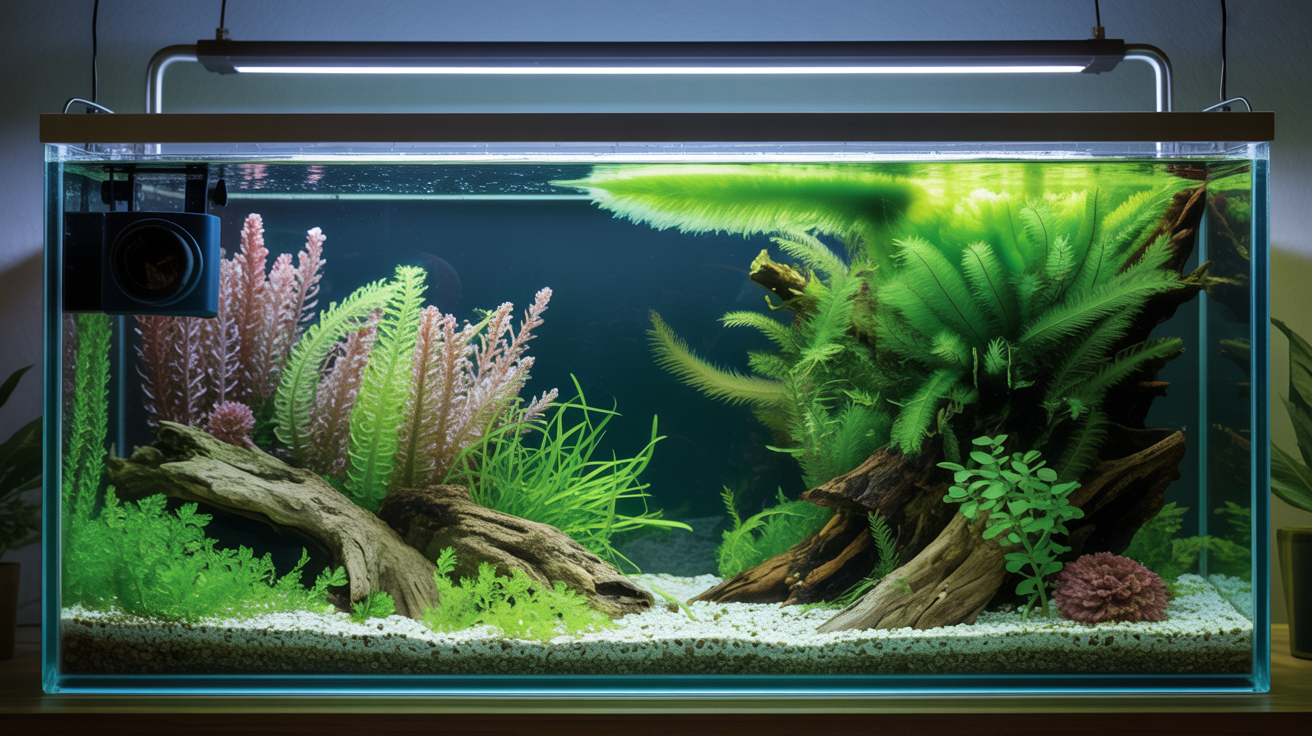
Green film on aquarium glass is almost always green algae (chlorophyta) fed by light and dissolved nutrients. A few common triggers:
- Too much light. Running your lights 10 or more hours daily gives algae the energy it needs to outcompete plants.
- High nitrates or phosphates. These accumulate between water changes and act as fertilizer for algae.
- Low plant density. Live plants compete with algae for the same nutrients. A lightly planted tank with high nutrients is algae's best friend.
- New tank syndrome. In the first 8 to 12 weeks, the biological system isn't stable, and algae typically blooms before it settles.
Brown diatom film is different, it's a silicate-based algae common in new setups and usually clears on its own after 4 to 6 weeks as silicates deplete. If you're seeing thick green patches, stringy green hair algae, or black brush algae, those are separate issues covered in more depth in how to get rid of algae in a freshwater tank.
Choosing the Right Algae Scraper
Using the wrong tool is the fastest way to scratch glass or, if you have an acrylic tank, leave permanent haze. Here's how the main options compare:
| Tool | Best For | Notes |
|---|---|---|
| Magnetic scraper (float) | Glass tanks, quick weekly wipe | Don't let sand or gravel get between the magnets |
| Long-handle scraper with plastic blade | Acrylic tanks, deep tanks | Never use metal on acrylic |
| Long-handle scraper with stainless blade | Glass tanks, stubborn coralline or hard mineral deposits | Safe on glass only |
| Melamine sponge (cut into strips) | Soft green film on glass | No chemicals; discard after use |
| Old credit card / plastic card | Corners and edges | Good supplement to a blade scraper |
For a standard glass aquarium, a magnetic float scraper handles most weekly cleaning. The pad side faces inward, the magnet stays outside, and you drag them together across the glass. Keep a long-handle blade scraper on hand for spots the float won't reach (corners, behind equipment) and for anything that's been left long enough to calcify.
If you have an acrylic tank, use only soft foam pads or felt-covered tools. A single piece of trapped gravel with a metal blade will leave scratches that never come out.
How to Clean the Inside of Your Fish Tank Glass
You don't need to drain the tank or stress the fish. Clean the glass while the tank is running and the fish are in it.
Step 1: Turn Off Flow-Heavy Equipment
Turn off powerheads and surface skimmers before you start. This keeps loosened algae from getting sucked into the filter immediately, but more importantly it keeps the water calmer so you can see what you're doing. Leave the filter running.
Step 2: Scrape Front and Side Panels
Starting at the top of one panel and working down in overlapping vertical strokes. With a magnetic scraper, keep the magnet side pressed flat; tilting it lets gravel sneak under the pad and scratch the glass. For a blade scraper, hold the handle at a shallow angle (about 30 degrees from the glass) rather than perpendicular, you get more shear force and less gouging risk.
Work panel by panel. Algae will billow off in green clouds; that's fine.
Step 3: Clean the Corners and Back Glass
The back panel doesn't need to be spotless, many aquarists leave it with a thin algae film, which some fish (plecos, otocinclus) will graze. If you prefer it clean, use a long-handle scraper or wrap a clean, chemical-free cloth around a ruler. For corners, a folded card or an old toothbrush dedicated to aquarium use works well.
Step 4: Do a Water Change
After scraping, a lot of suspended algae particles are floating around. Do your regular partial water change now, typically 20 to 30 percent of tank volume, to remove that green water and the nutrients feeding the algae. This step also dilutes any nitrates and phosphates. Combining glass cleaning with a water change is standard practice in a simple weekly aquarium maintenance routine.
Step 5: Rinse or Wipe the Outside
The outer glass picks up hard water spots, salt creep (even in freshwater setups, mineral deposits form along the waterline), and fingerprints. Wipe with a damp microfiber cloth, then dry it. For stubborn mineral rings on the outside only, a small amount of white vinegar on a cloth works well, just keep vinegar away from the water and fish.
Dealing with Stubborn Algae Stains
Some algae, especially black brush algae (BBA) and calcified green spot algae, won't budge with a standard scraper pass.
Green spot algae (GSA): Hard, dot-like patches of dark green that feel like grit. A stainless steel blade on glass will remove them; plastic blades usually won't. If the tank is acrylic, you'll need a razor blade held nearly flat and used extremely carefully, or leave it and address the phosphate levels that caused it.
Black brush algae: This one's actually a red algae (Compsopogon-type). A blade won't scrape it cleanly because it's anchored with holdfasts. The only mechanical approach is to physically scrub it with a stiff-bristled brush or a credit card edge. Long-term control is about CO2 levels and flow patterns rather than scraping.
Mineral deposits (white crust near the waterline): These are calcium and magnesium carbonate, not algae. Dampen a cloth with undiluted white vinegar and press it against the deposit for 5 to 10 minutes, then scrub. Do this on the outside of the glass. If the crust is on the inside at the waterline, lower the water level first and apply vinegar to a folded cloth pressed against the glass, don't pour vinegar into the tank.
Never use household glass cleaner (Windex and equivalents) on aquarium glass, inside or out. The ammonia and surfactants in those products are acutely toxic to fish at very small concentrations.
Preventing Algae Before It Takes Hold
Scraping is reactive. These habits keep glass clean between sessions:
- Trim light hours. For a planted freshwater tank, 6 to 8 hours per day is usually enough. Use a timer; inconsistent photoperiods make algae worse.
- Weekly 20 to 30 percent water changes. Keeps nitrates below 20 ppm for most community fish. Test monthly if you're unsure where your numbers are sitting.
- Add algae-eating fish or invertebrates. Otocinclus catfish (2 to 4 per 20 gallons), nerite snails (1 to 2 per 10 gallons), or amano shrimp (4 to 6 per 10 gallons) graze glass film constantly. They won't fix a nutrient problem on their own, but they significantly reduce manual scraping frequency.
- Don't overfeed. Uneaten food rots into ammonia, which cycles into nitrate. Feed what fish consume in 2 to 3 minutes, once or twice daily.
- Clean your filter on its own schedule. A clogged filter means poor circulation and nutrient buildup. The how-to for that is in how to clean an aquarium filter without killing the cycle.
Frequently Asked Questions
How often should I clean my aquarium glass?
For most tanks, a light wipe with a magnetic scraper once a week keeps visible film from building up. Deep cleaning (corners, back panel, outside mineral deposits) can happen every 2 to 4 weeks. If you're scraping more than twice a week, there's an underlying nutrient or light problem worth addressing rather than just keeping up with scraping.
Can I use a razor blade to clean fish tank glass?
Yes, but only on glass, never on acrylic. Hold the blade at roughly a 30-degree angle, keep it wet, and use slow strokes. Razor blades are most useful for calcified green spot algae and mineral deposits that scraper pads can't shift. Buy fresh blades; old blades with rust or burrs can scratch even glass.
Is it safe to clean the tank glass while the fish are still in it?
Yes, and that's the standard method. Fish will scatter when the scraper moves near them, which is fine. The only situation to watch is if a fish is already stressed, sick, or recently added, in that case, keep cleaning brief and gentle. Loosened algae in the water column isn't harmful; a water change afterward removes most of it.
Why does algae come back so fast after I scrape it?
If algae regrows within 2 to 3 days, nutrients (nitrate, phosphate) or light duration are too high. Test your water: nitrates above 20 to 40 ppm and phosphates above 0.5 ppm are common thresholds where algae accelerates. Cut light hours by 1 to 2 hours per day and increase your water change frequency temporarily to bring those numbers down.
Will algae-eating fish keep the glass completely clean?
Not entirely, but they help significantly. Nerite snails and otocinclus are the best glass grazers for freshwater tanks. Even a well-stocked cleanup crew leaves some patches, especially in corners or on silicone seams they can't reach. Think of them as reducing how often you scrape, not eliminating it.
Sources
- Algae (Wikipedia) covers the broader group of photosynthetic organisms behind glass film, and how water chemistry determines which species can establish in a given tank.
- Diatom (Wikipedia) explains the silica-shelled microalgae responsible for the brown film common in new tanks, including why it forms that distinctive slippery brown coating.