Maintenance & Gear
A Simple Weekly Aquarium Maintenance Routine
A practical aquarium maintenance schedule that keeps water quality stable and fish healthy, with a checklist you can actually follow each week.
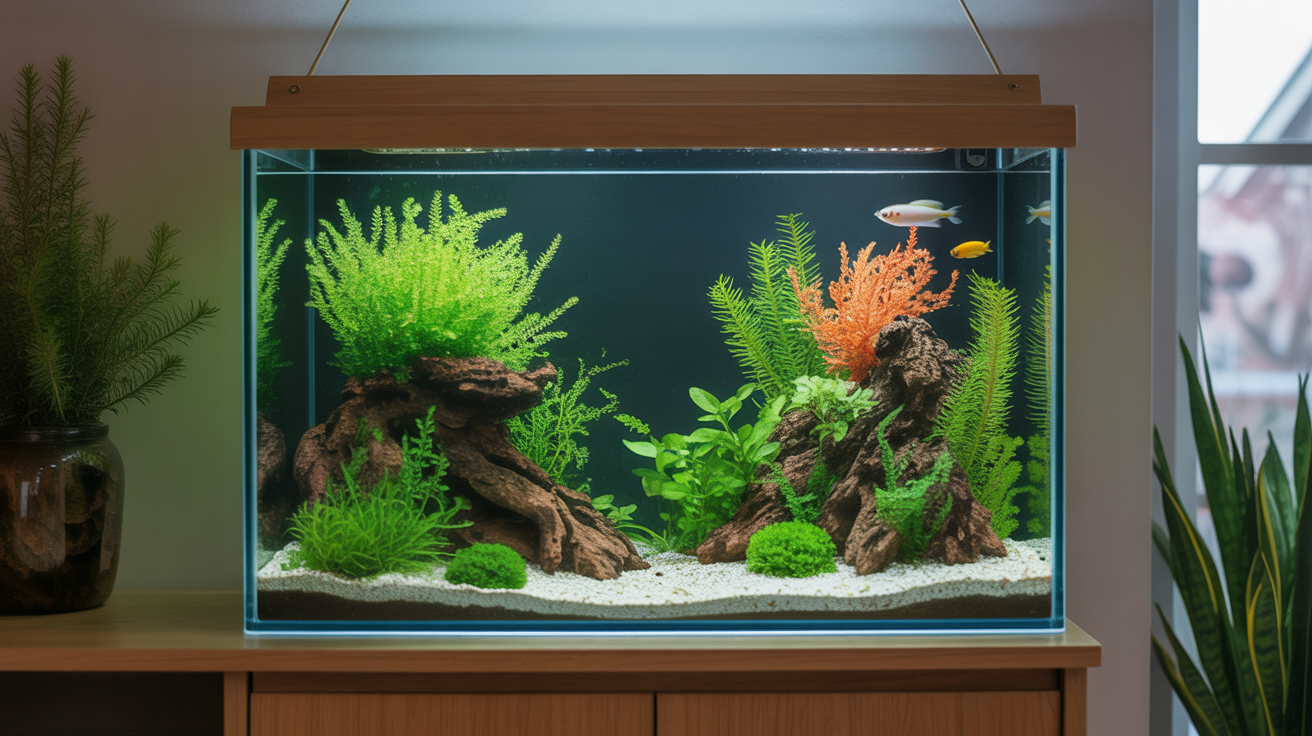
A consistent maintenance schedule is the single biggest thing you can do to keep a freshwater tank stable. Most fish don't die from one bad event. They die from weeks of slowly declining water quality that nobody caught in time. Twenty minutes once a week is enough to prevent that.
Here's a realistic, tested weekly aquarium maintenance routine that works for tanks from 10 to 75 gallons. Adjust the specifics for your setup, but keep the sequence the same every time.
At a Glance
- Budget about 20 minutes a week for a 20 to 40 gallon community tank.
- Test water first, before you disturb anything, so readings reflect real tank conditions.
- Change 25 to 30% of the water weekly and vacuum a third of the substrate at a time.
- Rinse mechanical filter media only in tank water, never under the tap.
- Log your numbers. A rising nitrate trend is invisible until you write it down.
Before You Start: Gather Your Tools
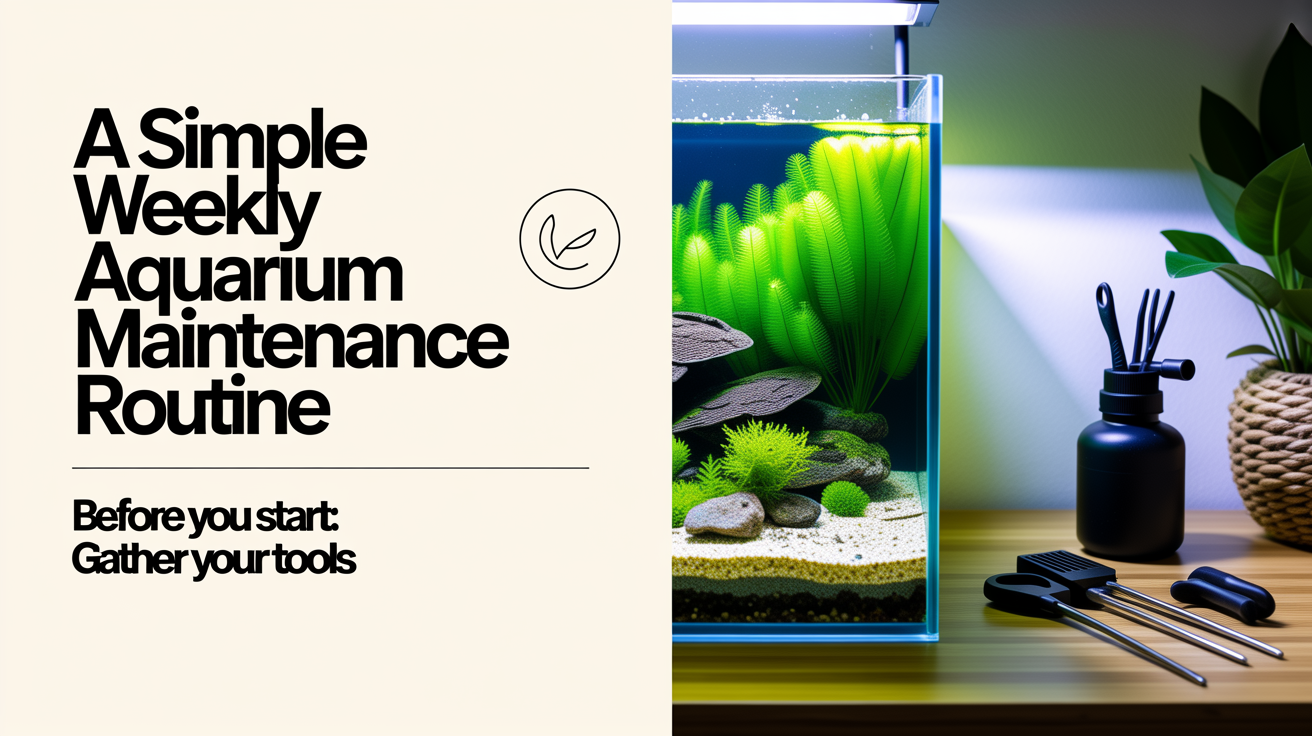
Having everything at arm's reach makes the whole process faster and less likely to cut short.
| Tool | Purpose |
|---|---|
| API liquid test kit | Ammonia, nitrite, nitrate, pH |
| Gravel vacuum (siphon) | Water change + substrate cleaning |
| Algae scraper or pad | Glass cleaning before water change |
| Clean bucket (dedicated tank-only) | Dechlorinated replacement water |
| Dechlorinator (sodium thiosulfate type) | Neutralize chlorine/chloramine |
| Paper towel or microfiber cloth | Lid, rim, and equipment wipe-down |
Never use a bucket or scraper that has touched soap or household cleaners. Even trace residue can wipe out a cycled tank.
Step 1: Test the Water First
Test before you do anything else. That way your results reflect actual tank conditions, not post-change water.
The numbers to check every week:
- Ammonia: 0 ppm. Anything above 0.25 ppm points to a problem: overfeeding, a dead fish, or a crashing cycle.
- Nitrite: 0 ppm. Elevated nitrite means your cycle is struggling.
- Nitrate: below 20 ppm for most community fish, below 10 ppm for sensitive species like discus or dwarf cichlids.
- pH: stable within 0.2 units of your last reading. Sudden swings matter more than the absolute number.
If ammonia or nitrite are elevated, skip the rest of this routine and do a larger emergency water change (50%) right now. A cycled tank in good health should read 0/0 every week.
Nitrate creeping above 40 ppm between water changes means you're either overstocked, overfeeding, or the water change volume needs to go up.
Step 2: Scrape the Glass
Do this before the water change so loosened algae gets siphoned out.
A simple algae pad or magnetic scraper handles most freshwater algae. Work top to bottom in overlapping strokes. Pay attention to the corners, where green spot algae clings.
If you're fighting a persistent algae problem, the deeper fix is usually excess light hours or elevated phosphate. The guide on how to get rid of algae in a freshwater tank covers the root causes worth checking.
For hard mineral deposits at the waterline, a credit card edge or razor blade (glass tanks only, never acrylic) works better than an algae pad.
Step 3: Do the Water Change
For most community tanks, a 25 to 30% water change every week hits the sweet spot: enough to dilute nitrates and replenish minerals without stressing fish with a big parameter shift.
A few practical notes:
- Match the temperature. Cold tap water added directly can shock fish. Aim within 1 to 2°F (0.5 to 1°C) of tank temperature.
- Dechlorinate before adding, or dose the tank first. If your tap uses chloramine (common in municipal water), make sure your dechlorinator states it handles chloramine specifically.
- Vacuum the substrate while you siphon. Push the gravel vacuum into the substrate and let it pull out waste. You don't need to clean every inch. Work one section at a time each week and rotate. Over-vacuuming removes beneficial bacteria and stresses plant roots.
For planted tanks, keep vacuuming light around root-feeders like Amazon swords and crypts. The debris around their roots actually feeds them.
Step 4: Clean the Glass Interior and Wipe Down Exterior
After the water change, clean any remaining algae you couldn't reach above the waterline. Wipe the rim, the lid, and any condensation off the light hood. A dry cloth picks up salt creep on marine-style rims without scratching.
For a thorough breakdown of glass cleaning techniques, including how to handle coralline-like mineral deposits and when to use a razor, see the guide on how to clean aquarium glass and remove algae.
Step 5: Check and Rinse Filter Media (Not Every Week)
This is the step most new fishkeepers either skip entirely or do too aggressively. The goal is to keep flow rate up without nuking your beneficial bacteria.
Every week: Glance at the filter intake and outlet. If flow looks reduced, something is clogged. Check the intake strainer for snail shells, plant leaves, or debris.
Every 2 to 4 weeks: Rinse mechanical media (sponge, filter floss) in a bucket of tank water, never tap water. Squeezing sponge media in tap water kills the bacteria colony you've spent weeks building.
Every 3 to 6 months: Inspect biological media (bio-balls, ceramic rings, lava rock). Rinse gently in tank water if visibly clogged. Replace only a portion at a time if you need to replace at all.
The full protocol, including how to split media changes so you never crash a cycle, is in how to clean an aquarium filter without killing the cycle.
Step 6: Quick Visual Inspection of Fish and Equipment
This takes two minutes and catches problems before they escalate.
Fish check:
- All fish accounted for? A missing fish usually means it's dead and decomposing somewhere.
- Any fish clamped fins, white spots, unusual spots or patches, or sitting at the surface gasping?
- Are they eating normally? Refusing food is usually the first sign of illness.
Equipment check:
- Filter running and producing normal flow?
- Heater: tank temperature in range? (Verify with a separate thermometer, not the heater's dial.)
- CO2 system if planted: bubble count consistent?
- Protein skimmer if any brackish setup: cup need emptying?
If you spot white spots on fins or body, or fish scraping against objects, that's worth a closer look. Ich (Ichthyophthirius multifiliis) and velvet spread fast in closed systems. Talk to an experienced local fish store or aquatic vet before medicating.
Your Weekly Maintenance Checklist
Print this out and tape it to the back of the tank stand if you're building the habit.
- Test ammonia, nitrite, nitrate, pH
- Scrape algae off glass (before water change)
- Gravel vacuum 1/3 to 1/2 the substrate
- Remove 25 to 30% of tank water
- Add dechlorinated, temperature-matched replacement water
- Wipe lid, rim, and light exterior
- Check filter flow rate and inspect intake
- Rinse mechanical media if flow reduced (in tank water only)
- Visual fish inspection: count, behavior, appearance
- Verify heater temperature with separate thermometer
- Log test results and anything unusual
The log is optional but genuinely useful. A notebook or simple spreadsheet where you record test numbers and observations makes it easy to spot a slow upward nitrate trend or a recurring pH dip before it becomes a crisis.
How Long Does It Actually Take?
For a 20 to 40 gallon community tank:
- Testing: 5 to 8 minutes (with a liquid kit)
- Scraping and water change: 10 to 15 minutes
- Filter and equipment check: 3 to 5 minutes
Total: roughly 20 minutes, once a week. Smaller tanks run closer to 15 minutes. Heavily planted or larger tanks might push 30 to 40 minutes.
If weekly maintenance is regularly taking you 45 minutes or more, the setup is working against you. Check whether you're overfeeding (reducing waste load), whether your gravel vacuum is the right diameter for the tank (a narrow tube on a large substrate is slow), and whether the substrate depth is manageable.
One thing that slows people down is not having a clear spot to work. Keeping your bucket, siphon, dechlorinator, and test kit in one place (a plastic bin under the stand is perfect) means you're not hunting for gear every Sunday. It sounds small, but friction kills habits.
Building the Habit
The biggest obstacle to a good maintenance routine isn't knowledge; it's consistency. A lot of fishkeepers start strong and then let it slide to every two or three weeks, which is when problems compound.
A few things that help:
Pick a fixed day. Sunday afternoon or Wednesday evening, same time every week. Make it non-negotiable for the first month, and it becomes automatic after that.
Don't skip a week because the water "looks fine." Ammonia and nitrite are invisible. A tank can look crystal clear while harboring rising nitrate or a beginning ammonia spike from a fish you haven't noticed died behind a decoration.
Keep your log close. Even a sticky note on the tank with the last nitrate reading gives you context. If nitrate was 10 ppm last week and it's 35 ppm this week with no obvious change, something shifted. You can't know that without a record.
Adjust, don't abandon. If 25% weekly changes aren't keeping nitrate in range, bump to 30%. If vacuuming the whole tank is too disruptive for your shrimp colony, clean half at a time. The routine bends; the schedule doesn't.
Frequently Asked Questions
How often should I change fish tank water?
For most freshwater community setups, a 25 to 30% water change once per week is the standard. Heavily stocked tanks, tanks with messy fish like goldfish or oscars, and tanks with nitrate-sensitive species may need twice-weekly changes or larger volumes (40 to 50%). The number that matters is keeping nitrates below 20 ppm between changes.
Can I do too many water changes?
Yes, though it's less common than doing too few. Very frequent large changes can stress fish by repeatedly shifting parameters. More practically, it can interfere with the nitrogen cycle in a brand-new tank. In an established, cycled tank with a stable source water, 2 to 3 smaller changes per week is fine and often beneficial.
Do I need to remove fish during a water change?
No. Removing fish to a bucket causes more stress than the water change itself. Just work carefully, don't bang the siphon around, and keep the bucket and water movement calm.
Why do my nitrates keep rising between water changes?
The most common causes are overfeeding (uneaten food breaks down fast), overstocking, and insufficient plant mass. Feeding only what fish consume in 2 to 3 minutes, reducing feeding to once per day for adult fish, or adding fast-growing stem plants like hornwort or water sprite can all help. If nitrates are consistently above 40 ppm at the end of the week, increase your water change volume.
Do I need to vacuum the gravel every single week?
Not necessarily all of it. Vacuuming a third of the substrate each week and rotating sections means the whole bottom gets cleaned monthly without over-disturbing bacterial colonies or plant roots. In a heavily planted tank with fine substrate, you may want to vacuum only the open areas and leave planted zones mostly alone.
Further Reading
The routine above rests on a bit of chemistry worth understanding, not just following. These sources go deeper on the mechanics behind the checklist:
- Ammonia in Aquatic Systems (University of Florida IFAS Extension) explains why ammonia is the parameter most likely to cause unexplained fish losses, and how temperature and pH change how toxic a given reading actually is.
- Nitrogen cycle, nitrification section (Wikipedia) covers the bacterial conversion of ammonia to nitrite to nitrate that your weekly testing is really tracking.
- Water hardness (Wikipedia) is useful background on why water changes replenish more than just "clean water": carbonate hardness buffers pH and gets consumed over time.