Maintenance & Gear
Gravel Vacuuming: How to Clean Aquarium Substrate
Learn how to clean aquarium gravel with a siphon vacuum, get the technique right for sand substrate, and keep your tank healthier with less effort.
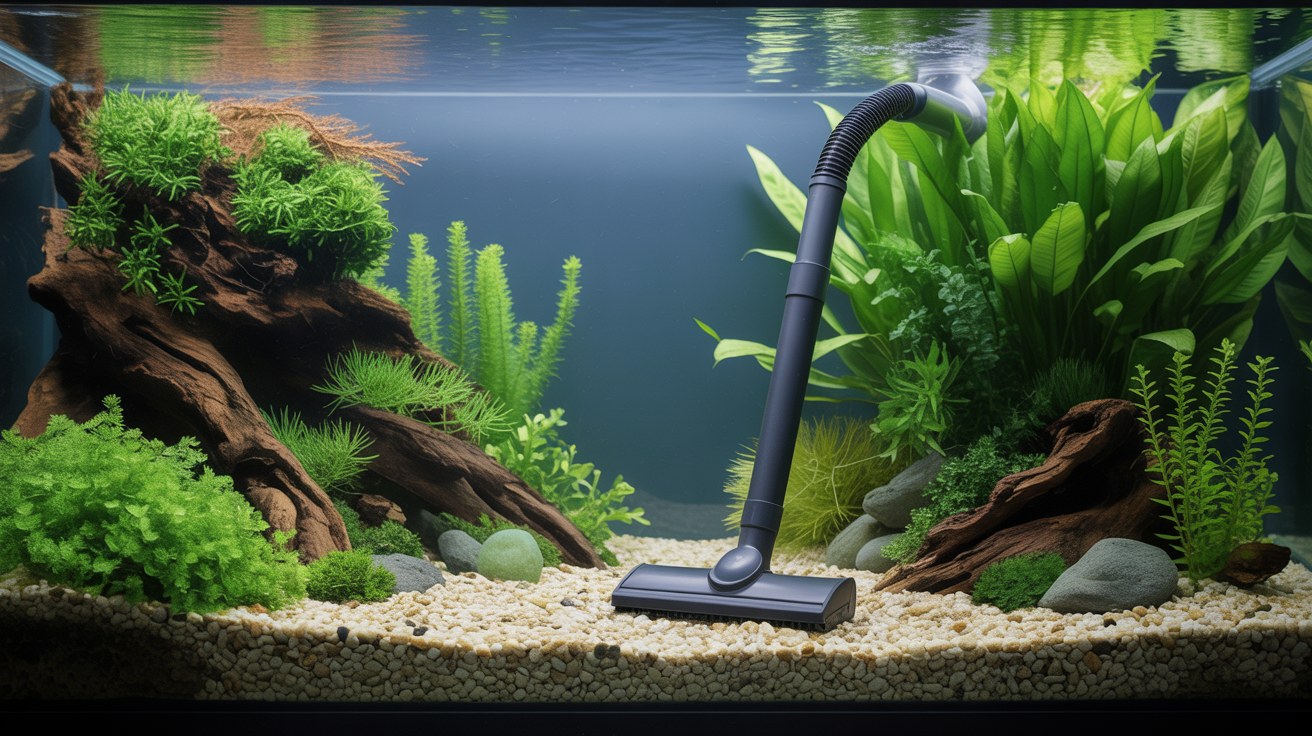
Substrate cleaning is one of those tasks that looks optional until you skip it a few times. Uneaten food and fish waste settle between gravel pieces and break down slowly, producing ammonia and nitrates as they go. The filter handles a lot of that load, but it cannot reach what is buried in the substrate. A gravel vacuum does.
This guide covers the full process: how the tool works, how to start the siphon, what technique actually shifts debris versus just stirring it up, and how to adjust your approach when your substrate is sand instead of gravel.
What Builds Up in Aquarium Substrate
Every tank accumulates what hobbyists call mulm: a mix of fish waste, uneaten food, decaying plant matter, and dead bacteria. In a gravel bed, mulm settles down into the gaps between stones where the water column barely reaches. A filter intake draws water from above the substrate, not from within it, so mulm can sit there for weeks.
That matters for water quality. As organic matter decomposes, it consumes oxygen and produces ammonia. In a well-maintained tank, your nitrogen cycle handles that ammonia, but there is a ceiling. Heavy mulm accumulation can push nitrates up faster than water changes alone can manage. Vacuuming removes the source rather than just diluting the byproduct.
Live plants complicate this a little. Their roots use some of that decomposing material as fertilizer, so a heavily planted tank benefits from lighter vacuuming than a fish-only setup. More on that below.
Choosing a Gravel Vacuum
A gravel vacuum is a simple device: a wide plastic tube (the siphon head) attached to a flexible hose. When you get water moving through it, suction lifts loose debris up through the tube and out into a bucket. Most vacuums come in two sizes -- a wider head for tanks above 30 gallons and a narrower one for smaller setups. Using a head that is too wide on a small tank pulls water out too fast and is hard to control.
Some vacuums have a squeeze-bulb or a priming pump built into the hose. These make starting the siphon easier and avoid the old method of sucking water through the hose with your mouth to get the flow going. If you are shopping for one, the priming pump version is worth having.
Battery-powered vacuums exist and work fine for light debris, but they tend to clog on heavier mulm and their flow rate is lower than a traditional gravity siphon. For a thorough clean, a standard siphon outperforms them.
How to Siphon Your Fish Tank: Step by Step
Before You Start
Get a bucket you dedicate to aquarium use only -- soap residue in a household bucket can harm fish. Position it on the floor next to the tank; the lower it sits, the stronger your siphon flow. Have a towel nearby.
If your vacuum does not have a built-in primer, you can start the siphon by submerging the entire tube and hose in the tank, capping the hose end with your thumb, then lifting the hose over the tank rim and releasing your thumb over the bucket. Water will flow.
Working Through the Substrate
Lower the siphon head straight down into the gravel until it touches the bottom. You will see debris and lighter particles rise into the tube. Hold the tube still for a few seconds until the debris either gets pulled up through the hose or falls back out the bottom of the head. Then move to the next spot.
The common mistake is sweeping the tube sideways. That stirs everything up into a cloud and makes it harder to see where you have already cleaned. Work in a grid pattern instead -- section by section, lifting the tube between spots rather than dragging it.
You do not need to vacuum the entire bottom every week. Many keepers split the tank into halves or thirds and rotate through, so each area gets attention every two to three weeks rather than every session. This is especially worth doing in planted tanks, where disturbing all the roots at once is not ideal.
How Much Water to Remove
A gravel vacuum is also a water change tool. The water you pull out goes into the bucket and gets replaced with fresh, dechlorinated water at the end of the session. A typical partial water change is 20 to 30 percent of tank volume. If you are vacuuming a 20-gallon tank, plan to remove roughly 4 to 6 gallons.
Stop vacuuming when you hit that target rather than continuing until every inch of substrate is covered. If the tank is very dirty, do a second session a few days later rather than doing one massive water change, which can stress fish.
Pair gravel vacuuming with the rest of your regular upkeep. A simple weekly aquarium maintenance routine keeps these tasks from piling up into a single overwhelming session.
Cleaning Sand Substrate
Sand is a different situation. The gaps between gravel pieces are wide enough that debris falls in and stays; sand packs tighter, so mulm tends to sit on the surface rather than sinking into it. That makes it easier to remove in some ways, but the siphon technique has to change.
The Hovering Method
Hold the siphon head about half an inch above the sand surface rather than pushing it in. Sand particles are light enough that they get sucked up just like debris if the tube is too close. At a short distance, the suction lifts the lighter mulm and fish waste while the heavier sand falls back down before reaching the tube.
It takes a bit of practice to find the right height. If you see a lot of clean sand getting pulled up, raise the tube slightly. If debris is not lifting off the surface, lower it a little.
Avoid Compacted Dead Zones
Sand can compact over time, creating low-oxygen pockets where anaerobic bacteria produce hydrogen sulfide. You may notice small dark patches or a sulfur smell when you disturb the substrate. Gently stirring the top layer of sand during each cleaning session prevents this from becoming a serious problem. Some keepers add Malaysian trumpet snails for this purpose -- they burrow through the substrate continuously and keep it oxygenated without any extra effort on your part.
Planted Sand Tanks
If you have plants rooted in sand, be careful around their bases. You can hover the vacuum over the open areas of the tank and simply leave the planted zones alone. Most plants appreciate some nutrient accumulation in the substrate anyway.
How Often to Vacuum
The right frequency depends on your stocking level and how much you feed.
| Tank type | Suggested vacuum frequency |
|---|---|
| Lightly stocked, planted | Every 2 to 3 weeks |
| Moderately stocked | Weekly, rotating sections |
| Heavily stocked or goldfish tank | Weekly, full coverage |
| New tank (under 8 weeks) | Light or skip -- let the cycle establish |
A new tank needs its bacterial colonies to settle before you start disturbing the substrate aggressively. Light surface cleaning is fine, but deep vacuuming in the first month or two can slow your nitrogen cycle.
Substrate cleaning is one part of the picture. Keeping aquarium glass clear of algae and managing algae growth in the water column round out a complete maintenance approach.
Frequently Asked Questions
Can I vacuum aquarium gravel too often?
Yes, in heavily planted tanks. Plant roots use decomposing organic matter as fertilizer, so vacuuming every surface every week can leave plants nutrient-starved over time. In a fish-only tank, frequent vacuuming is generally fine as long as you are not doing massive water changes each time.
My siphon keeps pulling up gravel. What am I doing wrong?
The siphon head is probably too small for the gravel size, or you are holding it too close to the substrate for too long. Try using a wider-diameter vacuum head -- it reduces flow velocity at the mouth of the tube, which means lighter pieces of gravel are less likely to be lifted. Lift and reposition the tube rather than hovering it in one spot for a long time.
How do I know if my substrate really needs cleaning?
Look between the gravel pieces with a flashlight. A light dusting of white or tan material is normal. Dark, fluffy patches or a noticeable smell when you disturb the substrate indicate meaningful mulm buildup. Also watch your nitrate readings between water changes -- if nitrates climb unusually fast, the substrate is likely contributing.
Do I need to remove fish before vacuuming?
No. Fish generally move away from the vacuum on their own. Be careful around bottom dwellers like corydoras or loaches that may not be as quick to react, but there is no need to catch and move your fish for a routine vacuuming session.
What if my tank has bare bottom -- no substrate at all?
Bare-bottom tanks are easier to clean: mulm sits in plain sight on the glass and can be directed toward a filter intake or siphoned up directly without the gravel-vacuum technique. Some breeders and quarantine setups use bare-bottom tanks specifically because cleaning is faster.